
Chapter 2: The birth of Daniel O, in a very difficult place
~~~
Chapter 2 of this fictionalized autobiography, by Jim Byrne, details the challenging environment surrounding Daniel O’s birth in a dire Irish village, Crumble, marked by economic hardship, deep-rooted cultural divides, and post-war darkness. As Daniel’s mother, Neeve, experiences a traumatic delivery fraught with complications, the village’s traditions contribute to the near-lethal dismissal of maternal care. In parallel, two aliens monitor the situation, hoping to study the psychological implications stemming from Daniel’s rejection at birth and the impact of his early familial dynamics. Despite the bleakness, hints at potential resilience and ancestral wisdom emerge as Daniel’s existence unfolds.
~~~
The text begins:
“Life is difficult for all human beings – but it is particularly difficult for children. Children are born without a roadmap of the world, and they have to construct their own from the clues they pick up from their parents. Some parents make it almost impossible for their children to reach a reasonable understanding of the nature of the world”.
Mickey J. Moran, A Very Peculiar Tragedy. (Page 8).
~~~
Preamble
If you want to understand the mind of any individual, you have to get to know as much as you can about the communal culture into which they were “thrown” at birth.
~~~
- Nothing to be cheerful about…
 Several miles inland from the coastal road that runs up the eastern seaboard of the Irish Free State, two deep, wooded valleys cut across each other at right angles, forming crossroads at the confluence of two rivers. Cattle drovers from the surrounding countryside have been passing through here for hundreds of years – two days before the cattle market in Dubh Linn (or Black Pool) – or, later, Dub’lin – on a weekly basis. Hence the existence of the hotel and four public houses in a community of less than one thousand people.
The people of Crumble are a dour lot. ‘Nothing to be cheerful about round here!’ is a common sentiment. The local farms are small, subsistence affairs, of about three to five acres each; on the periphery of a huge estate that is still owned by English landlords. And it’s hard to eke out a living.
There’s hardly any cattle farming in this particular village through which so many cattle are herded. Local people grow their own vegetables, raise chickens or turkeys, keep a few pigs; and go to the market some miles away once each week to buy what they do not grow, and to trade the surpluses that they have grown.
They travel to the market in their pony-traps or donkey-carts, and then mill around a big open field of dried earth (or rain-soaked mud), upon which selling stalls are erected. Everybody dresses in black, or colours which cannot easily be distinguished from black.
There is no electricity or gas supply in the village; and the local schools (one Catholic and one Protestant) only cover the primary level of education. The schools are managed by the clergy, and the teachers are sectarian religionists. It’s a very basic kind of life for people who do not count for anything with the national government.
On Sundays the locals go to their separate churches – the Catholic chapel and the Protestant church. The Catholic chapel is four times the size of the Protestant church. (It is believed there are a couple of secret Jews in the village, but nobody knows who they are, because if they did, they would run them out!)
The women and men all wear black hats. The women can keep their hats on during services, but the men must take theirs off. This is one of God’s fundamental rules; for both Gods. (Possibly for all Gods!)
The Protestants and Catholics look askance at each other, when they encounter each other, but manage to muddle along in their separate social and economic grooves.
- One night…
But right now, night has fallen on this warm day in July 1946, and the streets are in total darkness. The moon is obscured by clouds. The four streetlamps, which burn oil, are unlit – one in the middle of each of the small streets. They are unlit by tradition; a tradition which began at the request of the British government, because the German bombers could use the lights in Ireland to locate themselves over England, between 1941 and 1944.
‘You’d have to be very close to see four street lamps in Crumble’, was the local response when it was announced that the government had agreed with the British that we would follow a blackout, after the bombing of North Strand in Dublin, three years earlier, which local republican rumours claimed had been the result of anti-English Dubliners leaving their lights on to help the bombers to bomb England.
But now, one year after the end of the war in Europe, the lights were still out, because the local parish council had very little money to pay for oil, and this was one way of cutting costs.
So the streets and the surrounding buildings are in total darkness; as they have been for the past five years.
Apart from the pubs, the hotel, two churches, two tiny schools, and a farm shop, the streets are lined with small, two-storey houses which have whitewashed walls, and green or yellow or black or white front doors.
In the Haymakers’ Inn, which is the main Catholic pub used by small farmers, the small bar room is full. Six grey men in dark and dusty farm clothes and flat caps are sitting along the poorly illuminated wooden bar, mainly with their leather-patched elbows parked on the bar, small briar pipes in their mouths; puffing black shag smoke into the yellowed ceiling. Another dozen or so are sitting glumly around the little round tables.
Their faces are flickering patches of black and yellow, illuminated by the oil lamps which are located on the bar, by the entrance door, and behind the bar. Whole areas of the room are in total darkness.
The room is full of smoke from the pipe smokers, and the acrid smell of the small turf fire, which has been burning gently in the corner since about nine o’clock, when the heat went out of the evening. The flames of the fire add an orange glow to the flickering lights that illuminate the closed faces of the customers.
Nobody speaks, and you can hear their rasping breaths, shallow and rhythmical, with occasional gurgles of saliva in the bowls of their pipes, which signals the need to spit in one of the spittoons on the floor, and then scrape out the pipe and refill it; relight it; and continue the satisfied sucking of a loved object. (To love an object is okay in this culture. To love a person? Mortal Sin! According to the priests.)
Rough workhands reach repeatedly for glasses of black stout, take a slug, sigh with pleasure; lips smack with satisfaction; and glasses are replaced gently, quietly on the bar. Because of the strange illumination, the scene looks like it was painted by one of the Dutch Masters – perhaps Rembrandt or Flinck – without the fancy garments and hats.
The bald-headed, red-faced barkeeper washes and dries glasses, then pulls an occasional pint of black stout, which takes several minutes to settle down into a drinkable form, as the thick, creamy head shrinks from three inches to about one inch. This requires some assistance, so he scrapes some of the thick froth out of each glass into a receptacle beneath the bar. Throughout all these processes, he keeps his distance from the customers at all times.
Requests for serving are more like grunts and codes than statements or questions. No eye contact is made by anybody with anyone else. It looks and feels as if there is an unwritten agreement that this place is for the efficient buying and drinking of black stout, followed by silent departure.
~~~
- Darkness is where the demons dwell…
The Cullen Boys, as they are known, are in the middle of the bar – two big, strapping farmhands. They see that the barkeeper is sidling towards the left end of the bar, as the clock ticks up to eleven o’clock – and they know what will happen next. In unison, they drain their glasses, pull the peaks of their flat caps down over their eyes, tap their pipes into the ash trays on the bar, and push the empty pipes into the top pockets of their worn coats. Then they stand up from their bar stools, and swivel towards the door. As they do so, the barkeeper picks up a small leather mallet and strikes the bar once. As the Cullen boys turn to leave the bar, the remaining men drain their glasses, grunt or burp, turn like toy soldiers and follow the Cullen boys out into the street.
Sean and Padraig Cullen have left their big black bicycles outside the front of the pub, on top of the others, for a quick escape. They had already removed their bicycle clips when they arrived, because the hill home is too steep to cycle. As they wheel their bicycles away, now, they hear two or three men behind them grunt farewells, or say goodnight.
It’s only about fifty yards to the end of the street – five small houses and a small Catholic chapel – where the boys, no longer deserving of the name, as they are in their late thirties, turn sharp right and enter onto the steep hill homewards. At this point they both switch on their bicycle lamps. They are not cowards, but they believe that it could be dangerous to walk up this hill in the total darkness because there are big, waterlogged ditches on both sides of the road, and at least one or two drunks have drowned in them over the decades.
They also believe in demons and the devil, and they know that darkness is where they dwell. This is the point at which they normally begin to whistle – token whistling; little incomplete attempts at a tune; which is not so much an expression of culture as it is of panic.
Here, on the dark road home, the devil runs the show. When dawn comes, the freshly washed priests and vicars will emerge from their hiding places; the devil will withdraw, and god will reclaim the day.
The boys have a few miles to walk before they get to the Cullen farm, where they will collapse into bed together, in a bed shared with two younger brothers, and out of which they will be hauled by Old Man Cullen about four o’clock in the morning, to prepare to milk the herd – the Cullens’ being one of the few cattle farms this close to the village.
So they trudge off up the hill, side by side, pushing their heavy bicycles in silence. The moon emerges to illuminate their journey for a couple of minutes, and then is obscured again by cloud cover; only to emerge again two minutes later.
As they turned the gentle bend between Dennehey’s turkey farm and the Flynn’s run-down homestead, where the gradient of the hill steepens significantly, a cloud passed over the moon, and they were plunged into deeper darkness. Immediately after this point, they were stopped in their tracks by a loud scream. They looked at each other in terror through the gloom. Could this be it? The demonic confrontation they had long expected?
Silence!
They recovered their composure and walked on, gasping as they pushed their great black bicycles up the steep incline; tired out by a hard day’s work and too much porter.
As they got closer to the gate of Flynn’s farm – on the right of the road – they heard it again; this time louder; and this time it was clearly a woman in distress. She was shouting and screaming now; wailing and protesting.
As they reached the gate, they wondered what it could mean. By the gate, they could remember the spot where Old Man Flynn’s Model-A Ford had stood, on the side of the road, inches from the ditch. This was the car in which he died, about seven years ago, after weeks of using it as his home, in the coldest winter they had known, locked into a mound of snow. They had no idea why Old Man Flynn had taken to living in his car. There were rumours of ‘interfering with’ his children; but they had no idea what that actually meant. The phrase, ‘interfering with’, was like a blow to the guts, a painful grasping at the heart, a fear of falling into a big black pit. It had no images attached to it, and no descriptors. It was one of the night terrors of Catholic childhood.
Because of this confusion about why Old Man Flynn had died the way he did, they did not consider stopping to see if anybody needed their help. It was none of their business. They were not citizens of a Grecian democracy. They were pawns in a plot that had not been explained to them!
They walked on!
~~~
- A difficult birth…
Inside the Flynn’s farmhouse all was not well. Neeve, the twenty year old daughter, had come home to her mother’s place to give birth to her second child. The girls who slept in the big bedroom to the right of the front door had been sent to stay with various aunties, and Neeve had the room to herself. Birth was a secret process, and the less the children knew about it the better! (Best to tell them a nurse would bring the new baby in her suitcase, having found it under a cabbage plant!)
Neeve had arrived the day before she was due to give birth, and lounged around, waiting. She was not expecting to be detained for very long, because her first child, Caitlin, had ‘slipped out like an oiled pea’ after thirty minutes of labour.
She arrived before lunchtime yesterday, and her waters finally broke during breakfast today; and she was hurried off to the side room by the midwife in attendance. But now, tonight, she has been in labour for sixteen hours – and she is in a state of exhaustion and despair. The midwife, Mrs Meehan, had to send for Old Nurse Sweeny, because she was at her wits end.
Nurse Sweeny had tried everything she knew to get this girl to deliver her second baby, but nothing worked. Although she ordered her to push, to shove, to breathe, to squat on the bed and bear down, nothing worked. And now the girl had become hysterical, thinking this unbearable pain could never be dislodged from her unmentionable parts.
The girl’s mother, Old Mrs Flynn – as distinct from the younger Mrs Flynns who were married to her older boys – was agitated, as she went from room to room trying to distract herself from the screams and curses of her daughter.
Several of Neeve’s older brothers and sisters, along with a couple of aunts, sat around the big room to the left of the front door, waiting for the event to be over, so they could get on with their own lives. All the younger children were upstairs, under orders to go to sleep – but how could they with such a racket going on downstairs?
Nurse Sweeny had prepared a concoction of herbs, and forced the girl to drink it. This was followed by wild evacuations of the bowels, for which no advanced planning had been made, and then by much urination, but the head of the baby remained intractably, if visibly, lodged in the poor girl’s dilated vulva.
Old Nurse Sweeny went to the next room and talked to Old Mrs Flynn, and tried to persuade her that a doctor would have to be called, as they had exhausted all their know-how, and were at their wit’s end. It looked like Neeve and the baby might die, if a doctor was not called urgently.
But Old Mrs Flynn shook her head and pushed the nurse away, insisting, regrettably, that she definitely could not, under any circumstance, afford to pay a doctor.
~~~
- An innocent goat…
The next few hours were a nightmare for everybody. All the children who were in bed upstairs were distressed by the wild screaming. The girl’s husband, Owen, was in shock, sitting by the fire staring into ash and embers.
Now Neeve just wailed, weakly, from time to time, like a dying animal; and then fell into brief unconsciousness. Awake again, she wailed and cried. Sobbed. Then temporary silence. Then she would rouse up and bash her head against the headboard and shout, Jazis, Jazis, Jazis Christ! Will somebody kill me, please!
Somewhere after two o’clock in the morning, the goat, tied up in the barn, next to the delivery room, began to respond to Neeve’s screams with its own bleats.
The goat-bleating was unnerving everybody, and Old Mrs Flynn paced up and down, brushing the tangle of fuzzy grey hair out of her eyes. She was not a woman who knew much about self-restraint.
“Mother of God”, she intoned, after the goat had bleated more than a dozen times, in tandem with Neeve’s screams. “I’ll kill that goat if it doesn’t stop!” Her wrinkled face, like an ancient Native American who had been dehydrated for a decade, was more tense and angry than usual, which was saying something.
But the goat was nowhere near finished, and continued to bleat and blah, every time the girl cried out.
Finally, Old Mrs Flynn lost control, picked up a big, thick tree-branch from the pile of firewood by the open fire; went out, slamming the door behind her; yanked open the creaking barn door and obviously struck the goat a heavy blow. Instead of quieting the beast, this had the effect of producing a wild shriek, following which Neeve began to cry, “Oh God help me! God help me! God help me!”
The goat screamed; the stick thudded again and again; the girl cried out; the goat screamed; the stick thudded, over and over and over.
Finally, silence reigned, inside and outside the house. An uncomfortable silence of a type the children of this family knew in their bones. The silence of fear and apprehension.
Old Mrs Flynn re-entered the house and chased some children off the stairs – unwise children who had been attracted by the commotion and come down to see what the unholy row was about. She followed them upstairs and screamed at the kids who were talking loudly among themselves about what was going on. The big, blood-stained stick whacked the mattress through the blankets, rags and coats which covered them. Unlike the unfortunate goat, however, the kids knew to deliver immediate obedience and silence. They did not wish to die. One strike on the bedclothes and silence reigned.
An uncomfortable peace descended upon the house, broken only by Neeve’s occasional returns to consciousness, during which she cried and screamed, and pleaded for a merciful death!
~~~
- The god of small mercies…
At precisely four o’clock, in the dead of night – according to Old Nurse Sweeny, who had been sleeping on and off by the delivery bed – an angel of the lord arrived and pulled the child effortlessly from the woman’s womb, sliding it gently onto the bloody, wet, and soiled sheets of the bed.
It was a miracle, they all agreed, as the more energetic ones who had stayed up spilled into the room. What a big head, they all agreed. Nobody had ever seen such a big head on a new-born baby, and especially a baby with such a small, skinny body.
The midwives washed and dried the distraught Neeve, as she sobbed and moaned. Then they washed the baby, and wrapped it in a new towel. Slowly they approached the exhausted mother, and Old Nurse Sweeny began to move the baby towards her, for Neeve to take. Suddenly, without warning, Neeve’s left arm began to arc upwards from her chest, and her big flat hand assumed the slapping position, as she took aim at the baby’s little body. Nurse Sweeny pulled the baby back in the nick of time, and Neeve’s big flat hand arced downwards and hit the floorboards with a thud.
“Take that animal away from me!” Neeve bellowed; a look of black hatred on her contorted face. “Get it out! Get rid of it! Kill it! Get it out of this room!”
Having exhausted herself with this demonstration of rejection and disgust, Neeve fell back on the pillows, closed her tearful eyes, and rubbed the wet hair off her face as she fell into a deep sleep.
Old Nurse Sweeny took the baby out of the room, and sent for a wet nurse to provide it with some breast milk.
As a result, I (who would be called Daniel) escaped certain death, in those first few moments of my precarious life on earth!
~~~
Interlude
Let me give you a rest break here. That was a difficult birth; and as I’ve said before, I am not a sadist; and I do not wish to overload you with distress.
So let us take a break by noting that, just as the Cullen boys decided it was none of their business, and moved on up the hill, a strange swishing noise announced the arrival of a ring of white cloud, about four feet in diameter, which inserted itself through the wall of the right hand room, like a horizontal periscope seeking information from beyond.
It is said that there was some UFO activity around the cottage that night, and that this had been going on for some time. Some have even suggested that aliens were observing the Flynn’s farm.
“How likely is that?” scoffed old Sam Oliver. “There must be more interesting parts of the cosmos that need investigating than old Mrs Flynn’s rundown farm”.
His small crowd of cronies laughed heartily.
~~~
- A strange visitation…
A circle of wispy cloud, about four feet across, had inserted itself through the wall of the right-hand room, hours before the birth occurred.
Two strange-looking aliens are peering into the room at the various goings on.
“This doesn’t look very hopeful”, says the big yellow one – identified as Inspector Sappakawa. His face looks like a cross between a dog and a frog. His body is more humanoid; six feet tall, and about 150 pounds; with webbed hands and webbed feet.
“They certainly don’t behave like advanced life-forms, right enough”, says Kapatain Suttee Mala.
Suttee Mala is a little, blue, furry creature, with three fingers on each hand, three eyes, including one in the middle of his forehead, and a little ball of orange, frizzy hair in the middle of his head, about the size of a tennis ball. He’s Sappakawa’s research assistant, and not a particularly helpful one.
“That’s not really the problem”, says Sappakawa, with obvious disdain. “They don’t have to be advanced. They just have to provide us with a way into understanding them, and I’m not sure we have enough to go on here”.
“So that’s the end of our mission then”, says Suttee Mala.
“Why would you say that?” asks the inspector.
“Well. We got nowhere in the place south of Berlin, after observing the Baumgärtner family for four trimastruls[1]. We got nowhere in the place west of Paris. We flopped in the village north of Madrid; and in the hamlet east of London. And here we are, south of Dublin, and it’s not looking good, as you say!”
Sappakawa rolled his eyes in despair. At least Suttee Mala has kept him company for the past four years – as they sat, day after day, in a spaceship in the outer Balaffian asteroid belt, staring at an invasive viewing screen. From Berlin to Wicklow, Suttee Mala has kept him company; though the quality of that company left much to be desired.
“Get Professor Valises on the turling portette”, said Sappakawa, crossly.
Suttee Mala walks across the room and sits in front of the big komputa screen, and connects some plugs and sockets on a control panel. Then he turns some knobs, and pulls a couple of levers. The screen hums and buzzes, and an older, blue, furry face appears on the screen.
“Valises”, says this older, blue man, with long white hair like a judge’s wig.
“Professoré!” says Suttee Mala. “Inspector Sappakawa wishes to confer with you”.
“Connect us!” says the professor.
The screen flickers and splits in two. The yellow dog-frog face of Inspector Sappakawa appears alongside the little blue professor with the three piercing eyes.
“Hail, Professoré”, says the inspector.
“Hail”, says the professor. “What news?”
“It’s almost as bad as London, but not quite!”
“So tell me the good news”, says the professor.
“A baby boy has just been born into a very violent family. The mother tried to knock him from the midwife’s arms, and she has totally rejected him. He’s been given to a wet nurse to take care of him, and it’s not clear if his mother will ever accept him.”
“And that’s the good news?!” says the professor, shocked.
“Well, here’s my thinking”, says Sappakawa. “If he is rejected he may live or die. If he dies, our mission here is over. I will feel obliged to quit. But if he lives, we have two possibilities. One: He may be adopted by the wet nurse, or somebody else, in which case we can follow him to monitor whether his rejection at birth is registered by him; and if it is registered, did it function as a lifetime script, such as ‘Do not exist!’, or ‘Self-destruct: you are not wanted!’.”
“And the second possibility?” asks the impatient professor.
“Secondly: His mother may relent and take him back, and raise him. If this happens, does she inflict the family violence upon him, and how does this affect his psychological journey? Does she add to the script (‘do not exist’) any additional script injunctions which we can monitor”.
“This is not good, Inspector Sappakawa”, says the professor. “It’s beginning to look as if I will be retiring as a total failure, having spent more than one hundred earth years discovering absolutely nothing about any psychological principle whatsoever!”
“I’m so sorry, Professoré”, says Sappakawa. “I will redouble my efforts. I will do my best for you. I promise!”
“What do you know of the history of his ancestors?” ask Valises then.
“Seems they were conquered about eight hundred ago, and totally crushed as a people. But before that time, they were an egalitarian, communal clan of settled folks, who mostly lived from fishing and foraging for wild foods”.
“At least he may have good elfa badalla”, said the professor, “which is at least something to be thankful for!”
The screen goes blank. The professor has pulled a cable out of a socket on his own desk. He is feeling dejected and annoyed by the ongoing frustrations, and the apparent failure of his mission. Good elfa badalla is not enough to ensure success. He needs a promising subject.
~~~
- One year later…
Inspector Sappakawa continues to monitor the situation with the O’Beeve family. He sends regular reports to Professor Valises, in which he tries to sound as positive and hopeful as he can. He reports on the following developments:
Neeve, Owen and their three-year old daughter, Caitlin, return to their farm and get on with their lives as before. They leave the rejected baby, Daniel, with Neeve’s sister, Tara. Tara is married to Terry O’Leary, the blacksmith in Crumble, and Neeve intends for Daniel to be kept by Tara and Terry.
However, three months later, Neeve experiences a deep, postnatal depression, and the doctor tells her it’s probably grief at the loss of her son. After several days struggling with this idea, Neeve decides she wants Daniel back; goes to her sister Tara with this news; there’s a big fight, and Neeve has to snatch Daniel and run with him to the pony and trap in which Owen is waiting, and Owen has to wrestle with Tara to prevent her grabbing Daniel out of Neeve’s hands.
When Daniel is twelve months old, Inspector Sappakawa spots something really interesting; reports it to Professor Valises; and professor Valises writes a new research proposal.
Nine months later:
Owen loses the farm; has to work for a mad landlord who bullwhips him. He then finds work in the city as a gardener; and so, when Daniel is eighteen months old, the family moves to Cocklestown, on the fringes of Dublin city.
~~~
Just when Professor Valises thinks his career is over – depressing and disappointing him – he gets the call that tells him that his project on Planet 3EX771 (or Earth) has been approved. Quite suddenly, he’s got a credible research plan; and a reasonable chance of making a significant contribution to the Intergalactic Federation’s understanding of human psychology. And especially, he may be able to prove the existence of elfa badalla, which can reset an individual’s life potential back to his or her earlier ancestors, when their lives have been ruined beyond apparent recovery.
~~~
Interlude (By Jim Byrne)
Can Daniel O’Beeve overcome his horrible, bloody start in life, and tap into the innate wisdom of his ancestors, and build a happy and successful life for himself?
And if he can, what could you do with your infinitely better start in life?
~~~
Chapter 3: From birth to the age of fourteen years
“The Saravey priests and their henchmen haul the little white goat and the curious boy back out of the oasis, and up the winding road towards the Hill of Persecución. The mob following behind seem to be split into two groups: Those, like the Saravey, who believe that these two devils must be killed to protect our way of life; and those who believe that it was predicted that this goat and this boy would pass through here as a sign that the reign of materialism is about to draw to a close. That a challenge would be mounted towards the God, Namti. And that this revolution would be initiated by a pure white goat and a curious boy who must know the truth; must know it or die in the process of trying!”
From: The Collected Dreams of Daniel O’Beeve, 2005.
~~~
Because of the psychological analysis done by Dr Jim Byrne, in Part Two of this book, I (Daniel) can now say with reasonable confidence that the following events shaped the first few years of my life:
- My first eighteen months
I have no recollection of being rejected by my mother at birth. I do know that she told me many times during childhood that my big head had caused her enormous pain when I was being born; and that she would never forgive me!
I do know – (from observing how she was with my younger siblings, of which there were five, each at about eighteen months to two-year intervals) – that my mother enjoyed having a babe-in-arms; that it was her ‘dolly’; to be washed and dressed and carried around; and also to be breast fed. But when her next baby arrived, the current one was dropped down onto the dusty lino to crawl around feeling lost, while she got on with the game of having a new dolly.
So I assume that is what happened to me, at around eighteen months of age. I have also inferred, from Part Two of this book, that I also had a personal crisis of failed autonomy around that age, and attempted to return to my mother’s arms; but that she rejected me, causing a deep, traumatic wound.
At the same time, I had an older sister, Caitlin, who resented me for displacing her from our mother’s arms; and she took great pleasure in hurting me when I was not being observed by my mother, which was now almost all of the time.
And that brings us to my second birthday.
~~~
- My second birthday
When I first began to write this book, I was seeking nobility and elevation – charm and sophistication. I wanted to ape those social models we are told to ape! I didn’t know that as a grown man I would sit and write about the dark, pungent, orange piss in the white enamelled piss pot.
The piss had built up overnight from Daddy’s and Mammy’s visits to the pot, which always stood on the bedroom landing. They used this pot to save themselves a journey to the outside toilet, at the end of the back yard.
It’s now seven months since I fell down the steps, tried to return to mother’s arms, and got rejected; and I’ve been increasingly left on my own, or in the dangerous care of my sister, who is just three and a half years old.
I am just two years old – today! – and as my ‘celebration’, I am totally preoccupied with scooping this interesting, smelly, yellow-orange liquid up from the piss pot with a discarded Potters Asthma Remedy tin; and drinking it down hungrily.
Then, out of the blue, Mammy’s big, flat hand strikes me across the back of the head, causing me to topple forwards and kick the piss pot down the stairs, splashing its contents everywhere. I follow, toppling after it, down the long, dark staircase.
I land hard on the rounded bottom of the upturned pot, knocking the wind out of myself. My hand-knitted romper suit is now covered in piss. It’ not likely to be a happy birthday.
As I lie across the piss pot, I think I glimpse the little blue bear in a dark corner of the living room, by the front porch. He had originally been part of me (I think!), but now he’s totally outside of me, and so distant I can no longer feel him.
He lies prostrated on the floor, shrouded in dark shadow. As I focus in on him, I see the big pink foot descend upon him, and squeeze him into the lino-covered floor. I hate that foot, which has tormented me for so long.
I know how painful it is to be stood upon in that way. As I watch, the big pink foot moves upwards again, about the height of the window sill, and stamps hard on the blue bear’s body. The effect is, strangely, to wind me even more. But I have no further thoughts or feelings about his plight. I have serious problems of my own.
~~~
My mother, Neeve, who at that time I knew only as Mammy, rushes down the stairs after me, screaming something like: ‘Don’t be dead! Don’t be dead!’ She’s in a state of panic because, as I learned years later, she lives in dread of coming to the attention of the ‘authorities’ for neglect or abuse, which would have shamed her. She picks me up roughly, examines my limbs and head for signs of injury, decides I was uninjured, then smacks me several times on the legs and the arse, to ‘teach me a lesson’. I am decidedly unclear what the lesson is. Don’t get caught drinking piss? Don’t drink piss? Or perhaps just this: Don’t be curious?
One of the daily lessons drummed into me and my older sister was this: Curiosity killed the cat! (I think it was at this point that my ‘curious self’ went underground, and became a seeker in a strange dreamland!)
Mammy’s major injunctions are: Wake up! Get up! Shut up! Stand up! Stand still! Behave yourself! Stop that! Stand up straight! Do as you’re told! Eat this! Don’t be so bold! (Meaning: don’t misbehave). Stand up! Sit down! Don’t look at me with the white of your eyes! (Which meant, I think, look downwards to indicate submission). And: Go to sleep!
Her way of enforcing her will, to ensure total obedience to her every command, is the use of her big, flat hand: her slapping machine.
~~~
The little blue bear flinched in the corner by the front porch. He groans. The big pink foot has him pinned to the ground. There were only two kinds of beings in the gate lodge: the hurters and those they hurt. The only way to avoid the hurters is to become invisible.
~~~
If you want to imagine me, lying there on the piss-stained lino, you need to take into account that I had a big round head, with wispy brown hair, and a small skinny body; that my face was pretty well blank, because nobody had ever addressed a direct statement to me; nor smiled into my face. So my social and emotional intelligence was very low – ‘retarded’ is the technical term.
I must have screamed and roared in pain, as I fell down the stairs, and crashed onto the pot; but nobody came to my rescue. The lovely priests of god, who dominated our local culture, did not rush in to intercede for me; to wish the Love of Christ upon me. The nuns, who served in the army of the priests, did not arrive to urge my mother to treat me gently. In fact, the Catholic Church was very much in favour of beating the fear of god into god’s children.
And there were no ‘social workers’. This was, after all, 1948, in Dublin. Even in England and American, at that time, there was still great insensitivity to the plight of children in pain or emotional distress. It would be two more years before Mary Ainsworth joined John Bowlby to begin their famous studies of childhood attachment maladjustments, out of which came a greater sensitivity to children, at least in official circles in England.
Bowlby’s revolution can be summed up like this: ‘Bowlby’s major conclusion, grounded in the available empirical evidence, was that to grow up mentally healthy, “the infant and young child should experience a warm, intimate, and continuous relationship with his mother (or permanent mother substitute) in which both find satisfaction and enjoyment”. (Bowlby, 1951, p. 13).’[2]
So, understandably, because nobody yet cared a damn about the heart and mind of the child, nobody was coming to my rescue on that terrible day!
~~~
- Professor Valises’ report
Professor Valises is sitting at his desk, watching the action on the large komputa screen. When Daniel lands on the piss pot, the little blue professor flinches. Kolonel Mitta-Balaga declares, “There should be laws to protect Earth children from this kind of abuse!”
The professor nods his agreement; but he is too preoccupied with his own grief about the terrible way this child is treated. He, as a young post-doctoral researcher, had to decide whether to get married and have child or two; or to become professor of psychology, who would have to remain celibate for the whole of his working life.
Now, in his one-hundred-and-fiftieth year of life, he felt a strong sense of regret that he did not have a son, who he could nurture, just like his father had nurtured him. He could remember long sunny days, sitting outside of their kagloo-domodome residence, Nuveen the one or two or three year old child, sitting contentedly on his father’s knee, or hours at a time.
Of course it was a source of equally great regret that his mother was not there. She had chosen to become a professor, after trying marriage and motherhood, and not liking it much. It had taken Nuveen years to come to terms with this rejection.
And now he would like to be able to intervene in Daniel’s life; to pick him up and dry him off; and take him out into the field at the back of the gate lodge for a walk in nature. But of course that would never be allowed; and it would wreck his valuable research work; and it is in any case impossible, as there are many light years of open space between their locations in the universe.
So in lieu of taking action, he opens an electro-scratchpad on his desk, and taking a writing stylus begins to draft a report about this incident.
He wrote for a few minutes, while his two colleagues scrolled up and down their own electro-scratchpads; and he ended with this point:
“It seems clear that our subject, Daniel, is already so badly damaged by his abusive and emotionally unintelligent parents that it may prove to be totally impossible for him to recover. And this is precisely the kind of condition that we need to have in place, in order to try to see if an elfa badalla miracle can be observed, which would reset his underlying character a temperament back to his ancestors of nine-hundred years ago.
~~~
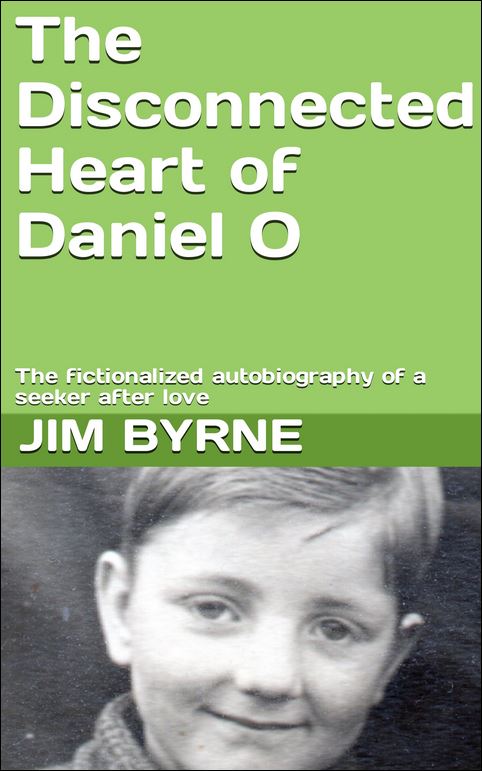
End of extract. For more information about this book, please visit this page: The Disconnected Heart of Daniel O…
~~~
Endnote
[1] An Intergalactic Federation ‘trimastrul’ is roughly equal to 3.25 Earth months; so four trimastruls is equal to 13 months; and 13 months is the standard accounting period for research projects.
[2] Bretherton, I. (1992). ‘The Origins of Attachment Theory: John Bowlby and Mary Ainsworth’. Developmental Psychology 28: 759

 ABC Bookstore Online UK