Blog post – 26th August 2024
Why do people – who definitely want love – allow their sex-love relationships to rot?
Investigation of a conundrum, or paradox
By Dr Jim Byrne, Doctor of Counselling
Copyright (c) Jim Byrne, 2024
~~~
Introduction

Jim Byrne and Renata Taylor-Byrne have been happily married for almost 40 years
People long to be in happy, loving, couple relationships. And yet they spend most of their lives living passively (or aggressively) in unhappy, non-loving, couple “involvements” or “entanglements”.
How to explain that paradox?
Nobody has so far suggested why this might be the case.
But I will explain it in this blog post.
Couples do not come forward for help to fix their failing relationships
 Many years ago, some research was done by Relate, the formerly UK-state-funded marriage guidance organization, which suggested that only 2% of couples whose marriage was in terminal decline would come forward for marriage guidance help! (And it is not unreasonable to assume that only about 20% of those 2% [totalling 0.4%] would read a book about couple relationships!)
This is very strange, because if you had a Harley Davidson motor bike, and it was not working well enough, you would most likely do one of three things:
(1) Buy a manual on how to repair a Harley Davidson motorcycle; or:
(2) Take it to a garage and ask a mechanic to fix it for you; or:
(3) Take it to a repair club, where Harley Davidson owners meet to discuss how to maintain their bikes.
You would see the problem as a knowledge and skill problem!
Books and counselling help with knowledge and skill problems
 And if you had a career problem, you would most likely either buy a book on how to fix your career problem, or you would go to see a career consultant or counsellor. —
So why is it that only 2% of couples with troubled relationships would come forward for marriage guidance or couples therapy —
(and perhaps only 0.04% would buy a book on the subject of couple relationships)?
My growing understanding of the problem
After long, hard reflection, I do now have some answers to the paradox:
Why do people, who want love, allow their sex-love relationships to rot?
In this blog post, I will look at some answers to that question under three headings:
- Life positions;
- The Inner Couple model; and
- Personality Adaptations
~~~
Life Positions
 The concept of “life position” comes from the psychotherapy system called Transactional Analysis (TA), created by Dr Eric Berne, after the Second World War, and into the 1970s.
The simplest life position is a decision about yourself, such as: “I’m OK”; I’m acceptable to myself; I’m good enough as an individual; I am worthy of respect.
Or “I’m OK”; I’m good enough.
We also tend to make decisions about our life partner: We decide if they are “OK” or “not-OK”.
The OK-Corral
The figure which follows shows the four basic Life Positions, only one of which is emotionally healthy:

Figure – The OK-corral showing the four life positions
Of the four positions that an individual can adopt towards themselves and others, only that shown in box 1, above, is emotionally healthy. That is the “I’m OK – You’re OK” life position, which leads to good human relations. It’s a statement of equality; egalitarianism.
~~~
(Which box do you think you normally live in, in your relationships?)
~~~
What’s wrong with the unhealthy life positions?
 Life positions 2, 3 and 4 lead to poor human relations outcomes. Or Bad Relationships! — Operating from Box 2 can lead to exploiting and abusing others, or being angry or dismissive towards them. — Operating from Box 3 can result in the individual becoming a ‘door mat’ for others, by being too passive and compliant.
And operating from Box 4 is a dark, nihilistic place which is likely to be found among sociopaths and suicides and very angry, self-loathing depressives. (Many people, in prison for murdering their nearest and dearest, may be found to have life position No.4!)
Life positions lead to rigid thinking!
It should be immediately obvious that, once you have adopted one of these unhealthy Life Positions, you have set yourself and your partner in concrete; solidified yourselves into an Unchangeable Truth.
 (To be clear, the attitude that “You are not-OK” is very different from the position, “Some of your behaviour is not acceptable to me!” One refers to the essence of the person; the second on refers to some changeable behavioural tendencies!)
And then, if your partner is essentially “Not-OK” (in your heart and mind!), what would be the point of reading a book, or seeing a counsellor. If they are Bad, then they are Bad. End of “reasoning”!
 (But, of course, when we conclude that our partner is “Not-OK”, that is just a Decision in our mind – (a subjective judgment!) It does not thereby become a Universal Truth. But it will certainly keep you from exploring possibilities for improving your relationship. You will stay in your rotting relationship, longing for love, until it falls apart!
[And the same is true no matter which of the unhealthy life positions you have adopted. Only the “I’m OK – You’re OK” life position will lead you to read about how to fix your relationship problems; or to see a marriage guidance counsellor!])
Get the knowledge and skill that you need
I have written about how to change your life position, and how to improve your couple communication, in my book: Byrne, J.W. (2019). How to Have a Wonderful, Loving Relationship. Hebden Bridge: The Institute for E-CENT Publications.
~~~
The Inner Couple Model
 The Inner Couple Model, created by Anne Teachworth, suggests that, when we are very young, under the age of 5 years, and up to the age of 10, we observe how our parents relate to each other; we choose our favourite parent; we model ourselves upon our favourite parent (or Role Model); and we choose to have a future partner like the other parent (who becomes our Mate Model).
Therefore, we get into adult relationships on the basis of this non-conscious blueprint for relationship, stored in the basement of our minds.
We copy our parents when we are too young to know what we are doing
So if our parents were basically incompatible, we “choose” a life partner with whom we are incompatible. And if our parents had unrealistic expectations of each other, then we will find unrealistic expectations at the heart of our own marriage or cohabiting relationships.
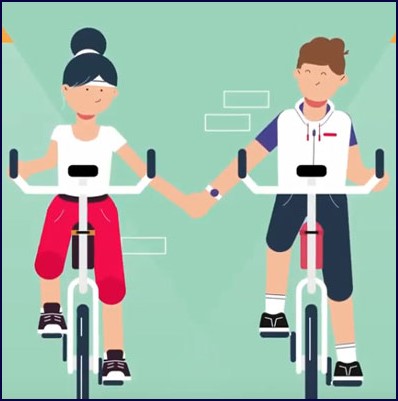 This subject has recently been revisited by a group of researchers.
~~~
According to a study by Shackleton, Barlow and colleagues (2018), at the University of Exeter, UK, there are four common reasons for relationships to break down:
“The first two (are) incompatibility and unrealistic expectations…”
 But why would anybody choose an incompatible partner? The viewpoint expressed in our book – How to Quickly Fix Your Couple Relationship – is that we choose incompatible partners because our parents were actually incompatible, and we simply copy what we experienced by observing their relationship – outside of our conscious awareness.
And our expectations of relationships also come primarily from what we saw our parents do, compounded by
(i) poor models we have seen in films; and
(ii) the lyrics of love songs we have heard, often subliminally hypnotizing us into unhelpful beliefs about love.
Why we “choose” the mates we choose
It is the contention of my Quickly Fix… book (above) that we will go on “choosing” incompatible partners until such time as we work at reforming our model of relationships – otherwise called our ‘Inner Couple’.
Let us now return to our question,
- having chosen badly, why do individuals stay in rotting relationships?
- Answer: Because that is what their parents did!
- ~~~
- And why don’t we read books on the subject of how to fix our love relationships?
- Answer: Because our parents did not read books on how to fix their love relationships!
(We are pure products of history and culture! And changing those macro-patterns (of history and culture) is not within our power.
But we can work on our own individual stuff; our own Inner Couple Model!)
~~~
Our Personality Adaptations
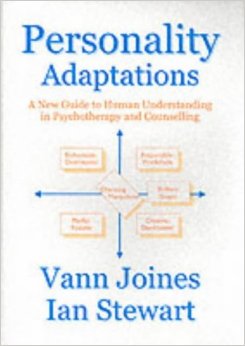 In the first two or three years of life, we have to figure out how to adapt to our parents, so they won’t abandon us, or get very angry with us.
We have to find out how they want us to behave, so we can “perform” for them; and we have to learn how to cope with our internal feelings about how they treat us.
All of this gives rise to our personality shape or tendencies.
~~~
The example of the Charming Manipulator
Let’s take one example: Some people come into the world expecting to be loved, and they conclude (non-verbally) that this is not happening; that they are not actively loved and cared for in ways that reassure them and make them feel safe and secure. They form a personality tendency called the Charming Manipulator.
They decide to get revenge on the world by tricking and fooling people into giving them what they want. They get into relationships on the basis of manipulation, rather than having anything at stake, emotionally.
However, once in a relationship, they find they have an intense fear of abandonment. They also have a strong “parental order” or “driver”, to Please Others, and to Be Strong. (And “be strong” here means “ignore your own feelings and needs”).
When you add the fear of abandonment and the Be Strong, and Please Others drivers together, it is not difficult to see why they would have great difficulty leaving an unhappy relationship!
All personality adaptations involve behavioural rigidities
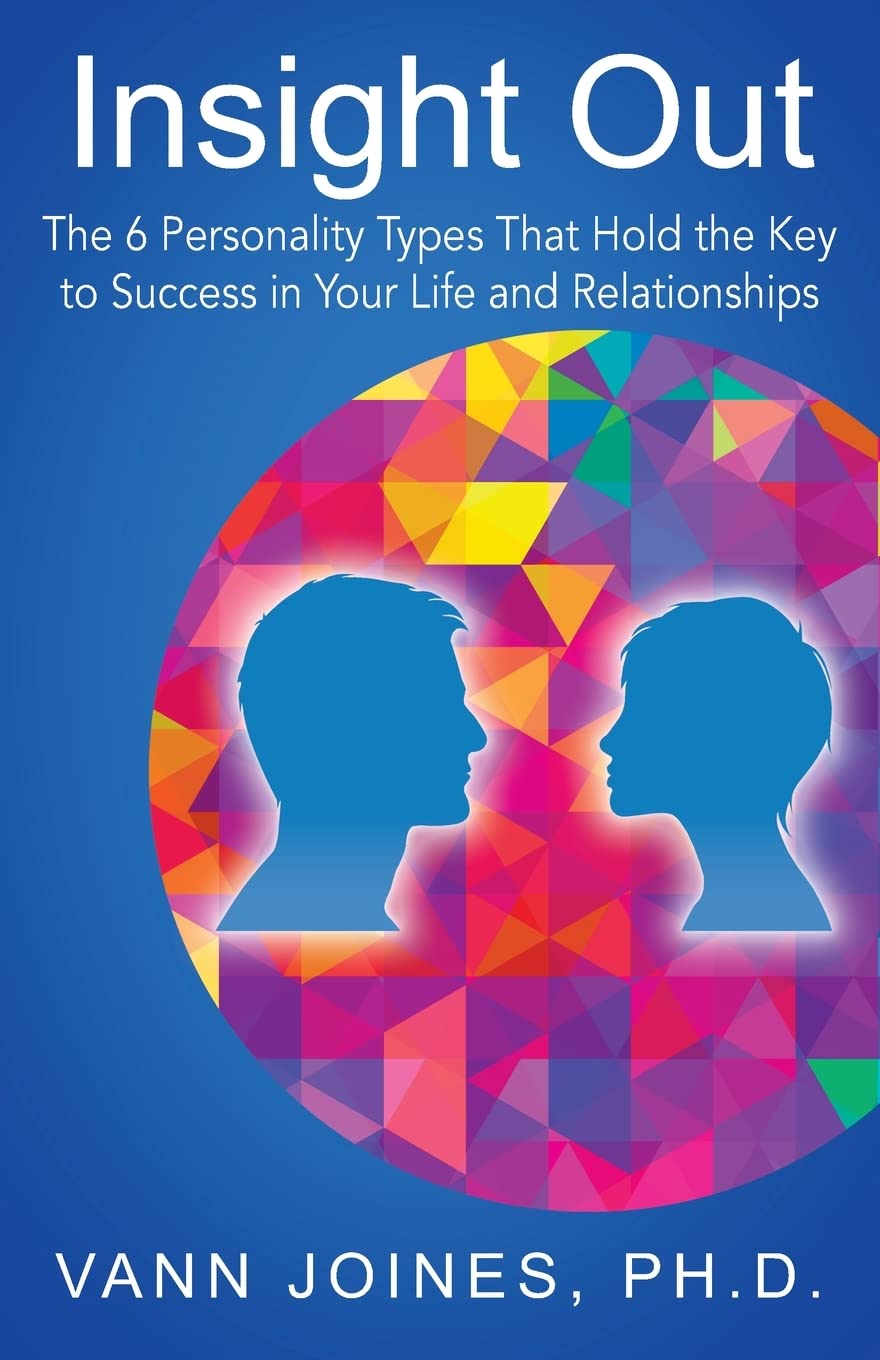 Similar dynamics occur with the other personality adaptations (of which there are six).
All six of the personality adaptations are based on hardwired behavioural habits, and feeling states, which are not easy to change.
But it is possible to change them, with focussed effort.
If you are curious about how to do that, I am working on a PDF eBook which will show you How to Work on the Pitfalls of Your Personality Adaptations, in order to have a happier relationship. Email me if you want to buy a copy. Dr Jim’s Email address.
Assessment, counselling and psycho-educational follow-up can help
Or you can consult me for a session of counselling, combined with a Personality Adaptations Questionnaire, and follow-up psycho-educational documents, for a fee of £250.00.
Again, please email me to discuss setting this up: Dr Jim’s Email address.
~~~
Conclusion
From the information presented above, we can see that the answer to the paradox, or conundrum – Why do people, who want love, allow their sex-love relationships to rot?
– Is that…
-
- (a) people are misled by their life position into thinking that the problem is not solvable, because it is down to the unchangeable nature of their (bad, Not-OK) partner, or of their (bad, Not-OK) self.
- (b) people are simply following their Inner Couple Model, which leads them into relationships which replicate their parents’ relationships. People stay in bad relationships because that is what their parents did!
- And (c) people get stuck in bad relationships because of the negative features (or Pitfalls) of their Personality Adaptations.
- In all three cases, they are sleepwalking through a habit-based nightmare!
But they can escape if they are willing to work on those three aspects of their belief system, and their non-conscious wiring! (And, sometimes, when an individual begins to work on their own psychological wiring, their partner becomes transformed into an ideal spouse; an OK-individual; and a wonderous being!)
~~~
Tell me your story
I would be very happy to hear your story of currently being stuck in a bad relationship; but, more interestingly, how you got out of your bad relatonship habits.
I would also recommend that you take a look at my books on couple relatonships, here: Couple Relationships and Love Bonds.
 That’s all for now.
Best wishes, and I’m here if you need my help!
Jim 🙂
Jim Byrne, Doctor of Counselling
Email: Dr Jim’s Email Address
Telephone: 01422 843 629 (from inside the UK)
Or: 44 1422 843 629 (from outside the UK)
~~~
PS: For my books on couple relationships, please click this link: Couple Relationships and Love Bonds.
~~~
Dr Jim’s Basic Couples Therapy Service.
~~~
Dr Jim’s Enhanced Main Couples Therapy Service.
~~~


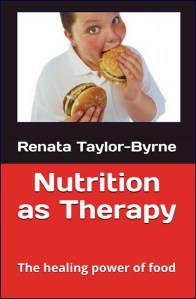 Amidst this backdrop, Renata Taylor-Byrne’s Nutrition as Therapy arrives at just the right moment. Drawing from robust scientific evidence and real-life stories, Taylor-Byrne offers a refreshing alternative to prescription drugs and high-tech solutions.
 If you’re a nutrition enthusiast, healthcare professional, or simply someone seeking better mental health, Nutrition as Therapy is a must-read. It’s not just about food; it’s about taking control of your wellbeing and finding hope in everyday choices. As the conversation around food and mental health grows louder, this book offers a bridge to understanding and lasting change. Discover the movement toward empowered health—visit ABC Bookstore Online UK and explore Renata Taylor-Byrne’s transformative message today.
 “In 2026, I resolve to nurture my mental and emotional health by seeking out practical self-help strategies and dedicating time each week to personal growth and healing.”
 When we think about love in relationships, most people tend to approach it with a rather naïve, childlike, and sometimes selfish mindset. In my experience as a couples therapist, I’ve often encountered the belief that love is all about “getting it” rather than “creating it”. But in reality, the most reliable way to receive love is by genuinely giving it first. It’s a principle as old as time: what goes around comes around.
 Attachment is a fundamental drive. In newborns, it’s an instinct geared towards survival. For new mothers, attachment is both innate and learned, shaped by their own upbringing and cultural influences. When we enter adult relationships, our attachment styles – be they secure or insecure – often mirror those we developed as children, particularly in relation to our mothers, and later, our fathers.
 Best wishes, and take good care of yourself!


 Conflict in couple relationships, and in families in general, is a major source of human misery. However, with the right kind of instruction, you can insulate your social relationships from constant or repeated misery and unhappiness; and learn to have a wonderful life with your family and friends. The essential solutions to destructive social conflict have been assembled by Dr Jim Byrne in this book about how to re-think/re-feel/re-frame your encounters with your significant others; how to communicate so they will listen; how to listen so they can communicate with you; and how to manage your emotions and lifestyle for optimum peace, happiness and success in all your relationships.
 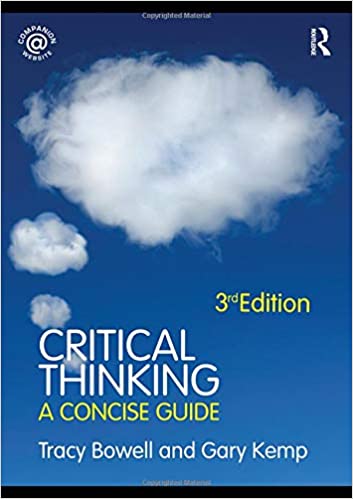 The content of this book emphasizes the importance of developing an effective philosophy of life to navigate emotional challenges, particularly during stressful periods like holidays.
 When emotionally upset, individuals often view situations through unhelpful fixed frames of reference that are non-conscious and rigid, leading to unproductive interpretations of their experiences.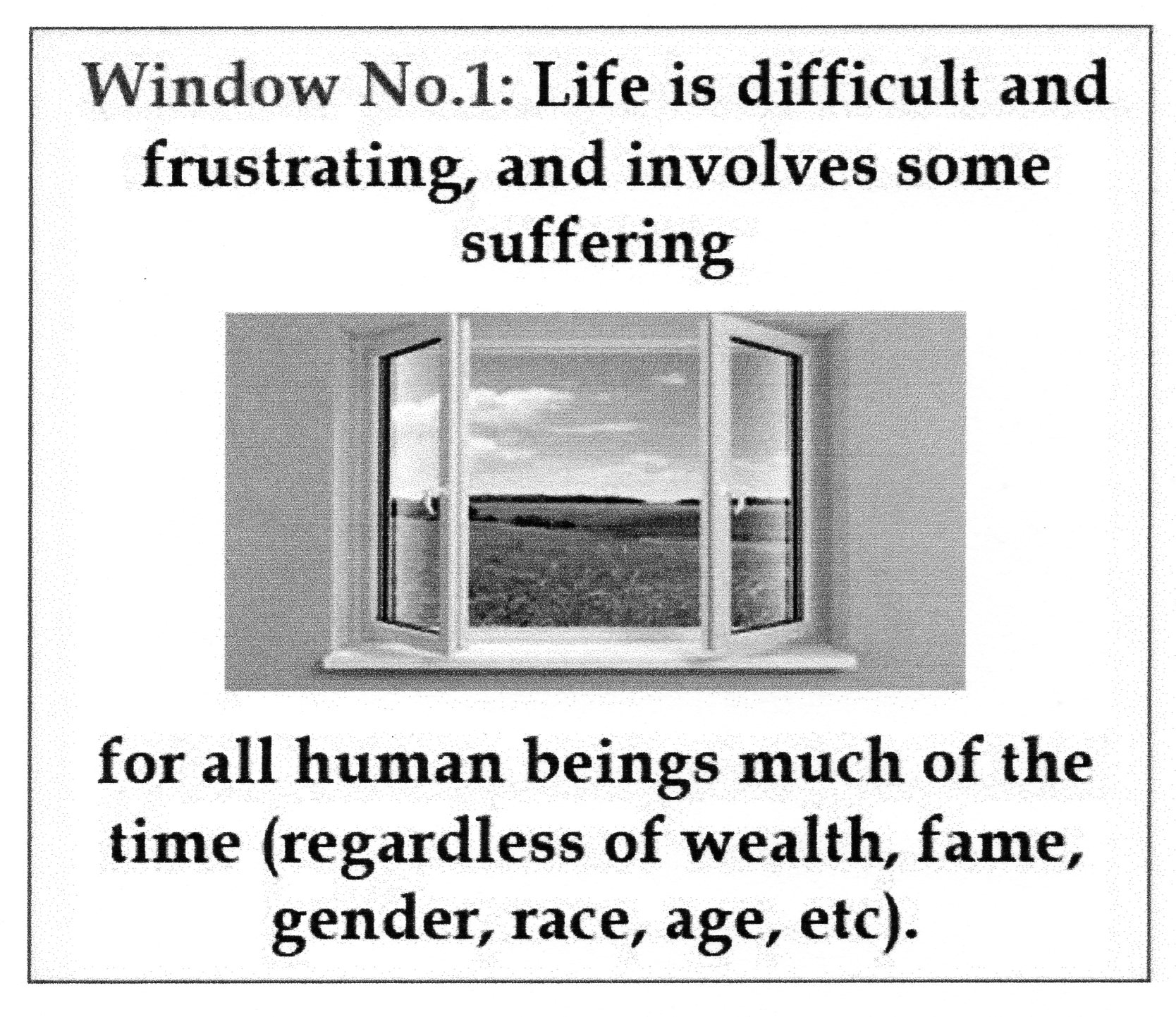

 Best wishes for a Happy Christmas and a Peaceful New Year
 ABC Bookstore Online UK