Covid anxiety is manufactured

~~~

SOS: Emergency: Please share this with everybody you love.  The price of freedom is eternal vigilance:

Fear Is Contagious and Used to Control You

Analysis by Dr. Joseph Mercola Fact Checked

  • June 18, 2021

Story at-a-glance

  • In a newly released book, members of the Scientific Pandemic Influenza Group on Behaviour, a subcommittee that advises the Scientific Advisory Group for Emergencies in the U.K., admit government is using fear to control and manipulate the population
  • SPI-B, which advocated for the use of fear messaging, now says it was unethical, totalitarian and a regrettable mistake
  • Aside from the barrage of bad-news-only data — which was heavily manipulated in a variety of ways — fear and anxiety are also generated by keeping you confused
  • Giving out contradictory recommendations is being done on purpose, to keep you psychologically vulnerable. By layering confusion and uncertainty on top of fear, you can bring an individual to a state in which they can no longer think rationally. Once driven into an illogical state, you are easily manipulated
  • Government’s reliance on behavioural psychology didn’t just happen as a result of the pandemic. These tactics have been used for years, and are increasing

Governments are using fear to control and manipulate their citizens. That has now been admitted by members of the Scientific Pandemic Influenza Group on Behaviour (SPI-B), a subcommittee that advises the Scientific Advisory Group for Emergencies (SAGE) in the U.K. And they should know, because they advocated for it, and now say it was a regrettable mistake. As reported by The Telegraph, May 14, 2021:1

“Scientists on a committee that encouraged the use of fear to control people’s behaviour during the COVID pandemic have admitted its work was ‘unethical’ and ‘totalitarian.’ Members of the Scientific Pandemic Influenza Group on Behaviour (SPI-B) expressed regret about the tactics in a new book about the role of psychology in the Government’s COVID-19 response.

SPI-B warned in March last year that ministers needed to increase ‘the perceived level of personal threat’ from COVID-19 because ‘a substantial number of people still do not feel sufficiently personally threatened.’

Gavin Morgan, a psychologist on the team, said: ‘Clearly, using fear as a means of control is not ethical. Using fear smacks of totalitarianism. It’s not an ethical stance for any modern government. By nature I am an optimistic person, but all this has given me a more pessimistic view of people.’”

Psychological Warfare Is Real

The Telegraph quotes several of the SPI-B members, all of whom are also quoted in the newly released book, “A State of Fear: How the UK Government Weaponised Fear During the Covid-19 Pandemic,” written by Laura Dodsworth:2

“One SPI-B scientist told Ms Dodsworth: ‘In March [2020] the Government was very worried about compliance and they thought people wouldn’t want to be locked down. There were discussions about fear being needed to encourage compliance, and decisions were made about how to ramp up the fear. The way we have used fear is dystopian.

The use of fear has definitely been ethically questionable. It’s been like a weird experiment. Ultimately, it backfired because people became too scared’ …

One warned that ‘people use the pandemic to grab power and drive through things that wouldn’t happen otherwise … We have to be very careful about the authoritarianism that is creeping in’ …

Another member of SPI-B said they were ‘stunned by the weaponization of behavioural psychology’ during the pandemic, and that ‘psychologists didn’t seem to notice when it stopped being altruistic and became manipulative. They have too much power and it intoxicates them.’

Steve Baker, the deputy chairman of the COVID Recovery Group of Tory MPs, said: ‘If it is true that the state took the decision to terrify the public to get compliance with rules, that raises extremely serious questions about the type of society we want to become. If we’re being really honest, do I fear that government policy today is playing into the roots of totalitarianism? Yes, of course it is.’”

The Manufacture of Fear

For nearly a year and a half, governments around the world, with few exceptions, have fed their citizens a steady diet of frightening news. For months on end, you couldn’t turn on the television without facing a tickertape detailing the number of hospitalizations and deaths.

Even when it became clear that people weren’t really dying in excessive numbers, the mainstream media fed us continuous updates on the growing number of “cases,” without ever putting such figures into context or explaining that the vast majority were false positives.

People don’t enjoy being hoodwinked and they don’t want to live in a state of fear. We maybe need to be a bit bolder about standing up more quickly when something is not right. ~ Laura Dodsworth

Information that would have balanced out the bad news — such as recovery rates and just how many so-called “cases” actually weren’t, because they never had a single symptom — were censored and suppressed.

They also refused to put any of the data into context, such as reviewing whether the death toll actually differed significantly from previous years. Instead, each new case was treated as an emergency and a sign of catastrophic doom.

Fear Is Contagious

Fear has long been the tool of tyrants. It’s profoundly effective, in part because it spreads from person to person, just like a virus. The contagion of fear is the topic of the Nova “Gross Science” video above, originally aired in mid-February 2017. Among animals, emotional distress responses are telegraphed through pheromones emitted through various bodily secretions such as sweat and saliva.

As explained in the video, when encountering what is perceived as a serious threat, animals with strong social structures, such as bees and ants, will release alarm pheromone. The scent attracts other members of the hive or colony to collectively address the threat.

Humans appear to have a very similar capability. When scared or stressed, humans produce chemosignals, and while you may not consciously recognize the smell of fear or stress, it can have a subconscious impact, making you feel afraid or stressed too.

Humans also tend to mimic the feelings of those around us, and this is yet another way through which an emotion can spread like wildfire through a community or an entire nation — for better or worse. Behavioural psychologists refer to this as “emotional contagion,” and it works both positive and negative emotions.

For example, if you’re greeted by a smile when meeting someone, you’re likely to smile back, mimicking their facial expression and behaviour. If someone looks at you with an angry scowl, you’re likely to suddenly feel angry too, even if you weren’t before and have no subjective reason to — other than that someone looked at you the “wrong” way.

However, while both positive and negative emotions are contagious, certain emotions spread faster and easier than others. Research cited in the Nova report found that “high arousal” emotions such as awe (high-arousal positive emotion) and anger or anxiety (high-arousal negative emotion) are more “viral” than low-arousal emotions such as happiness or sadness.

The Nova report also points out that researchers have been mining Twitter and other social media data to better understand how emotions are spread, and the types of messages that spread the fastest. However, they ignored the primary culprits, Google and Facebook both of which steal your private data and use it to manipulate your behaviour.

At the time, in 2017, they said this information was being harvested and used to develop ways to avoid public messaging that might incite mass panic. But the COVID-19 pandemic suggests the complete opposite. Clearly, behavioural experts have been busy developing ways to generate maximum fear, anxiety and panic.

How to Inoculate Yourself Against Negative Contagion

At the end of the report, Nova cites research detailing three effective ways to “immunize” yourself against negative emotional contagions.

  1. Distract yourself from the source of the negative contagion — In the case of pandemic fearporn, that might entail not reading or listening to mainstream media news that for the past year have proven themselves incapable of levelheadedness.
  2. Project your own positive emotions back at the source of the negative contagion — If talking to someone who is fearful, they might end up “catching” your optimism rather than the other way around.
  3. Speak up — If someone is unwittingly spreading “negative vibes,” telling them so might help them realize what they’re doing. (This won’t work if the source is knowingly and purposely spreading fear or anxiety though.)

~~~

Source: https://articles.mercola.com/sites/articles/archive/2021/06/18/fear-contagious.aspx?

~~~

Journal writing as therapy

~~~

Blog post

11th June 2021

How to Write a New Life for Yourself: Using journal writing to improve your life

By Renata Taylor-Byrne

~~~

“Writing in a journal reminds you of your goals and of your learning in life.

It offers a place where you can hold a deliberate, thoughtful conversation with yourself.”

Robin S. Sharma

~~~

Introduction

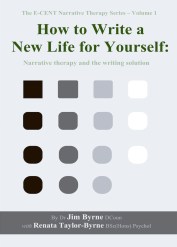
Write a new life for yourselfIn this blog I want to outline some of the invaluable benefits of writing about yourself and your life, and then briefly explain some of the writing strategies recommended and described in Jim Byrne’s book:  “How to Write a New Life for Yourself: narrative therapy and the writing solution”.
Firstly, writing about yourself brings order and understanding into your life. Would you like to create some new structure and certainty in your life, after the constant changes that you have been experiencing as a result of the Covid 19 pandemic? One of the most effective ways to make sense of all the changes that have taken place, is to reflect on what has been happening to you and how your life has been changed.

Writing about your experiences, including your losses, acknowledges them, processes them and helps you move beyond them.  Getting in touch with your feelings helps you to reconnect with yourself. And in the process, you find out who you were, the things that shaped and changed your life, and the reasons why you want to create new changes or goals for yourself.

“I think writing really helps you heal yourself.

I think if you write long enough, you will be a healthy person.

That is, if you write what you need to write, as opposed to what will make money, or what will make fame”.  

Alice Walker

~~~

Scientific validation of writing as therapy

Kindle Cover WriteANewLife (2)Secondly, the benefits of the writing therapy process have been scientifically assessed. It’s worth knowing that there are very real benefits to our bodies and minds which have been systematically researched: The benefits of writing things out of our system was investigated by Dr James Pennebaker of the University of Texas. He thinks that regular writing (he calls it ‘journaling’) strengthens our immune cells, called T-lymphocytes.  Other research has shown that regular writing reduces the symptoms of asthma and rheumatoid arthritis. Pennebaker also believes that writing about stressful events helps you come to terms with them, and this means a reduction in the impact of these stressors on your physical health.
“My wife Cecily Adams was dying of cancer, my daughter Madeline was struggling to overcome an autism diagnosis, and my father was dying, all at the same time. Writing the journal was a cathartic experience, and an extremely positive one.” Jim Beaver

Philippa Perry (2012) has described the findings about people who keep a diary, and write about the events of their lives. Apparently they have stronger immune systems than those who don’t write them, they are admitted into hospital less, don’t need as much medical attention, and the function of their livers becomes more effective. Their ability to manage their emotions and moods also becomes stronger.

How to get started with your journal writing

Dr-Jim-Byrne8 (2)Jim Byrne’s book has a section which can help you if you feel unable to start the writing process, and he describes the different life transitions which he used on his own writing therapy, and which he has used for many years to help his clients heal and deepen their understanding of their lives. He describes the main life stories as: ‘The story of my origins”, “The story of my relationships” (especially your relationship with your mother), “The story of transitions” and the “Story of career difficulties”. He also describes the starting points used by other therapists, for example Noppe-Brandon (2018) who focusses on life stages.
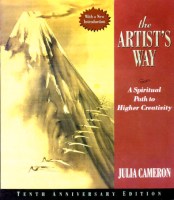
And he describes the writing process developed by Julia Cameron. She is described by the New York Times as the “Queen of Change” and for many years has led workshops all over the world for creative people who are blocked in the self-expression of their creativity.

The-Artists-Way“Julia Cameron (1992) teaches a daily writing process that is designed to help the writer recover a sense of safety and identity; a sense of power and integrity; a sense of possibility and abundance; a sense of connection and strength; a sense of compassion and self-protection.  These goals are achieved by writing three pages of ‘streams of consciousness’ each day.”
She describes her technique as “writing Morning Pages”. It’s a technique whereby you write three pages (in your own handwriting – not on the computer) every day, early in the morning. She suggests that you just write down anything and everything that is on your mind: (she calls it stream-of-consciousness descriptions of whatever is on your mind or going through your mind).

~~~

Key benefits of journal writing

To summarize, the three different ways that writing about ourselves can benefit us is by:

(a) Helping us process and fully digest past experiences which we need to complete (for example, making peace with past traumas or upsets, or forgiving people whose negative behaviour affected us badly).

(b) Enabling us to clarify our values and goals and the way forward for us in our careers.

(c) Helping us master the challenges we face daily, by fully expressing them in writing, problem-solving and writing about strategies to support ourselves – a self-coaching process which gets our problems outside of our heads, and onto paper. By putting our problems outside of ourselves, we can see them better and find solutions to them more quickly.

Here is a link to Jim’s book: https://abc-bookstore.com/writing-therapy-exercises/

~~~

Health coach, Renata Taylor-ByrneRenata Taylor-Byrne

Lifestyle Coach-Counsellor

The Coaching-Counselling Division

ABC Coaching and Counselling Services

01422 843 629

Email: Renata and ABC Coaching

~~~

Sweet, soft relaxation, and a sense of peace

~~~

Blog post:

The build-up and dissipation of chronic stress and tension

By Renata Taylor-Byrne, Lifestyle Coach-Counsellor

12th May 2021

~~~

Introduction

The fact that most people are totally unaware of just how tense their body is does not in any way protect them from the negative effects of ongoing stress, strain and physical and mental tension.

There is a solution to this situation, and I want to share it with you.

Automatic bodily tensing responses

Rexatation Book

Because of the way our bodies have evolved and developed, if you’re faced with challenging situations or feel under attack in a scary situation, your body has an effective strategy for dealing with it. We become physically highly alert, attentive, focussed and ready to deal with the new situation. We get rid of other things on our minds and focus on this specific problem, fully concentrating!

Then when we’ve dealt with the challenge, we relax – panic over! Our bodies go from ‘full alert’ to a more relaxed response. Our nervous system changes from “fight or flight” mode, to the “rest and digest” part of our nervous system. We chill out, relax and move on to the next situation.

This is how we’ve developed, and evolved as human beings, and it works well when we have the time and space to recover from daily challenges. We finish work, go home and get a decent night’s sleep so we can wake up the following day with our batteries fully recharged.

The importance of switching off the fight-or-flight response

But – and this is a big but – if we don’t get enough quality recovery time in-between challenging situations – if there are fewer and fewer recovery spaces in-between mental and physical challenges, what happens is that there is a slow, unrelenting  build-up of tension in our bodies.

And this tension can cause quite a few problems: people can start to have difficulty getting to sleep at night, lying awake for hours, experiencing insomnia. Digestion problems can happen, the heart can be affected, panic attacks can occur, anxiety levels can increase. The immune system becomes weakened, making people more susceptible to infections and viruses. People can start to dread situations that in the past they would have had no problem handling.

Unless we realise what is happening – our bodies, specifically our nervous system, is protesting against tension overload – then our physical and mental health can suffer, and our peace of mind will be affected. People can be full of tension when they are lying on the beach.

How to manage your tension, stress and strain

How can you handle this stress build up in your body? You could take the route of experimenting with a less tense, more relaxed way of life and specifically learn ‘scientific relaxation’. Dr Edmund Jacobson, based in Chicago, spent 70 years of his professional life researching how tension affects the body. He created a relaxation technique called “progressive muscle relaxation”, where you practise for 10 to 15 minutes a day, to slowly teach yourself what tension in your muscles feels like.

You slowly learn to feel and notice the different ways that you can be tensing up your muscles, without realising. Then you learn to relax your body quickly. As a result, you develop a feeling of physical and mental control over your body. And the benefits to your body are: improved sleep, reduced anxiety, improved digestion, and phobias disappear. Insomnia is eliminated, and also it’s a great stress reducer for public performance, exams, and it strengthens the immune system and reduces the experience of pain.

The need for alcohol, or other stimulants, which are a short cut to relaxation (but which have a sleep–destroying price tag as well as the financial cost) aren’t needed in the same way. Once you know how to relax, the need for artificial relaxants is greatly reduced.

There are some amazing case studies of clients using and benefitting from this technique, and I describe them in my book: Relax Your Way to a Better Life: Using Dr Jacobson’s progressive muscle relaxation technique for physical and mental health”).

Problems with orthodox medical solutions

Or you could try a different approach, and try orthodox medicine. But bear in mind that this has its drawbacks: In The Times newspaper of Monday, March 29th (page 19) there was an article with the headline: “Alarm over growing use of drugs to treat insomnia and anxiety”. Apparently patients are being prescribed anti-psychotic drugs to cure insomnia, and these prescriptions have doubled from 1.6 million, to 3.5 million in the ten years up to 2018. Side effects? “Weight gain, intense sleepiness, increased risk of diabetes and blurred vision”. And if the drug is stopped incorrectly, the article states, it can “Induce severe symptoms, including psychotic episodes”.

Alternative and complementary medicine solutions are best

Rexatation BookLearning the skill of proper relaxation, as in Dr Jacobson’s progressive muscle relaxation technique, benefits the body enormously, and will enhance the quality of your life for many years. And the side effects? A greater sense of connection with your body, an increased confidence in your ability to calm , soothe and relax yourself after stressful experiences, and if you have children, they will greatly benefit from your lack of tension and enhanced well-being, without realising it: If you’re relaxed – they’ll be relaxed!

~~~

What did you think of this presentation?  Have you tried out the relaxation system described? Any feedback would be very helpful for readers of this blog post.

~~~

Best wishes,

Renata

Renata Taylor-Byrne, Lifestyle Coach-Counsellor

Author of, Relax Your Way to a Better Life!

~~~

Think better, think on paper

~~~

Think and grow rich, and wise, and healthy!

The process of thinking is a lost art…

Blog post by Jim Byrne, Doctor of Counselling, Hebden Bridge, West Yorkshire, UK.

9th May 2021

~~~

Introduction

We live in an era of information overload – “Big time”!

Most people have had their ability to concentrate and pay attention to the Vital Few goals they should be pursuing in life; and are constantly distracted into performing the Trivial Many. They end up doing what is “anxiety relieving” instead of “goal achieving”. (Constantly checking that mobile phone does nothing to improve your life circumstances!  Really! It doesn’t!)

Furthermore, most people will do anything to avoid the hard labour of thinking.

What is thinking?

Thinking has been defined in various ways by various experts, and the best approach to thinking is going to be this: Study the distilled essence of the best approaches.  That is what I offer to my clients: the distilled essence.

Critical thinking structures our attention around the concept of “creating an argument” as opposed to engaging in “emotionally arousing rhetoric”.

Edward de Bono’s approach is designed to help us to learn and use a range of “attention directors”; and a systematic way to collect information and make sense of it, using six different strategies.

John Chaffee’s approach teaches the eight keys of “the thinker’s way”; and these include: thinking critically and creatively; and using effective communication and problem solving strategies.

My approach involves an integration of Perceiving, Feeling and Thinking – linked to the search for the answer of these question: “How to live wisely”; and “How to write a new life for yourself”.

How I teach my system

I teach my approach to effective “perfinking” – or perceiving/ feeling/ thinking, through my counselling and coaching services; and through some of my books; especially the following two:

How to Write a New Life for Yourself, by Dr Jim Byrne

Kindle Cover WriteANewLife (2)Writing about your daily life, on a regular basis, is like acquiring a second brain.  Processing your daily experiences through reflective writing is one of the most effective ways of promoting personal and professional change and improvement in your life situation, at home and in work.

The author presents more than twenty of his most potent reflective-writing exercises; including those that have made the greatest improvements to his own life circumstances, especially health and happiness, problem solving, career and life management, and enjoyable relationships. Write down your vision and goals, and make them happen; or write out your past problems as a form of therapy; or develop your creative ideas. This book shows you how, in small, easy to follow steps. Anything you wish to achieve in your life is brought closer, more reliably, by writing it out using our writing strategies.

…Read more about Writing for Success and Happiness…

~~~

Who Are You, And Where Are You Going?

Transformative insights from psychology and the philosophy of psychotherapy

Front cover, Who are youBy Dr Jim Byrne, Doctor of Counselling

If I asked you, “Who are you?” my guess is that you would tell me your name.

But that is just an identification label attached to you, soon after birth, by your parents.  You are not your name!  How do I know? Because you are at least a physical body, and your physical body is not a name.

So then, you might try telling me your name (again) combined with your place of birth, your age, gender, and current marital status.  But that is not who you are, because many other people are the same gender as you, but they are not you. Many other people have your marital status, but they are not you. Many people are your age, but they are not you.

You might then tell me some of your accomplishments, and your work role.  But that is not who you are, because many other people have the same or similar accomplishments, but they are not you. And many other individuals do work which is similar to yours, or virtually identical to yours, but they are not you.

So there is a real problem for you, because you do not have a clue who you are. And therefore you cannot know what is possible for somebody like you. This book is designed to wake you up to who you could be, and how much more you could get out of your life.

For more information, please click this link: Self, identity and life direction.***

~~~

Please take a look at the information about those two books. I hope you find this interesting and helpful in moving you beyond the widespread state of directionless anxiety about an uncertain future.

Best wishes,

Jim

Dr Jim Byrne, Doctor of Counselling

ABC Coaching and Counselling Services

ABC Bookstore

The E-CENT Institute

Email: Dr Jim Byrne

~~~

Writing therapy and Covid-19 trauma recovery

~~~

Blog Post – 5th March 2021

By Renata Taylor-Byrne

~~~

Reading and writing can help us make sense of what happened to us all during the Covid-19 pandemic

And you can find peace again!

~~~

Copyright (c) Renata Taylor-Byrne, 2021

~~~

“Words are a form of action, capable of influencing change”.

Ingrid Bengis – (From page 10, The Artists Way, 1992)[1]

~~~

Health coach, Renata Taylor-ByrneBecause of the challenges, disruption, and appalling deaths and destabilising changes which have taken place since the onset of the world-wide Covid-19 health crisis, inevitably many people have lost sight of who they are and where they are going in life. And they don’t know what the future holds for them.

An invaluable way of finding yourself again – and starting to come to terms with where you are, and what the way forward is for you in your life – is to  use a method which has been tried and tested by many people. We are big fans of this process.

In short, you start writing about what is happening to you in your life, and what you have experienced; and begin the process of mentally digesting past events, and coming to terms with the new, very different world you are now living in.

Six months ago, this process would have been premature.  Even nine months ago it would not have been advisable.  (Early processing of traumatic memories simply acts to re-traumatize you!) But now, more than one year since the first Covid-19 deaths in the west, it is time to begin digesting the awful traumatic shock of this terrible disease.

“You need to claim the events of your life to make yourself yours”.

Anne-Wilson Schaef

~~~

By writing for a few minutes, every morning, about the stressful time you have come through, you can begin to fully acknowledge the confusion, pain, loss, and anxiety you have been going through.

You can begin to extract any valuable insights you have learned about life, other people and yourself, and slowly start finding and feeling your way into a future which makes sense to them.

Kindle Cover WriteANewLife (2)This very simple but highly therapeutic process is described in our book titled: “How to write a new life for yourself”, (by Dr Jim Byrne with Renata Taylor-Byrne).

The benefits are very real:

For example, Philippa Perry (2012) describes a research study where the people taking part were split up into 2 groups. One half of the group wrote in their diary every day, and the other half didn’t. The results were as follows:

“Diarists reported better moods and fewer moments of distress than non-diarists. Those in the same study, who kept a journal following trauma or bereavement, also reported fewer flashbacks, nightmares and unexpected difficult memories”.[2]

She also describes diarists as less likely to be admitted to hospital, with improved liver, blood pressure, and a stronger immune system. (And keeping your immune system strong is now recognized as the main way you can protect yourself from Covid-19, and other major diseases!)

For more insights into the benefits derived from diary writing, or keeping a journal, please look at “How to write a new life for yourself” (by Dr Jim Byrne with Renata Taylor-Byrne).

The-Artists-WayIn her work on therapeutic writing, Julia Cameron (1992) uses several metaphors and similes to try to communicate what her readers and students can gain from using her system of therapeutic writing.

The one I like the most is this:

“Writing in your journal, about the trials and tribulations of your life, is like building a bridge into a better future for you!”

And that is what we set out to do in our book: To provide you with a roadmap which will support you in building a bridge into a better future for yourself.

We used a more gradual approach than Julia Cameron.  This approach helps you to begin with small steps; in an easy, simple way; and to slowly build up your ‘writing muscles’.

In the process, you will develop a great capacity to manage your thinking-feeling-perceiving more effectively; calmly; in a more self-regulated fashion.  You will become more intuitive; more creative; and a more efficient and effective problem-solver.  You will be less troubled by stress and strain, and more likely to succeed in achieving whatever goals you want to pursue!

And, perhaps most importantly, you will figure out how to process the traumatic events of this terrible year of Covid-19 challenges and anxieties.

~~~

Health coach, Renata Taylor-ByrneThat’s all for now.

Best wishes,

Renata

Renata Taylor-Byrne

Lifestyle & Health Coach-Counsellor

cropped-abc-bookstore-maximal-charles-2019-1.jpgABC Coaching and Counselling Services

ABC Bookstore Online UK

The Institute for E-CENT (Research and publishing)

~~~

Endnotes

[1] Cameron, J. (1992) The Artist’s Way: A spiritual path to higher creativity. London: Souvenir Books.

[2] Perry, P. (2012) How to Stay Sane.  London: Macmillan.