~~~
Blog Post
Update on my Trauma Book…
Transforming Traumatic Dragons:
How to recover from a history of trauma – using a whole body-brain-mind approach
By Jim Byrne, Doctor of Counselling
12th January 2021
~~~
Copyright (c) Jim Byrne 2021
~~~
Introduction
 If my memory serves me well, I was confident that I could complete my book – How to recover from a history of trauma – before the end of 2020.
However, my plans were blown off course in August 2020, because I had a list of extensive reports to write for some of my couple’s therapy clients; which kept me busy up to Christmas Eve.
Now I am back working on that Trauma Book; and I hope to complete it by Easter at the latest. I know some individuals are patiently waiting for it.
~~~
About the book…
 I wrote this book to help individuals (who had traumatic experiences earlier in life) to be able to digest those traumas, and resolve any negative symptoms of having been traumatized.
This book is designed to help you
– to understand what trauma is;
– the various forms of post-traumatic stress;
– including the nature of complex childhood development trauma;
– and also, most importantly, to help you to recover from your traumatic past.
My major aim is to teach you how to slowly and cautiously process, or digest, old emotional traumas, so they can be healed.
~~~
The ‘interoceptive’ detour
 This book is a greatly expanded version of an earlier book I which I did not pay sufficient attention to the role of the body in the storing and restimulation of traumatic memories. I was woken up by Bessel van der Kolk’s book, ‘The Body Keeps the Score’, and so I have been adapting my own trauma therapy processes to include a good deal of body-based ‘interoceptive’ elements.
What is ‘Interoception’? “Interoceptive awareness is the awareness of inner body sensations, involving the sensory process of receiving, accessing and appraising internal bodily signals (Craig, 2009). Interoceptive awareness is fundamental to mindfulness-based approaches, involving focused present-moment awareness on internal sensations, most often introduced by attending to the sensations of the breath (inhaling and exhaling), or by engaging in a body scan. Interoception is recognized as a possible mechanism underlying mindfulness-based approaches (Farb et al., 2015; Garland, 2016), and learning interoceptive awareness skills may improve well-being and enhance capacity for emotion regulation (de Jong, et al., 2016; Price, et al., 2018).” From Price (2019).
~~~
My three main processes
 have developed three main processes to help you to reframe and digest your problematical feelings and experiences.
– The first – which is called the Basic Nine Windows Model – is intended to be a basic training in how to think-feel-perceive any problem, so that it shows up as being of manageable proportions, in terms of its impact on your emotions and your behavioural responses. The idea is to work on day to day problems of a non-traumatic nature, so that you do not overwhelm yourself. Gradually, you will build up your resilience muscles, and can confront and digest bigger and bigger problems. (This is described in Chapter 4).
– The second process – which is called Completing Your Experience – is intended to surface more difficult emotional memories, including some traumatic memories, and to reframe and digest them. (This is described in Chapter 5).
 – And the third and final process – which is called the Interoceptive[1] Windows Model[1] – is designed to involve your body, brain and mind in the processing of previously non-conscious traumatic memories. This includes reflecting upon your body’s sensations; controlled breathing; visual memories; writing down memories; eye movement desensitization[2]; and physical movement/exertion. (This multi-element process is described in Chapter 6).
~~~
~~~
Deviation
 I am enjoying the process of rewriting the current chapter – 6 – but I have had to deviate to develop an appendix on Stephen Porges’ Polyvagal Theory. This is an important part of the process of understanding how the body features in the processing of traumatic memories. The appendix begins like this:
Appendix L: Some insights into the Polyvagal Theory of Dr Stephen Porges
By Jim Byrne, 9th January 2021
~~~
Introduction
In this appendix, I want to introduce a brief set of insights into the Polyvagal theory, which is central to Dr Bessel van der Kolk’s approach to Developmental Trauma Therapy; which has also influenced my own system of Interoceptive Processing of Intense Traumas.
~~~
Before I look at some of the papers and books that gave rise to this system of understanding the human body-brain-mind, I want to present my own summary understanding of the polyvagal theory:
What is the polyvagal theory?
Here are some of the most important elements of the polyvagal theory:
…
Our physiological state is the substrate, or foundation, of our emotional states, attachment states, social connection capacity, and so on. And when we focus on the body as the foundation of the individual, we have also to consider the question: what are the best ways of treating the individual for unhelpful emotional states – such as panic and traumatic over-arousal – which are grounded in the body? Clearly, talk therapy has a role to play, but there has proved to be an array of physical interventions which calm down the body-brain-mind and emotions much more effectively than talk therapy, especially when the client is very anxious, stressed, or traumatized by extreme experiences.
The polyvagal theory also gives counsellors and therapists a new way to explain to the client why they are having overly-aroused reactions to situations that others take in their stride. For example: “Your body is overly aroused, sending signals to your brain that you are not safe!” The solution is to calm the body (because ‘the body’ is really shorthand for ‘a socialized-body-brain-mind’). One effect of this shift is that, instead of focusing on the client’s ‘presenting problem’, the counsellor can focus instead on the state of the client’s body (in terms of tension/relaxation). But this should not be taken too far, as some focus on the client’s story can be very helpful – for example, in the use of writing therapy to transform a story from one that causes over-arousal of the fight-flight response, to a revised story which triggers the calming effects of the parasympathetic nervous system.
It would be a mistake to go from the idea that “it’s all in the mind” to the equally simplistic idea that “it’s all in the body!”
The point has to be how to move the client’s body-brain-mind from a state of feeling “I’m in danger” to one in which they feel “I am feeling safe!”
While the Polyvagal theory emphasizes how the client’s “body” responds to threats and dangers – including the recalling of, and flash backs to, traumatic experiences – we in E-CENT counselling always seek to keep the focus on the “body-brain-mind” of the client! We know that the body is primary, from the beginning of life; but the body-brain is shaped by socializing experiences which change how they are wired up. What we take from the Polyvagal theory is this: The triune brain is organized vertically, and the lowest level, the brainstem, has a huge influence over our survival strategies and survival responses to threats. But the brainstem and the limber system, in the midbrain, are changed by social experiences, including traumatizing social experiences, like rape, domestic violence, bullying, mugging, war, captivity, and so on. Thus, when a client has a deep trauma to be resolved, it is not going to work to engage their upper brain, which will be switched off by the dorsal vagal nerve… (And then the vagal nerve subdivision have to be explored!) …
…End of extract…
~~~
Conclusion
As we approach the middle of January, I am fairly confident that I can complete this book by the middle of March. That should allow enough time to get it published and on to Amazon for Easter.
I am excited by this development, if only because the extent of traumatic suffering has been greatly increased over the past ten months by the arrival of Covid-19, and all of its destructive effects on the lives of so many families and individuals.
For more information about this book, please see the revised page of information.***
Best wishes,
Jim
Jim Byrne
Doctor of Counselling
The ABC Bookstore Online
The E-CENT Institute
ABC Coaching and Counselling Services
~~~
Email: Dr Jim’s Email Address***
Telephone: 01422 843 629 (from inside the UK)
Or: 44 1422 843 629 (from outside the UK)
~~~
Footnotes
[1] Definition: “Interoceptive awareness is the awareness of inner body sensations, involving the sensory process of receiving, accessing and appraising internal bodily signals (Craig, 2009). Interoceptive awareness is fundamental to mindfulness-based approaches, involving focused present-moment awareness on internal sensations, most often introduced by attending to the sensations of the breath (inhaling and exhaling), or by engaging in a body scan. Interoception is recognized as a possible mechanism underlying mindfulness-based approaches (Farb et al., 2015; Garland, 2016), and learning interoceptive awareness skills may improve well-being and enhance capacity for emotion regulation (de Jong, et al., 2016; Price, et al., 2018).” From Price (2019).
[2] Eye Movement Desensitisation Reprocessing (EMDR) was developed in 1987 to help people overcome the effects of psychological trauma. Trauma is defined as something that happened that still affects you today. It is recommended by NICE (the UK standards agency for medical processes) as an effective individual treatment for PTSD and other forms of trauma.
[1] Price, C. (2019) ‘Research on Interoceptive Awareness Training: An innovative approach to develop awareness and body connection’. Psychology Today, online blog: URL: https://www.psychologytoday.com/ us/blog/mindful-body-awareness/ 201902/research-interoceptive-awareness-training. Accessed on 8th June 2020.
~~~
Craig, A. D. (2009). ‘How do you feel – now? The anterior insula and human awareness’. Nat Rev Neurosci, 10(1), 59-70.
De Jong M, Lazar SW, Hug K, et.el. (2016) Effects of Mindfulness-Based Cognitive Therapy on Body Awareness in Patients with Chronic Pain and Comorbid Depression. Front. Psychol. 7:967. doi: 10.3389/ fpsyg. 2016.00967.
Farb, N., Daubenmier, J., Price, C., et.al. (2015). ‘Interoception, Contemplation, and Health’. Frontiers in Psychology, 6:763.
~~~

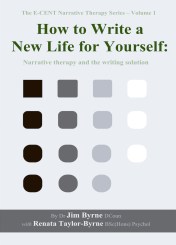 Writing about your daily life, on a regular basis, is like acquiring a second brain. Processing your daily experiences through reflective writing is one of the most effective ways of promoting personal and professional change and improvement in your life situation, at home and in work.
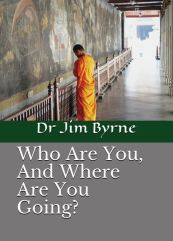 By Dr Jim Byrne, Doctor of Counselling
 Because of the challenges, disruption, and appalling deaths and destabilising changes which have taken place since the onset of the world-wide Covid-19 health crisis, inevitably many people have lost sight of who they are and where they are going in life. And they don’t know what the future holds for them.
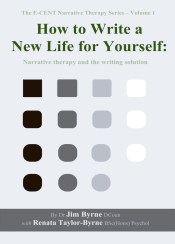 This very simple but highly therapeutic process is described in our book titled:
  In her work on therapeutic writing, Julia Cameron (1992) uses several metaphors and similes to try to communicate what her readers and students can gain from using her system of therapeutic writing.
 ABC Coaching and Counselling Services
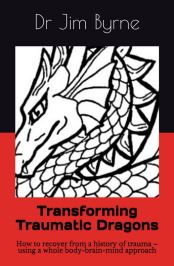 I have now resumed my work on my main Trauma Book – (
 I had become distracted from working on the trauma book (above) – which I am co-authoring with Renata Taylor-Byrne – because I wanted to begin work on my new book on Emotional Intelligence. Here’s an extract from the Introduction to that new book:
 So now I have resumed working on the Transforming Dragons book, and hope to have it on sale by Easter.
 Traumatic experiences are those which cannot easily be processed by the person to whom they occur. Most people are probably somewhat traumatized (or greatly traumatized) by their childhood experiences. One estimate – by Dr Felitti, in Dr van der Kolk’s book (The Body Keeps the Score) suggests that about 87% of Americans are somewhat traumatized by their Adverse Childhood Experiences!
 I have used writing therapy to heal my own childhood traumas, which has taken a number of years (on and off). I first wrote some articles and papers, and then combined them into a fictionalized autobiographical story – (
 Dr Jim Byrne
 ABC Bookstore Online UK