~~~
ABC Bookstore Blog Post
2nd July 2020 (Updated on 6th August 2021)
~~~
The circle of life, and the value of stories: The silent witness of early childhood trauma
By Jim Byrne, Doctor of Counselling: Copyright (c) Jim Byrne 2020
~~~
Introduction
 I believe that each of us is a silent witness of our early childhood experiences. We do not know what happened to us unless and until somebody helps us to make a story or stories out of our raw experiences.
You may have noticed this phenomenon: Sometimes in a cop show, or murder mystery, on TV, there’s a witness who knows something which is relevant to solving the crime or mystery. But this witness is unaware that they have witnessed something which is very important, which could be helpful in solving the case.
I believe each of us is like that witness. Let me explain:
Recently I’ve been reading three books that deal with complex, post-traumatic stress disorder:
Bessel van der Kolk’s The Body Keeps the Score.
Judith Herman’s Trauma and Recovery.
And Pete Walker’s Complex PTSD: From surviving to thriving.
One of the things that struck me about all three books is that each of the authors have to tell a personal story to illustrate the journey that got them to study trauma. There is nothing impersonal about their expertise; and their personal stories underpin their professional practices.
Many years ago, I had a set of serendipitous experiences which unearthed some strange stories from my own ‘internal silent witness’. The first happened in Bangladesh in 1977. Up to that point, nobody had ever expressed any curiosity about my life. And I had – consequently – no story about life, which I could know and share with the world.
 I met Carla in Bangladesh, and she was intensely curious about my life, and especially my childhood. I told her some bits and pieces from the very edges of my conscious awareness, and she was appalled at how painful my childhood had been – how physically and emotionally I’d been abused. I was amazed at the emotions that came up them: the painful memories that welled back. What I had taken to be ‘normal life’ turned out to be quite brutally unusual – or at least not how children should be raised, by parents who love their children, and want them to be happy.
Two years later, back in the UK, I met Renata (my wonderful wife of 34 years), and she was studying various disciplines, including Gestalt therapy. As a result, she was able to help me to explore my childhood some more. Out of my conversations with Renata, I got a lot of little stories about my weird childhood: some funny; some saddening; and some angering.
 Over time, two major stories emerged: My Story of Origins (as a country boy in a city school, who failed to make a single friend in ten years of schooling). And My Story of Relationship (especially my insecure attachment to my cruel mother). Both of these stories now appear in a forthcoming book, which you can read about here: Recovery from Childhood Trauma: How I healed my heart and mind – and how you can heal yourself.
Later, I expanded those two stories to include a good deal of my journey from birth to eventual relationship happiness:
Fictionalized autobiography of an Irish Catholic boy: The autobiography of a traumatized child.
Title: Metal Dog – Long Road Home
By Jim Byrne (writing through his alter ego, Daniel O’Beeve)
~~~

In 1968, at the age of 22 years, I went inside (the fish and chip shop in Blackpool), blinking the rain out of my eyes, and immediately recognized the leopard-skin coat and black fishnet tights on the raven-haired customer in front of me at the counter. She lived in the house next to the one in which I was lodging. I’d seen her come and go a few times as I sat at the table in the bay window, eating my breakfast or my evening meal.
She had the appearance of an actress or model. Tall, elegant, heavily made-up, and she walked with a wiggle, in extremely high, black, patent leather stiletto heels. As I stood behind her on the queue, she ordered cod and chips. Then I ordered the same. She turned to look at me and said, “Horrible weather!”
I agreed.
Her fish and chips were wrapped within seconds; she paid; and she headed for the door.
My fish and chips were wrapped next, and I followed suit.
I did not expect her to be waiting at the exit to speak to me…
For more information, please click this link: Fictionalized autobiography – Metal Dog, Long Road back to near normality.***.
And, at the moment, I am rewriting another of my books, which is designed as a self-help guide for individuals who want to work on their childhood trauma. You can read some information about that book here: Transforming Traumatic Dragons: How to recover from a history of trauma – using a whole body-brain-mind approach
~~~
And then there is my new book about how to heal your own childhood trauma:
Transforming Traumatic Dragons:
How to recover from a history of trauma – using a whole body-brain-mind approach
By Jim Byrne, Doctor of Counselling
 Over a period of more than 22 years of professional practice, Dr Jim Byrne has developed and refined a DIY (self-help) approach to resolving your own childhood trauma. This book will help you to understand what childhood developmental trauma is; how it relates to insecure attachment and dysfunction of the right brain; and how to work on childhood trauma using a whole body, brain, mind approach. This book outlines three major therapeutic processes, at three graded levels of emotional disturbance (from mild to intense), which you can progressively (and slowly and gradually) work through, in the form of journal writing, and related processes of body-awareness, body activity, sleep, diet and exercise solutions, and deep relaxation.
Dragons are fearsome, mythical animals which terrify those who contemplate them. Childhood developmental trauma is like a dragon in the basement of your mind, which constantly frightens you (from below the level of your conscious awareness, so that it feels like the terror is here, and now; but it’s not!).
This self-help book explains that you would be able to damp down this fright and panic, if you’d had the right kind of attachment experience with your mother in the first couple of years of your life! And this book teaches you how to get your trauma under control today, despite the lack of an attuned and attentive mother!
For more information, please click this link: Childhood developmental trauma: Facing and defeating dragons.***
~~~
Without the curiosity of Carla and Renata, all of my unknown stories would still be festering inside of my neurotic, subconscious mind-brain-body; instead of having been externalized, ventilated, and healed.
What kinds of stories does your Silent Witness have in raw, gut-feeling form, which could benefit from being written up, or talked out?
What happened to you that needs to be aired and witnessed by a caring other?
~~~
 That’s all for today.
Best wishes,
Jim
Dr Jim Byrne, Doctor of Counselling, Authorship Coach and Trauma Therapist
~~~

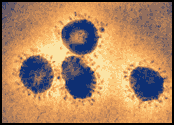 We cannot trust The Lancet to tell the truth about Covid-19, so long as Peter Daszak is leading the commission of enquiry on this subject.
 By
By It is people’s right to know how little we really know about these drugs. People should be informed that the story they have been told, implicitly or explicitly, about having an underlying chemical imbalance that drugs can correct is just that—a story—with very little evidence to back it up.
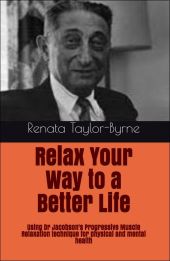 I have been interested in relaxation systems since 1986, when I used Ainsley Mears’ Passive Progressive Relaxation system to cope of with the stress of preparing for a surgical operation for which I had been scheduled – (a hysterectomy). I found his system helped enormously to calm me down, and also to cope with the post-surgical pain.
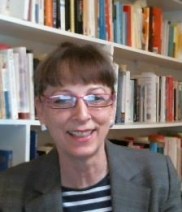 I then felt obliged to write a book about the amazing range of benefits of this system of de-tensing the body: based on my reading and my personal, daily experimentation. I wanted other people to benefit from using this easy to learn, re-energizing technique.
 This book is brief, easy to read and concisely summarises the priceless insights of Dr Edmund Jacobson, who researched the amazing health benefits of relaxation for over seventy years, at the Universities of Harvard and Chicago, in the US, in the early part of the last century. In 1936 he set up his own institute to research scientific relaxation.
 Lifestyle & Health Coach-Counsellor
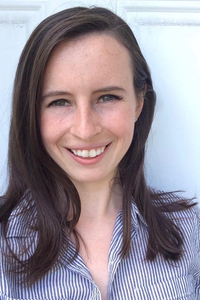 Lucy Johnstone addresses how limitations to models for psychological health and treatment have been spotlighted during the COVID-19 pandemic–which may not be a bad thing.
 ABC Bookstore Online UK