Sweet, soft relaxation, and a sense of peace

~~~

Blog post:

The build-up and dissipation of chronic stress and tension

By Renata Taylor-Byrne, Lifestyle Coach-Counsellor

12th May 2021

~~~

Introduction

The fact that most people are totally unaware of just how tense their body is does not in any way protect them from the negative effects of ongoing stress, strain and physical and mental tension.

There is a solution to this situation, and I want to share it with you.

Automatic bodily tensing responses

Rexatation Book

Because of the way our bodies have evolved and developed, if you’re faced with challenging situations or feel under attack in a scary situation, your body has an effective strategy for dealing with it. We become physically highly alert, attentive, focussed and ready to deal with the new situation. We get rid of other things on our minds and focus on this specific problem, fully concentrating!

Then when we’ve dealt with the challenge, we relax – panic over! Our bodies go from ‘full alert’ to a more relaxed response. Our nervous system changes from “fight or flight” mode, to the “rest and digest” part of our nervous system. We chill out, relax and move on to the next situation.

This is how we’ve developed, and evolved as human beings, and it works well when we have the time and space to recover from daily challenges. We finish work, go home and get a decent night’s sleep so we can wake up the following day with our batteries fully recharged.

The importance of switching off the fight-or-flight response

But – and this is a big but – if we don’t get enough quality recovery time in-between challenging situations – if there are fewer and fewer recovery spaces in-between mental and physical challenges, what happens is that there is a slow, unrelenting  build-up of tension in our bodies.

And this tension can cause quite a few problems: people can start to have difficulty getting to sleep at night, lying awake for hours, experiencing insomnia. Digestion problems can happen, the heart can be affected, panic attacks can occur, anxiety levels can increase. The immune system becomes weakened, making people more susceptible to infections and viruses. People can start to dread situations that in the past they would have had no problem handling.

Unless we realise what is happening – our bodies, specifically our nervous system, is protesting against tension overload – then our physical and mental health can suffer, and our peace of mind will be affected. People can be full of tension when they are lying on the beach.

How to manage your tension, stress and strain

How can you handle this stress build up in your body? You could take the route of experimenting with a less tense, more relaxed way of life and specifically learn ‘scientific relaxation’. Dr Edmund Jacobson, based in Chicago, spent 70 years of his professional life researching how tension affects the body. He created a relaxation technique called “progressive muscle relaxation”, where you practise for 10 to 15 minutes a day, to slowly teach yourself what tension in your muscles feels like.

You slowly learn to feel and notice the different ways that you can be tensing up your muscles, without realising. Then you learn to relax your body quickly. As a result, you develop a feeling of physical and mental control over your body. And the benefits to your body are: improved sleep, reduced anxiety, improved digestion, and phobias disappear. Insomnia is eliminated, and also it’s a great stress reducer for public performance, exams, and it strengthens the immune system and reduces the experience of pain.

The need for alcohol, or other stimulants, which are a short cut to relaxation (but which have a sleep–destroying price tag as well as the financial cost) aren’t needed in the same way. Once you know how to relax, the need for artificial relaxants is greatly reduced.

There are some amazing case studies of clients using and benefitting from this technique, and I describe them in my book: Relax Your Way to a Better Life: Using Dr Jacobson’s progressive muscle relaxation technique for physical and mental health”).

Problems with orthodox medical solutions

Or you could try a different approach, and try orthodox medicine. But bear in mind that this has its drawbacks: In The Times newspaper of Monday, March 29th (page 19) there was an article with the headline: “Alarm over growing use of drugs to treat insomnia and anxiety”. Apparently patients are being prescribed anti-psychotic drugs to cure insomnia, and these prescriptions have doubled from 1.6 million, to 3.5 million in the ten years up to 2018. Side effects? “Weight gain, intense sleepiness, increased risk of diabetes and blurred vision”. And if the drug is stopped incorrectly, the article states, it can “Induce severe symptoms, including psychotic episodes”.

Alternative and complementary medicine solutions are best

Rexatation BookLearning the skill of proper relaxation, as in Dr Jacobson’s progressive muscle relaxation technique, benefits the body enormously, and will enhance the quality of your life for many years. And the side effects? A greater sense of connection with your body, an increased confidence in your ability to calm , soothe and relax yourself after stressful experiences, and if you have children, they will greatly benefit from your lack of tension and enhanced well-being, without realising it: If you’re relaxed – they’ll be relaxed!

~~~

What did you think of this presentation?  Have you tried out the relaxation system described? Any feedback would be very helpful for readers of this blog post.

~~~

Best wishes,

Renata

Renata Taylor-Byrne, Lifestyle Coach-Counsellor

Author of, Relax Your Way to a Better Life!

~~~
Think better, think on paper

~~~

Think and grow rich, and wise, and healthy!

The process of thinking is a lost art…

Blog post by Jim Byrne, Doctor of Counselling, Hebden Bridge, West Yorkshire, UK.

9th May 2021

~~~

Introduction

We live in an era of information overload – “Big time”!

Most people have had their ability to concentrate and pay attention to the Vital Few goals they should be pursuing in life; and are constantly distracted into performing the Trivial Many. They end up doing what is “anxiety relieving” instead of “goal achieving”. (Constantly checking that mobile phone does nothing to improve your life circumstances!  Really! It doesn’t!)

Furthermore, most people will do anything to avoid the hard labour of thinking.

What is thinking?

Thinking has been defined in various ways by various experts, and the best approach to thinking is going to be this: Study the distilled essence of the best approaches.  That is what I offer to my clients: the distilled essence.

Critical thinking structures our attention around the concept of “creating an argument” as opposed to engaging in “emotionally arousing rhetoric”.

Edward de Bono’s approach is designed to help us to learn and use a range of “attention directors”; and a systematic way to collect information and make sense of it, using six different strategies.

John Chaffee’s approach teaches the eight keys of “the thinker’s way”; and these include: thinking critically and creatively; and using effective communication and problem solving strategies.

My approach involves an integration of Perceiving, Feeling and Thinking – linked to the search for the answer of these question: “How to live wisely”; and “How to write a new life for yourself”.

How I teach my system

I teach my approach to effective “perfinking” – or perceiving/ feeling/ thinking, through my counselling and coaching services; and through some of my books; especially the following two:

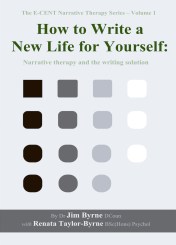
How to Write a New Life for Yourself, by Dr Jim Byrne

Kindle Cover WriteANewLife (2)Writing about your daily life, on a regular basis, is like acquiring a second brain.  Processing your daily experiences through reflective writing is one of the most effective ways of promoting personal and professional change and improvement in your life situation, at home and in work.
The author presents more than twenty of his most potent reflective-writing exercises; including those that have made the greatest improvements to his own life circumstances, especially health and happiness, problem solving, career and life management, and enjoyable relationships. Write down your vision and goals, and make them happen; or write out your past problems as a form of therapy; or develop your creative ideas. This book shows you how, in small, easy to follow steps. Anything you wish to achieve in your life is brought closer, more reliably, by writing it out using our writing strategies.

…Read more about Writing for Success and Happiness…

~~~

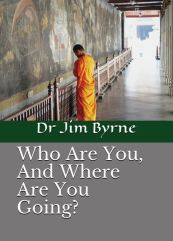
Who Are You, And Where Are You Going?

Transformative insights from psychology and the philosophy of psychotherapy

Front cover, Who are youBy Dr Jim Byrne, Doctor of Counselling

If I asked you, “Who are you?” my guess is that you would tell me your name.

But that is just an identification label attached to you, soon after birth, by your parents.  You are not your name!  How do I know? Because you are at least a physical body, and your physical body is not a name.

So then, you might try telling me your name (again) combined with your place of birth, your age, gender, and current marital status.  But that is not who you are, because many other people are the same gender as you, but they are not you. Many other people have your marital status, but they are not you. Many people are your age, but they are not you.

You might then tell me some of your accomplishments, and your work role.  But that is not who you are, because many other people have the same or similar accomplishments, but they are not you. And many other individuals do work which is similar to yours, or virtually identical to yours, but they are not you.

So there is a real problem for you, because you do not have a clue who you are. And therefore you cannot know what is possible for somebody like you. This book is designed to wake you up to who you could be, and how much more you could get out of your life.

For more information, please click this link: Self, identity and life direction.***

~~~

Please take a look at the information about those two books. I hope you find this interesting and helpful in moving you beyond the widespread state of directionless anxiety about an uncertain future.

Best wishes,

Jim

Dr Jim Byrne, Doctor of Counselling

ABC Coaching and Counselling Services

ABC Bookstore

The E-CENT Institute

Email: Dr Jim Byrne

~~~

Writing therapy and Covid-19 trauma recovery

~~~

Blog Post – 5th March 2021

By Renata Taylor-Byrne

~~~

Reading and writing can help us make sense of what happened to us all during the Covid-19 pandemic

And you can find peace again!

~~~

Copyright (c) Renata Taylor-Byrne, 2021

~~~

“Words are a form of action, capable of influencing change”.

Ingrid Bengis – (From page 10, The Artists Way, 1992)[1]

~~~

Health coach, Renata Taylor-ByrneBecause of the challenges, disruption, and appalling deaths and destabilising changes which have taken place since the onset of the world-wide Covid-19 health crisis, inevitably many people have lost sight of who they are and where they are going in life. And they don’t know what the future holds for them.
An invaluable way of finding yourself again – and starting to come to terms with where you are, and what the way forward is for you in your life – is to  use a method which has been tried and tested by many people. We are big fans of this process.

In short, you start writing about what is happening to you in your life, and what you have experienced; and begin the process of mentally digesting past events, and coming to terms with the new, very different world you are now living in.

Six months ago, this process would have been premature.  Even nine months ago it would not have been advisable.  (Early processing of traumatic memories simply acts to re-traumatize you!) But now, more than one year since the first Covid-19 deaths in the west, it is time to begin digesting the awful traumatic shock of this terrible disease.

“You need to claim the events of your life to make yourself yours”.

Anne-Wilson Schaef

~~~

By writing for a few minutes, every morning, about the stressful time you have come through, you can begin to fully acknowledge the confusion, pain, loss, and anxiety you have been going through.

You can begin to extract any valuable insights you have learned about life, other people and yourself, and slowly start finding and feeling your way into a future which makes sense to them.

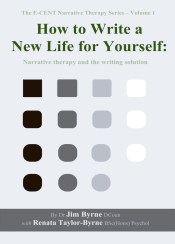
Kindle Cover WriteANewLife (2)This very simple but highly therapeutic process is described in our book titled: “How to write a new life for yourself”, (by Dr Jim Byrne with Renata Taylor-Byrne).

The benefits are very real:

For example, Philippa Perry (2012) describes a research study where the people taking part were split up into 2 groups. One half of the group wrote in their diary every day, and the other half didn’t. The results were as follows:

“Diarists reported better moods and fewer moments of distress than non-diarists. Those in the same study, who kept a journal following trauma or bereavement, also reported fewer flashbacks, nightmares and unexpected difficult memories”.[2]

She also describes diarists as less likely to be admitted to hospital, with improved liver, blood pressure, and a stronger immune system. (And keeping your immune system strong is now recognized as the main way you can protect yourself from Covid-19, and other major diseases!)

For more insights into the benefits derived from diary writing, or keeping a journal, please look at “How to write a new life for yourself” (by Dr Jim Byrne with Renata Taylor-Byrne).

The-Artists-WayIn her work on therapeutic writing, Julia Cameron (1992) uses several metaphors and similes to try to communicate what her readers and students can gain from using her system of therapeutic writing.

The one I like the most is this:

“Writing in your journal, about the trials and tribulations of your life, is like building a bridge into a better future for you!”

And that is what we set out to do in our book: To provide you with a roadmap which will support you in building a bridge into a better future for yourself.

We used a more gradual approach than Julia Cameron.  This approach helps you to begin with small steps; in an easy, simple way; and to slowly build up your ‘writing muscles’.

In the process, you will develop a great capacity to manage your thinking-feeling-perceiving more effectively; calmly; in a more self-regulated fashion.  You will become more intuitive; more creative; and a more efficient and effective problem-solver.  You will be less troubled by stress and strain, and more likely to succeed in achieving whatever goals you want to pursue!

And, perhaps most importantly, you will figure out how to process the traumatic events of this terrible year of Covid-19 challenges and anxieties.

~~~

Health coach, Renata Taylor-ByrneThat’s all for now.

Best wishes,

Renata

Renata Taylor-Byrne

Lifestyle & Health Coach-Counsellor

cropped-abc-bookstore-maximal-charles-2019-1.jpgABC Coaching and Counselling Services

ABC Bookstore Online UK

The Institute for E-CENT (Research and publishing)

~~~

Endnotes

[1] Cameron, J. (1992) The Artist’s Way: A spiritual path to higher creativity. London: Souvenir Books.

[2] Perry, P. (2012) How to Stay Sane.  London: Macmillan.

Books about emotional intelligence and trauma recovery

~~~

Blog Post No.1 – 27th February 2021

Books about Emotional Intelligence and Trauma Recovery

By Dr Jim Byrne

Copyright (c) Jim Byrne, 2021

~~~

Preamble about the Polyvagal Theory

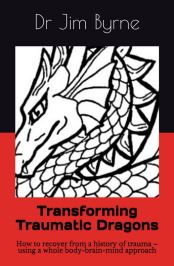
Front cover 2, Dragons Trauma book June 2020I have now resumed my work on my main Trauma Book – (Transforming Traumatic Dragons: How to recover from a history of trauma – using a whole body-brain-mind approach); and yesterday I wrote the intro to one of my appendices for that book.  Here is an extract from that appendix:

Appendix L: Some insights into the Polyvagal Theory of Dr Stephen Porges

By Jim Byrne, Updated 26th February 2021

~~~

Introduction

In this appendix, I want to introduce a brief set of insights into the Polyvagal theory, which is central to Dr Bessel van der Kolk’s approach to Developmental Trauma Therapy[1]. The Polyvagal theory and Dr Van der Kolk’s approach to trauma have both influenced my own system of Interoceptive Processing of Intense Traumas.

The Polyvagal theory explains the ways in which the vagus nerve participates in the calming of bodily arousal, and also in face to face interpersonal communication as a form of affect (or emotion) regulation.

The bottom line of the Polyvagal system can be summarized like this: The autonomic nervous system has three levels of hierarchy:

– 1. Social engagement and connection, which regulates our levels of arousal to produce a sense of safety and protection. This operates through the ventral vagal complex (VVC), which regulates facial communication and tone of voice, heart rate, breathing, etc., (and which is highly developed in humans).

– 2. Nervous arousal (as in fight or flight), which is a survival-enhancing response to signs of threat or danger. This level is controlled by the limbic system, including the amygdala and hippocampus, and the hormonal system. (This system is found in all mammals, including humans).

– 3. Immobilization, or freeze/faint/closedown. This is also a survival-enhancing response of signs of extreme threat or danger, where the fight or flight response is not able to help. It is controlled by the dorsal vagal complex (DVC) which links to the heart and lungs, and also to the guts), The DVC is rooted in the reptilian brain (or brain stem, in humans).

The signals which trigger us into one or other of the three states described (in para 1, 2 and 3) above are not noticed consciously.  Rather, they are sensed through a process which Stephen Porges labelled as ‘neuroception’, which means “detection without awareness”. (See Dana 2018)[2].

Level 1 of this system – (social engagement and connection) – facilitates a process of co-regulation of emotions, whereby, when I encounter you, I help to set the level of arousal of your autonomic nervous system (by seeming to be, or seeming not to be, trustworthy [and encouraging you to feel safe or unsafe with me]). And you regulate the level of my autonomic nervous system by the way your nonverbal signals, of face and voice, strike me: (Do you seem safe and trustworthy, or not?!)

Front cover 2, Dragons Trauma book June 2020But let us back up a little.

Let us begin with the human brain as a whole, and its many connections to parts of the body. …”

…End of extract.

For more, please click this link: Transforming Traumatic Dragons: How to recover from a history of trauma – using a whole body-brain-mind approach***

~~~

A new book on Emotional Intelligence

Emotional intelligence book temp coverI had become distracted from working on the trauma book (above) – which I am co-authoring with Renata Taylor-Byrne – because I wanted to begin work on my new book on Emotional Intelligence.  Here’s an extract from the Introduction to that new book:
Introduction

The first and most important aspect of emotional intelligence is self-understanding.  To “know thyself” is an important goal; and to examine the kind of life you are leading – and the kind of like you really want – that it just as important.

Let me begin, here in this Introduction, to clarify some of the insights I’ve had over the years about the nature of a human individual, and how we are ‘wired up’.

Firstly, if you want to understand yourself fully, it would help if you knew how stressed your mother was when you were in her womb, because that is where the basic wiring of your brain began to be laid down.

But more importantly than that, it would help if you knew how securely attached your mother had been to her own mother when she was a baby, because she is most likely to have passed on to you the same kind of (secure or insecure) attachment style that she got from her mother.

The first five or six years of your life would have laid down some fundamentals of your personality, including the creation (in your own mind) of a life script, encouraged by your parents, siblings, neighbours, teachers, other relatives, etc.  And that life script tells you (from subconscious levels of mind) what is going to happen to someone like you, as you progress through your life.  (Don’t worry. You can rewrite this script, and I will show you how in Appendix A of this book).

Emotional intelligence book temp coverWhen you were born, you were essentially a little body, with a set of basic emotions (or ‘affects’), mostly a capacity to perceive and evaluate pleasure and pain; ‘good’ and ‘bad’ sensations.  Those innate affects or simple emotions are then socialized into a set of ‘higher cognitive emotions’ by your daily encounters with your mother (or main carer), you father (in most cases), your other relatives, peers (as you begin to move around and begin to go to kindergarten or pre-school, etc.)  From the beginning…”

…End of extract.

For more, please click this link: How to Improve Your Emotional Intelligence***

~~~

Dr-Jim-Byrne8 (2)So now I have resumed working on the Transforming Dragons book, and hope to have it on sale by Easter.

Watch this space.

That’s all for now.

Best wishes,

Jim

Jim Byrne, Doctor of Counselling

ABC Bookstore Online

ABC Coaching and Counselling Services

Dr Jim’s Counselling and Psychotherapy Division

The Institute for E-CENT

Email: Dr Jim’s Counselling Division

Telephone: 44 1422 843 629

~~~

[1] Van der Kolk, B. A. (2015). The Body Keeps the Score: Brain, mind, and body in the healing of trauma. New York: Viking.

[2] Dana, D. (2018) The Polyvagal Theory in Therapy: Engaging the Rhythm of Regulation. London: W. W. Norton & Company

~~~

Books about trauma recovery

~~~

Blog Post 2 – 25th February 2021

How to process traumatic experiences from your past

Author: Jim Byrne

Copyright (c) 2021

~~~

Hi,

Front cover 2, Dragons Trauma book June 2020Traumatic experiences are those which cannot easily be processed by the person to whom they occur.  Most people are probably somewhat traumatized (or greatly traumatized) by their childhood experiences.  One estimate – by Dr Felitti, in Dr van der Kolk’s book (The Body Keeps the Score) suggests that about 87% of Americans are somewhat traumatized by their Adverse Childhood Experiences!

In E-CENT counselling, we teach our clients to (slowly and gradually!) face up to their traumatic memories, which they have often been running away from; sometimes for decades.  Because it is only by facing up to the traumatic experiences from our past – (slowly and gradually) – that we can reframe them, complete them, and allow them to shrink and fade:

“Shadows of the past sometimes contaminate the present and narrow down the future for all of us”, writes Muriel Shiffman.  “The purpose of my self-therapy technique is to confront the past and put it in its place.  Only then are we released to live the present more fully and grow into a richer future, able to use more of our true potential.” Because she was depressed, Muriel Shiffman “…began to use myself as a guinea pig in a fumbling attempt at self-therapy.  …  (Over time) I stumbled on the key to self-therapy: I learned to feel painful emotions I had been avoiding all my life. I explored attitudes and relationships that forced me to feel rage and grief and anxiety, and I did a great deal of crying.  For two long years I unearthed a hidden part of my life, and suffered and then it suddenly dawned on me that my old, recurrent depression was gone.  Somewhere along the way I had lost it, and it has never come back”.

Muriel Shiffman, Self-Therapy: Techniques for personal growth.

~~~

Kindle Cover WriteANewLife (2)I have used writing therapy to heal my own childhood traumas, which has taken a number of years (on and off).  I first wrote some articles and papers, and then combined them into a fictionalized autobiographical story – (Metal Dog – Long Road Home***) – plus a book about HOW TO complete your own traumatic experiences***, and one which describes the first two stories that I used therapeutically to heal my own heart and mind.
If you want to explore the skills of Writing Therapy, you could also look at my book: How to Write a New Life for Yourself.***

~~~

I hope you find this information helpful.

Best wishes,

Jim

Dr-Jim-Byrne8 (2)Dr Jim Byrne

Doctor of Counselling,

ABC Bookstore Online

ABC Coaching and Counselling Services

Email: Dr Jim.***

Or Telephone: 01422 843 629 (from inside the UK)

Or 44 1422 843 629 (from outside the UK)