
Lovingkindness versus Loveless Attachment

Blog Post – ABC Bookstore

Understanding Love and Attachment in Relationships

By Jim Byrne, Doctor of Counselling

~~~

Posted on 23rd November 2025

~~~

Introduction

When we think about love in relationships, most people tend to approach it with a rather naïve, childlike, and sometimes selfish mindset. In my experience as a couples therapist, I’ve often encountered the belief that love is all about “getting it” rather than “creating it”. But in reality, the most reliable way to receive love is by genuinely giving it first. It’s a principle as old as time: what goes around comes around.

The real challenge is that many individuals haven’t yet discovered the wellspring of love within themselves. All too often, what initially draws someone to a partner isn’t love at all, but need. There’s a yearning for connection, a longing for attachment to a “love object” – reminiscent of the bond formed with a mother in early childhood.

Attachment is a fundamental drive. In newborns, it’s an instinct geared towards survival. For new mothers, attachment is both innate and learned, shaped by their own upbringing and cultural influences. When we enter adult relationships, our attachment styles – be they secure or insecure – often mirror those we developed as children, particularly in relation to our mothers, and later, our fathers.

When love and attachment work hand in hand, they create a strong bond that holds couples together. However, if love fades but attachment lingers, that bond can trap partners in cycles of hurt and unhappiness. It’s crucial to learn the difference between loveless attachment – which can be toxic and should ideally be ended amicably – and loving attachment, which is truly life-affirming.

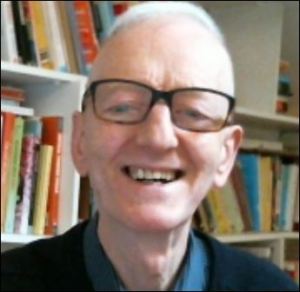
Happy faces of Jim and Renata
Jim And Renata built a wonderful life by studying self-help and personal development books!

Loveless attachment often leads individuals to treat their partner as a possession, rather than a companion. It can also give rise to controlling behaviours and, in some cases, domestic violence. Recognising and addressing the difference between healthy, loving attachment and destructive, loveless attachment is essential to fostering happier, healthier relationships.

What do you think of these ideas?

Has this blog post sparked off any insights in you?

Please share your thoughts.

Dr Jim Byrne, Executive DirectorBest wishes, and take good care of yourself!

Jim

Dr Jim Byrne

Doctor of Counselling

And author and publisher of this book:

How To Build Your Own Love Island - The front cover
Now you can get the love you want!

How to Build Your Own “Love Island”

An easy to follow blueprint, plus seventeen illuminating case studies from the Couples Therapy Room

Read the full book description online.***

~~~

Read the Preface here.***

~~~

Read the Introduction here.***

~~~

Featured

Are you following the wrong teachings?

~~~

Blog Post: 5th May 2024

If you follow the wrong teaching, you will get lost for sure!

A parable by Jim Byrne, Doctor of Counselling and author of self-help books

~~~

If you have ever felt disappointed or let down by a self-help book, this blog post should help you to understand what went wrong.

Harry, Larry, Gary and Keith built their own life scripts

(or maps of the psycho-social world)

three men standing near window
Photo by Kobe – on Pexels.com

Harry, Larry, Gary and Keith were all born in the same town in England, within days of each other.

They went to adjacent schools. Two of them went on to university, and two went down vocational routes via college and internships.

They all sought love, on the basis of what they had seen going on between their parents, as they were growing up.

And they sought wisdom from different gurus, mostly in the form of self-help books.

Book messages reflect their authors’ lives!

person carrying a stack of books
Photo by Karolina Grabowska on Pexels.com

Harry studied ‘The Road Less Travelled’, and ended up living all alone in the woods, wondering why his love relationships had never worked out.

~~~

Larry studied ‘On Becoming a Person’, and ended up in an unhappy marriage, with a strong desire to have sex with younger women; which he felt obliged to share with his wife (who was dying of cancer)!

It didn’t end well for Larry!

~~~

Gary studied ‘A New Guide to Rational Living’, and failed to find love in a stable relationship, and ended his life being kicked out of the boardroom of the company he had founded.

~~~

Front cover Sept 2023Keith read all kinds of different self-help books – including ‘Lifestyle Counselling and Coaching for the Whole Person’,

and

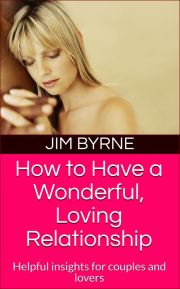
‘How to Have a Wonderful, Loving Relationship: Helpful insights for couples and lovers’.

After a couple of false starts, Keith fell in love with Poppy, and they set up their own bookshop, to sell self-help books; because Poppy had also found her way to him via her self-help reading history.Kindle cover, How to Love

The moral of this story is simple: Make sure you know the kind of guru – or teachings – you are following, or you could end up in a worse place than the one you started from!

~~~

Postscript: The little red book of life guidelines…

~~~

By Jim Byrne, Doctor of Counselling, and author of self-help books

~~~

Blog post about life guidelines, May 2024Is there one book that could solve all of your problems, for the whole of your life?
Probably not!

If I had one day left to live, and I wanted to write the nearest thing to “the one book” that would solve all your problems, this is what I would write:

  1. Start by taking responsibility for your life – all of it. Not in the sense of having caused all of your own problems. But certainly in this sense: Nobody is coming on a cuffing white charger to rescue you. If you are going to be “saved” you will have to make the plan yourself, and implement it yourself. Any anger you have been struggling with, against the world and the people who raised you, and the people who surround you, will evaporate.
  2. Be grateful for small mercies. Make a list, every morning and every evening of the things you can be grateful for. If you do this every day, any depression that has been affecting you will disappear!
    Kindle Cover WriteANewLife (2)
  3. Get out and walk for half and hour each day, preferably near trees or water, or both. Get out earlier rather than later, to get the maximum exposure to sunlight. And get a little trampoline, which you can easily accommodate in your home, and bounce on it for at least five or ten minutes every day. Any anxiety you are prone to suffer from will simply fall out of your life.
  4. Learn to smile at the problems of life. Write down your problems. Ask yourself: About these problems, which can I control, and which is beyond my control. Learn to take action about those things you can control, and to let go of those things which are beyond your control. And then learn to relax your body, using passive progressive relaxation, or progressive muscle relaxation. Your happiness level will soar.Front cover, Sleep Book 2022
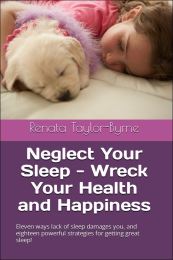
  5. Get at least eight or nine hours sleep every night, and, if at all possible, have a 90-minute siesta every afternoon. (If you are desk bound, get your head down on your arms for at least 15 minutes every afternoon). You will begin to remember what it felt like to be a carefree child.
  6. Avoid all forms of junk food; eat whole foods; at least 50% organic (depending upon your income level). Drink three glasses of water and/or decaf tea and/or fruit juice with each meal. (One before, one with, and one after). Choose a time of day when you can spend extra time in the kitchen, drinking three or four extra glasses or mugs of water. (Always add a little boiling water to your cold-water drinks, to stop very cold water getting to your stomach!)Rexatation Book
  7. Take a range of nutritional supplements, including: A multivitamin and mineral; a B-Complex; two or three grams of Vitamin-C; plus vitamin D3, E, and cod liver oil; and ACV and turmeric. Your health and vitality will soar.
  8. Get into the habit of keeping a reflective journal…
  9. Learn how to meditate…
  10. Study communication skills, and maintain good relationships with a few good friends; one good lover; and any offspring you may have.
  11. Stop reading, or listening to, the news. It’s bad for your health and happiness.

  1. And come and see me, for the bits I have omitted, before I die and take all my wisdom with me!

Counselling in Hebden Bridge, Doctor of Counselling 2~~~

Best wishes,

Jim

Dr Jim Byrne, Doctor of Counselling, and self-help author

PS: See a list of my books (published by me, or co-authored with Renata Taylor-Byrne, my wonderful wife and best friend!)

~~~

Your childhood shaped today and tomorrow

~~~

Blog post – 29th January 2023

By Jim Byrne, Doctor of Counselling

~~~

The unexamined life versus the frank autobiography

How to change your future by changing your past

Copyright (c) Jim Byrne, 2023

~~~

Sex-love and gender wars1B, Front cover Sex-love book – I don’t suppose anybody knows for sure what Plato meant by his slogan: “The unexamined life is not worth living”.

But, in the modern world, the unexamined life equates to “not doing your therapy”.

How do I mean that?

Everybody is harmed to some extent in their family of origin; some more than others; but nobody escapes completely. And what most people do with their childhood harm is to cover it over with a layer of something sweet and superficially nice; a socially distorted PR job. A false self.

Mostly, people do this because doing one’s therapy hurts. It hurts like having a tooth out; and the costs and benefits are similar. If you have a decayed tooth out, it will hurt, having the injection; having the extraction; and when the anaesthetic wears off, the wound will hurt for a day or two. Blood clots may become visible on the tongue, and so on.

However, if you do not have the tooth out, it rots in your gum, and causes worse pain later on, including the possibility of brain damage, because of the proximity of the infection to the brain.

  1. The unexamined life; the downside…

Kindle coverThe unexamined life is just like that rotting tooth left in the gum. It rots away, causing low level problems for a long time, before it flares up into a much worse problem. Better to have it out (or filled) as soon as the problem becomes visible for the first time; and better to get into therapy as soon as you spot that something horrible happened to you in childhood, which you have never explored or digested.

  1. The frank autobiography, and the problem of getting hold of repressed memories…

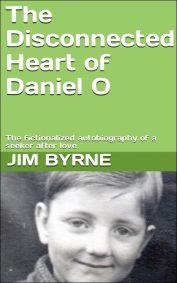
You can do your therapy on your childhood in a face-to-face encounter with a helpful psychotherapist or counsellor; or you can do it yourself in a journal or notebook. If you decide to write it out, you can do it as autobiography; fictionalized autobiography; drama; poetry; or letters to your childhood carers which you never send. I did some of my therapy on my horrible childhood in the form of psychoanalysis, but I have also written a lot of it out in the form of fictionalized autobiography of my alter ego: Daniel O’Beeve.***

  1. Hack writing versus principled writing…

If you decide to write your autobiography, and to publish it, then up comes defence mechanisms. Will people dislike me for this? Will I look good or bad? How can I sanitize my public appearance? How can I distort the story in order to look like a hero instead of a victim of circumstances?

Considerations of those kinds can lead you to abandon principled writing, and to substitute hack writing. Hack writers get well paid for producing rubbish and garbage and pulp fiction. They add nothing to the world, except more junk. Principled writers add some value to the human condition. They liberate or ennoble or rescue; or encourage the growth of hope, compassion, charity, love. They strive to contribute to the creation of a better world, by exposing the underbelly of our current forms of life.

  1. The determination to keep going…

Road to better lifeHack writers are beloved of the publishing industry. Principled writers are unpopular with vested interests. They are a nuisance to the forces of political expediency. They undermine the evil side of human nature.
  1. The courage to face the unadorned truth…

And principled writing, including writing autobiography or fictionalized autobiography about a difficult childhood takes a lot of courage. Fortitude. To look ugliness and pain in the face is not an easy task.

  1. The importance of leavening of the text…

But principled writers do not unnecessarily strain or drain their readers. They strive to sustain the flame of hope in the darkest caves that they explore. The work with the principle of leavening their texts. Of finding the moments of humour among the images of pain and suffering.

And the therapy of principled writing heals. Old wounds dry out, and begin to heal; leaving small but almost invisible scars as medals of honour. And the writer is stronger in the broken parts that have been honoured in their texts.

This is what I strove to do in *Daniel’s Disconnected Heart*.

~~~

And that is what I am now working on in

*The Sex-Love Question and the Gender Wars*.

~~~

Daniel for cover - 001Whatever wounds you have, hidden in your childhood history, I do hope you will try to dress them; process them; and heal them. And one way to do that is to practice principled writing about them, whether as private autobiographical writing, or published fictionalized autobiography.

“The unexamined life is not worth living”.

And travelling incognito is not nearly as exciting and enjoyable as telling the world who you are, and where you have been!

With my very best wishes for your happiness and healing.

Jim

Jim Byrne, Doctor of Counselling

~~~

Childhood developmental trauma recovery

Blog post – 17th November 2022

How I recovered from childhood developmental trauma disorder, and found myself in an expected paradise…

By Jim Byrne, Doctor of Counselling

~~~

Hello, and Welcome.

Kindle coverOur mothers have the most dramatic effect upon our psychical and mental health, and upon our life chanced. So choose your mother carefully!

I have recently written a new version of the first forty years of my life, to explore the journey I had to go on in order to fix the damage that was caused to me in the first two years of life by my incompetent, very young, damaged mother.

In reviewing my life, I thought this was a most important principle:

“Life is a process of becoming, a combination of states we have to go through. Where people fail is that they wish to elect a state and remain in it. This is a kind of death.”

Anais Nin, in her book: ‘D. H. Lawrence: An Unprofessional Study’. 1964/1994.

So I explored the various states that I went through; sometimes using factual autobiography, sometimes using fictionalized autobiography, and sometimes using the stories of archetypal characters from my dreams and reveries.

This is how the publisher’s Foreword begins:

“When a child walks away from an abusive parent – when they are old enough to leave – they unknowingly, and unwillingly, carry that abusive parent in their heart and mind. And most often they head off into a life in which they repeat the same kind of abusive relationship with a “love partner”.

When the physical bruises of abusive parenting heal, the psychological scars remain intact, hidden in the subconscious mind of the abused child. And also stored in the physical tensions of body-memory.

Jim Byrne thought he’d walked away. Left it all behind. Sailed into a new life, at the age of eighteen years. But his physically and emotionally abusive childhood relationship with his mother (and his father) came back to haunt him at the age of twenty-two years.

At that point, his life imploded. He’d been over-consuming (“abusing”) sleeping pills for a few weeks, following total rejection by his peer group on a barren military squadron of damaged young men.

Eventually an ambulance came and got him; took him to hospital; where he saw a psychoanalyst for weekly meetings. After three meetings, the analyst told him that he (Jim) needed to examine his relationship with his mother.”

For more, please click this link! The story of Jim’s journey through uncharted territory in search of love!

~~~

Dr Jim's officeBest wishes,

Jim

Dr Jim Byrne

Doctor of Counselling, and survivor of childhood developmental trauma disorder.

~~~

To see this book online, at an Amazon outlet near you, please click one of the following links. (There may be a couple of days’ delay in appearing on some Amazon outlets).

Amazon.com, US+   Amazon UK + Ireland  
       
Amazon Spain   Amazon Italy  
       
Amazon Germany   Amazon Netherlands  
       
Amazon Japan   Amazon Brazil  
       
Amazon Canada   Amazon Mexico  
       
Amazon Australia   Amazon India  
       
Buying from Singapore   Flycrates  
       

~~~

Authorship as a surging current of emotional energy

Blog Post: Sunday 18th September 2022

By Jim Byrne

~~~

Title: The floodgates and the writer’s surging tide…

Jim-portrait-001Writers are people who write.

I write something every day, normally quite a lot.

But these days, it is mostly not fiction; not writing for pleasure.

Mostly I write psychoanalytic reports for my counselling clients. Analysing the real life dramas of people in pain.

Or I write and update web pages about my professional services.

And over the past period of busy report writing, from mid-December 2021, up to yesterday, I have longed to write something fictional; something from my heart; about my interior emotional life.

Then yesterday, when I finished writing a long report for a client, the floodgates burst open, and out came a story that has been fermenting in the basement of my mind for a few days.

This is how it begins:

Blue Boy Karma

By Jim Byrne

September 17th 2022

Copyright © Jim Byrne, 2022

~~~

Blue boy pictureVasha Popov screwed his little face up, like a well-squeezed dishcloth. He stared into the big, mottled mirror, looking for the echo of his facial contortions. And there it was. This was him. This blue face, with the sad calf eyes and the downturned mouth. And there in the apparent ugliness of his blue face was the evidence, it seemed, of why Mamu did not let him touch her, or speak to her, or get close to her.

His blue hair did not help, regimented as it was by Mamu’s daily brushing with her harsh scrubbing brush, with which she would whack him if he did not stand still while she vigorously brushed out the tangles.

When he relaxed his little blue face, it did not seem quite so ugly, but the dark blue hair and the mid-blue skin were an unbecoming combination.

~~~

To read more, please go here: Blue Boy Karma, Therapeutic fictional writing.***

~~~

Of course, this story had its origins and development: like my wife’s flowers outside the front of our home. She had to acquire the soil; buy the seeds and plants; do the planting and watering and feeding. And to lovingly watch over her emerging leaves and flowers.

Similarly, I take certain actions each day, and some on a less frequent basis – such as three days per week – to build up the literary flowers that I want to grow.

Recently I have increased the number of strategies and techniques that I use to produce fictional writing; and it has born leaves and flowers, yesterday, and today, in the form of the short story above.

And one of the things I like to do with my experience of writing is to use it to help emerging authors to increase their creativity and productivity. I do this through my authorship coaching services. For more on my Authorship Coaching service, please go here: Authorship and creative writing coaching.***

~~~

If you are a writer, I wish you a productive, creative, satisfying day. If you wish to become a productive, creative writer, then you must study the art and science of your subject.

The rewards are rich indeed!

Best wishes,

Dr Jim's officeJim

Jim Byrne, Doctor of Counselling, and Writing Coach

ABC Bookstore;

and ABC Counselling and Psychotherapy Services.

~~~