
~~~
ABC Bookstore Blog Post
2nd July 2020 (Updated on 6th August 2021)
~~~
The circle of life, and the value of stories: The silent witness of early childhood trauma
By Jim Byrne, Doctor of Counselling: Copyright (c) Jim Byrne 2020
~~~
Introduction
 I believe that each of us is a silent witness of our early childhood experiences. We do not know what happened to us unless and until somebody helps us to make a story or stories out of our raw experiences.
You may have noticed this phenomenon: Sometimes in a cop show, or murder mystery, on TV, there’s a witness who knows something which is relevant to solving the crime or mystery. But this witness is unaware that they have witnessed something which is very important, which could be helpful in solving the case.
I believe each of us is like that witness. Let me explain:
Recently I’ve been reading three books that deal with complex, post-traumatic stress disorder:
Bessel van der Kolk’s The Body Keeps the Score.
Judith Herman’s Trauma and Recovery.
And Pete Walker’s Complex PTSD: From surviving to thriving.
One of the things that struck me about all three books is that each of the authors have to tell a personal story to illustrate the journey that got them to study trauma. There is nothing impersonal about their expertise; and their personal stories underpin their professional practices.
Many years ago, I had a set of serendipitous experiences which unearthed some strange stories from my own ‘internal silent witness’. The first happened in Bangladesh in 1977. Up to that point, nobody had ever expressed any curiosity about my life. And I had – consequently – no story about life, which I could know and share with the world.
 I met Carla in Bangladesh, and she was intensely curious about my life, and especially my childhood. I told her some bits and pieces from the very edges of my conscious awareness, and she was appalled at how painful my childhood had been – how physically and emotionally I’d been abused. I was amazed at the emotions that came up them: the painful memories that welled back. What I had taken to be ‘normal life’ turned out to be quite brutally unusual – or at least not how children should be raised, by parents who love their children, and want them to be happy.
Two years later, back in the UK, I met Renata (my wonderful wife of 34 years), and she was studying various disciplines, including Gestalt therapy. As a result, she was able to help me to explore my childhood some more. Out of my conversations with Renata, I got a lot of little stories about my weird childhood: some funny; some saddening; and some angering.
 Over time, two major stories emerged: My Story of Origins (as a country boy in a city school, who failed to make a single friend in ten years of schooling). And My Story of Relationship (especially my insecure attachment to my cruel mother). Both of these stories now appear in a forthcoming book, which you can read about here: Recovery from Childhood Trauma: How I healed my heart and mind – and how you can heal yourself.
Later, I expanded those two stories to include a good deal of my journey from birth to eventual relationship happiness:
Fictionalized autobiography of an Irish Catholic boy: The autobiography of a traumatized child.
Title: Metal Dog – Long Road Home
By Jim Byrne (writing through his alter ego, Daniel O’Beeve)
~~~

In 1968, at the age of 22 years, I went inside (the fish and chip shop in Blackpool), blinking the rain out of my eyes, and immediately recognized the leopard-skin coat and black fishnet tights on the raven-haired customer in front of me at the counter. She lived in the house next to the one in which I was lodging. I’d seen her come and go a few times as I sat at the table in the bay window, eating my breakfast or my evening meal.
She had the appearance of an actress or model. Tall, elegant, heavily made-up, and she walked with a wiggle, in extremely high, black, patent leather stiletto heels. As I stood behind her on the queue, she ordered cod and chips. Then I ordered the same. She turned to look at me and said, “Horrible weather!”
I agreed.
Her fish and chips were wrapped within seconds; she paid; and she headed for the door.
My fish and chips were wrapped next, and I followed suit.
I did not expect her to be waiting at the exit to speak to me…
For more information, please click this link: Fictionalized autobiography – Metal Dog, Long Road back to near normality.***.
And, at the moment, I am rewriting another of my books, which is designed as a self-help guide for individuals who want to work on their childhood trauma. You can read some information about that book here: Transforming Traumatic Dragons: How to recover from a history of trauma – using a whole body-brain-mind approach
~~~
And then there is my new book about how to heal your own childhood trauma:
Transforming Traumatic Dragons:
How to recover from a history of trauma – using a whole body-brain-mind approach
By Jim Byrne, Doctor of Counselling
 Over a period of more than 22 years of professional practice, Dr Jim Byrne has developed and refined a DIY (self-help) approach to resolving your own childhood trauma. This book will help you to understand what childhood developmental trauma is; how it relates to insecure attachment and dysfunction of the right brain; and how to work on childhood trauma using a whole body, brain, mind approach. This book outlines three major therapeutic processes, at three graded levels of emotional disturbance (from mild to intense), which you can progressively (and slowly and gradually) work through, in the form of journal writing, and related processes of body-awareness, body activity, sleep, diet and exercise solutions, and deep relaxation.
Dragons are fearsome, mythical animals which terrify those who contemplate them. Childhood developmental trauma is like a dragon in the basement of your mind, which constantly frightens you (from below the level of your conscious awareness, so that it feels like the terror is here, and now; but it’s not!).
This self-help book explains that you would be able to damp down this fright and panic, if you’d had the right kind of attachment experience with your mother in the first couple of years of your life! And this book teaches you how to get your trauma under control today, despite the lack of an attuned and attentive mother!
For more information, please click this link: Childhood developmental trauma: Facing and defeating dragons.***
~~~
Without the curiosity of Carla and Renata, all of my unknown stories would still be festering inside of my neurotic, subconscious mind-brain-body; instead of having been externalized, ventilated, and healed.
What kinds of stories does your Silent Witness have in raw, gut-feeling form, which could benefit from being written up, or talked out?
What happened to you that needs to be aired and witnessed by a caring other?
~~~
 That’s all for today.
Best wishes,
Jim
Dr Jim Byrne, Doctor of Counselling, Authorship Coach and Trauma Therapist
~~~
 Early childhood trauma (like physical and emotional abuse, and neglect), and other forms of prolonged trauma (like domestic abuse), affect the very structure of the human brain, and the behaviour of stress hormones in the body. This insight is expressed by Dr Daniel Siegel as follows:
 That’s all for now.
 It has often been said that it’s easier to “talk the talk” than it is to “walk the walk”. This American expression refers to the frequent gulf between our words and our actions.
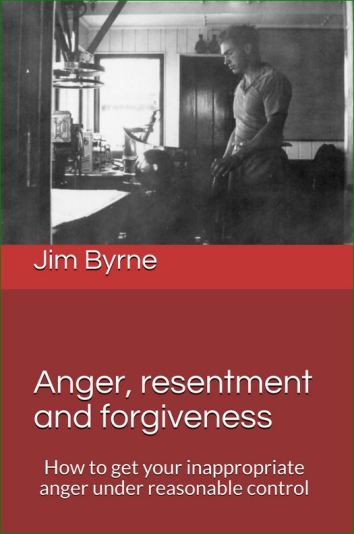 Learning to walk this talk is a function of Anger Management Training; and our book on that subject is a good resource for calming yourself, reducing resentment, and learning how to forgive others, instead of becoming excessively angry with them.
 I like to think of myself as a calm, reasonable and rational individual with high emotional intelligence. I think I am gentle and kind, and well able to manage my emotions to keep them within reasonable bounds; not too high, and not too low.
 The next thing that happened was that I felt very shocked that I used the ‘C’ word. I was shocked that I was so angry. (I am an anger management specialist! [Or that is one of my specialisms]). (Postscript: Upon reading this back, I notice that I did not judge the woman to be culpable, even though she was in the leading position! Interesting!)
 I have tended to damn anyone who breaks the rules, in relation to keeping their distance from me and/or my wife; and that makes me angry at them. And resentful: which is like taking poison, and waiting for them to die! This harms my body and lowers my mood for a protracted period of time. Meanwhile, the person at whom I am angry may be having a ball, oblivious to the effect they have had on me. So the ultimate harm is all done to me, by me.
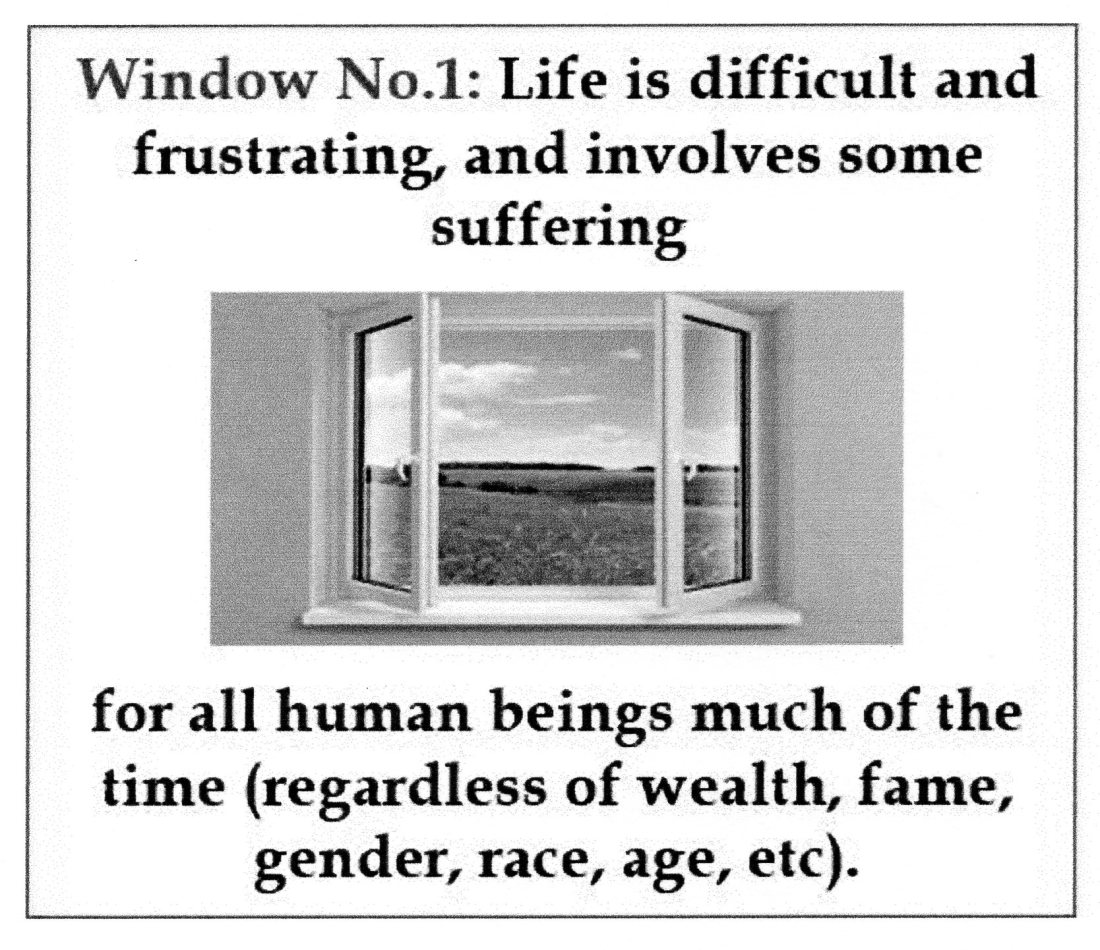 So: “In life, there are certain things I can control, and certain things that are beyond my control”. And a good way to get upset and stay upset is to try to control the uncontrollable! (Of course, if something [which is important to me] is potentially controllable, I should try, within reason, to control it!)
 That aggressive behaviour on my part was uncharacteristic, but then I am very new to being involved in a death-inducing viral pandemic. (And I am over the age of 70 years, and I’ve been sent a powerful ‘nocebo’ [or negative self-fulfilling prophesy] by the state to the effect that my age puts me, automatically at risk! Although I think the strength of my immune system is just as important as my age, nocebos, sent by authoritative voices, have powerful influences, outside of conscious awareness!) I spent years teaching myself the idea, from Epicurus, that I should “get accustomed to the idea that my death means nothing to me”, for all good and evil consist in sensations, and death is only the deprivation of sensations. Therefore, it makes no sense for any person to fear their own death, for when death arrives, they will have (simultaneously) departed. And if they are here (and aware of being here) then death has not arrived.
 If your situation is such that you do not want to take the time to read a book or two to support you through the Covid-19 crisis, you can always consult me – Dr Jim Byrne – or Renata Taylor-Byrne – via the telephone, for help, support Psychological First Aid, counselling, coaching or deep psychotherapy:
 Best wishes, and take good care of yourself (and others).
 I love books; and I’ve enjoyed scouring bookshops for new ideas since I was about 14 years old. It is perhaps one of the greatest deprivations of the Covid-19 lockdown that I cannot get to walk around the philosophy, psychology, health and self-help sections of Waterstones, in Leeds or Manchester; or the Bookcase in Hebden Bridge; or W.H. Smith’s in Halifax; or the Bookcase store in Piece Hall.
 But, actually, it was the original version I had in my hands; the one with the bnlue cover, and the coloured illustrations – and my eyes were drawn to three illustrations, on pages vi and vii of the Foreword.

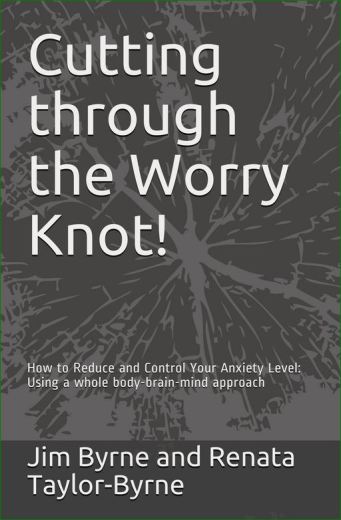 Cutting through the Worry Knot!
 Jim
Jim I have frequently found that senior REBT theorists, like Albert Ellis and Michael Edelstein, do not seem to be able to string a valid argument together!
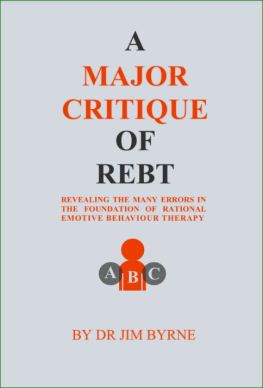 (Subsequently, that book was slightly updated, and reissued with the title,
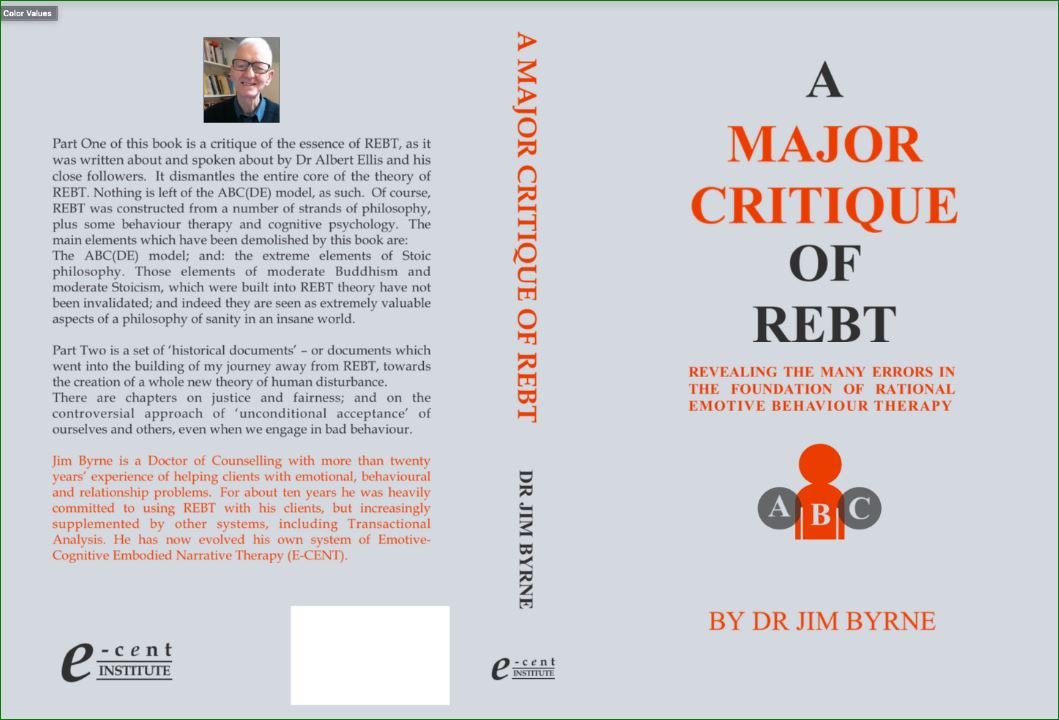
 However, the Conclusion does not follow logically from those two true premises, because you have smuggled the word *feel* into the conclusion, whereas it does not appear in either of the premises! (It has to be in at least one of the premises to get into the conclusion, validly). Therefore, this argument is invalid, and it falls!
 Premise 1. Particular forms of self-talk help to calm our emotions.
 In the summary of A Major Critique of REBT, I introduce the concept of ‘perfinking’ – which is shorthand for perceiving/ feeling/ thinking, which seems to me, based on modern neuroscience research, to be what humans do – not discrete thinking, or discrete feeling, or discrete perceiving.
 My REBT book, and also my
  ABC Bookstore Online UK