Blog Post – 9th May 2020
Copyright (c) Jim Byrne 2020
~~~
How Stoical can a Moderate Stoic remain during the Covid-19 Social Distancing rule and its frustrations?
By Dr Jim Byrne, Doctor of Counselling
~~~
Introduction
 It has often been said that it’s easier to “talk the talk” than it is to “walk the walk”. This American expression refers to the frequent gulf between our words and our actions.
But we all like to think that this only applies to other people, especially if we pride ourselves on being some kind of Stoic or Buddhist, capable of being supremely detached from the threats and dangers of life.
We know that many people are losing their tempers and engaging in domestic violence, under pressure of lock-down in crowded homes. This is deplorable. The “talk” (or principle) here is that it is not okay to hit another person, no matter how frustrated we may feel when attempting to communicate with them, or trying to influence their thinking or their actions. We must walk that talk, or face the legitimate shame of being prosecuted and punished for grossly immoral behaviour. And that applies whether or not the perpetrator is male or female.
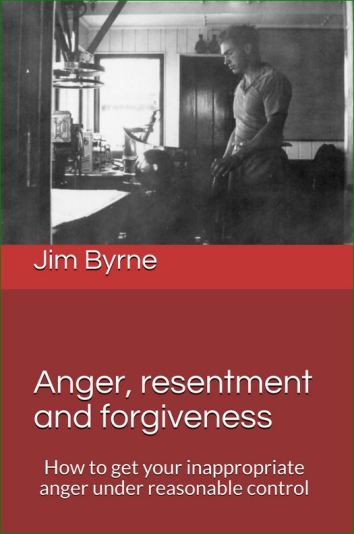 Learning to walk this talk is a function of Anger Management Training; and our book on that subject is a good resource for calming yourself, reducing resentment, and learning how to forgive others, instead of becoming excessively angry with them.
(See my book: Anger, resentment and forgiveness).
But what about the stresses and strains of being out and about in public: shopping, or taking a daily (legal) walk for exercise?
What is the legitimate “talk” here, and how easy is it to “walk it”?
My recent experience
Let me tell you a story about my own recent experience. I am able to tell this story with reasonable accuracy because one of the things that I do to control my mind and to manage my life is to write things down, on a daily basis. At the moment, I spend about half an hour each morning writing what Julia Cameron called ‘Morning Pages’; about three pages of stream of consciousness; which provide an opportunity to chew through what went wrong (or right) yesterday; and what I want to (or need to) do today.
The story I want to tell you was written down in Friday’s (7th May) morning’s Pages, as follows:
Can I walk my own talk?
 I like to think of myself as a calm, reasonable and rational individual with high emotional intelligence. I think I am gentle and kind, and well able to manage my emotions to keep them within reasonable bounds; not too high, and not too low.
Yesterday something strange and slightly disturbing happened, which seems to be a result of the (unrecognized) stresses and strains of the Covid-19 social distancing rules.
Renata and I went out for our daily (legal) walk near out home. At a certain point, where the road is narrow (just over two metres wide), and there are no pavements, a cyclist came down the middle of the road, while Renata and I stood on the right hand side. He was cycling directly behind a woman (his girlfriend/wife?) who was jogging.
My expectation was that they would move over to the left as they approached us, in order to maintain roughly two metres of social distance. But they stuck to the centre of the road.
When they were getting very close to us, I suddenly looked him in the face, angrily, with the intention of ‘willing him’ to move further over the road, away from us (so he could not infect us with Covid-19, if he was infectious). Then, when he was about two metres before the point at which he would pass me by – inside my space – and without realizing that I would speak, I said (in a fairly quiet, but angry voice): “Move over, you c**t!” These words just popped out of my mouth, unbidden.
 The next thing that happened was that I felt very shocked that I used the ‘C’ word. I was shocked that I was so angry. (I am an anger management specialist! [Or that is one of my specialisms]). (Postscript: Upon reading this back, I notice that I did not judge the woman to be culpable, even though she was in the leading position! Interesting!)
After the cyclist passed, I noticed he was looking back at me angrily. Perhaps he’d heard what I said; or been able to read my lips; or he decoded by body language.
So, I’d upset myself; and I’d upset him. And what had I achieved? Nothing useful. I did not get what I wanted (in terms of social distancing). I did not teach anybody any lessons. (He most likely had no idea how I had perceived him, other than negatively. And he most likely believed, sincerely, that he had done nothing wrong.)
Except – I now realize – that I was about to teach myself a lesson.
My lesson from the school of life
I felt bad about how I’d responded to this invasion of my social distancing space. I felt guilty that I could (potentially) have caused an accident, by distracting him from his cycling. I felt fear that I could have precipitated an ugly scene of verbal conflict; or even physical conflict with him.
As I write these notes this morning, I realize that this is a major learning experience for me. I realize that I am quite demanding that people should and must follow the government’s guidelines in an intelligent manner, and never get closer than two metres from me. (I also realize that this has been building up over time. This is not the first time I’ve felt angry towards somebody who mindlessly walked too close to me. But I failed to pay sufficient attention to what was happening (inside of me, in response to those ‘invasions’); and I made excuses – I distinctly remember – for my aggressive responses – instead of correcting myself).
 I have tended to damn anyone who breaks the rules, in relation to keeping their distance from me and/or my wife; and that makes me angry at them. And resentful: which is like taking poison, and waiting for them to die! This harms my body and lowers my mood for a protracted period of time. Meanwhile, the person at whom I am angry may be having a ball, oblivious to the effect they have had on me. So the ultimate harm is all done to me, by me.
~~~
~~~
Reframing transgressions against me
I must learn to apply my own Window No.1 (from my Nine Windows Model) to social distancing problems. This is it:
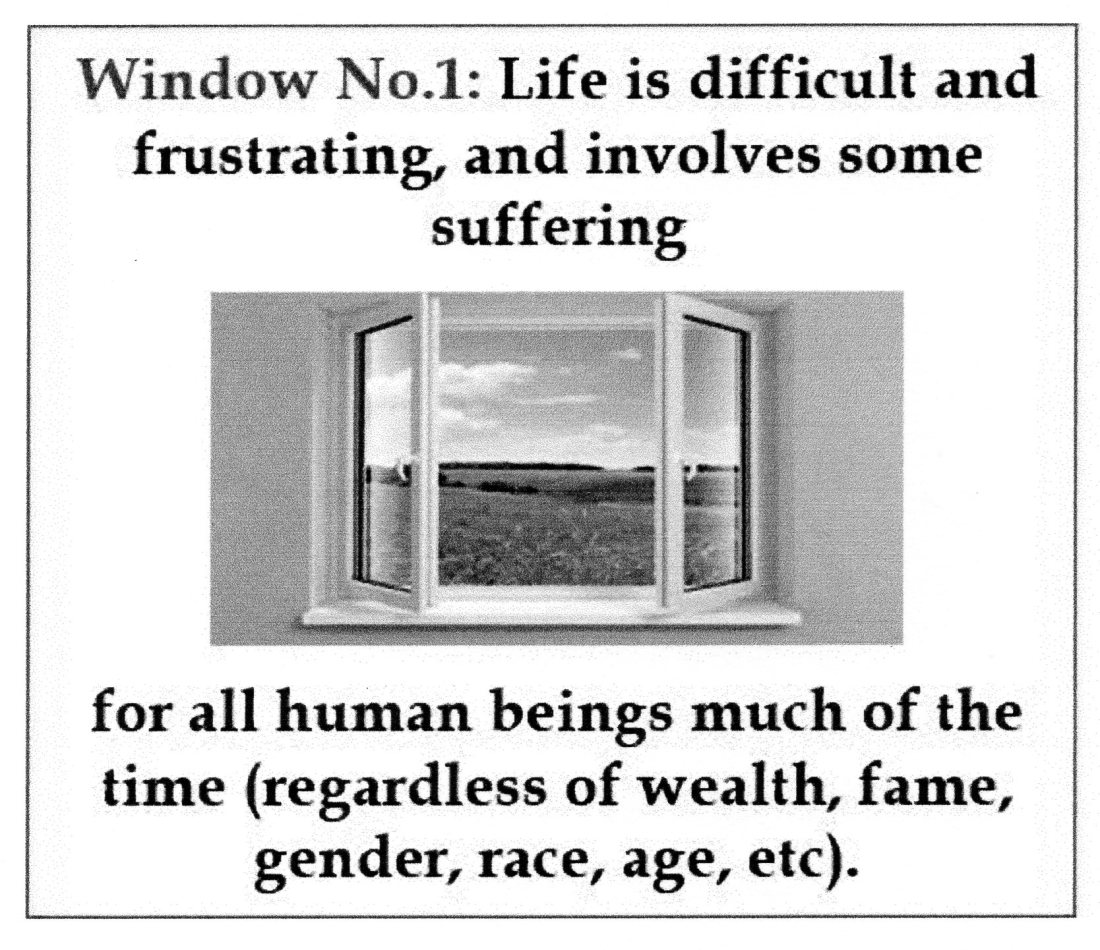 So: “In life, there are certain things I can control, and certain things that are beyond my control”. And a good way to get upset and stay upset is to try to control the uncontrollable! (Of course, if something [which is important to me] is potentially controllable, I should try, within reason, to control it!)
Therefore, I will always try to put two metres between me and everybody else in public places. But I will not insist that they be as diligent, or intelligent as me, in keeping their distance. I’d prefer it if they kept their distance, but it’s not essential to make them do so! It may be bad for me if they get too close, but I don’t run the universe!
I’m sorry I was so aggressive yesterday. It won’t happen again; I am determined to make sure that it does not. That is my commitment! I will stop calling people ugly names (in my head) if they prove to be unintelligent, or incompetent, or uncooperative in maintaining social distancing rules.
How far I slipped back, under Covid-19 pressure
 That aggressive behaviour on my part was uncharacteristic, but then I am very new to being involved in a death-inducing viral pandemic. (And I am over the age of 70 years, and I’ve been sent a powerful ‘nocebo’ [or negative self-fulfilling prophesy] by the state to the effect that my age puts me, automatically at risk! Although I think the strength of my immune system is just as important as my age, nocebos, sent by authoritative voices, have powerful influences, outside of conscious awareness!) I spent years teaching myself the idea, from Epicurus, that I should “get accustomed to the idea that my death means nothing to me”, for all good and evil consist in sensations, and death is only the deprivation of sensations. Therefore, it makes no sense for any person to fear their own death, for when death arrives, they will have (simultaneously) departed. And if they are here (and aware of being here) then death has not arrived.
I was totally reconciled to my own death. The deaths of my nearest and dearest is another matter. Their deaths will hurt me, deprive me, cause me grief, and render my life less joyful. But my own death means nothing to me. (Except that I want to stay alive for my nearest and dearest; and for the fun of it!)
But then Covid-19 crept up on me; blindsided me; and I am having to learn all over again that “If I die, I die!” That only my body will die, because it alone was born. My mind cannot die, because it was never born. And that my death means nothing to me, because I am here, and my death is not!
My revised plan
 I will try to avoid the sickness of Covid-19; and I hope my immune system is strong enough to keep me alive if I contract it. (I work at strengthening my immune system in various ways; in particular with eight hours sleep each night; eating the right foods; avoiding the wrong foods; exercising every morning at home; and getting out for a one hour walk in the sunshine and fresh air every day; and relaxing my body, and meditating to calm my mind).
However, if, after all that, it transpires that I die from Covid-19; then I die; or my body dies; and at the moment that death arrives, I will no longer be here to lament my own passing! (But it would, of course be painful for my loved ones, which gives me an incentive to try to avoid dying!)
So let me live today fully so that I do not regret my (potentially) last day on Earth
~~~
That’s the end of my story, from Friday’s Morning’s Pages.
~~~
Let me leave you with this final thought, from Jack Kornfield’s wonderful book, mentioned above:
“Anger, blame, conflict, and resentment arise from our fear. When we are afraid, our body tightens, our heart is constricted, our mind is possessed. We cannot live wisely.
“Forgiveness releases us from the power of fear. It allows us to see with kindly eyes and rest in a wise heart”.
~~~
Please take a look at our book on Anger, resentment and forgiveness: How to get your inappropriate anger under reasonable control
~~~
~~~
Or this: How to Control Your Anger, Anxiety and Depression: Using nutrition and physical exercise).
~~~
~~~
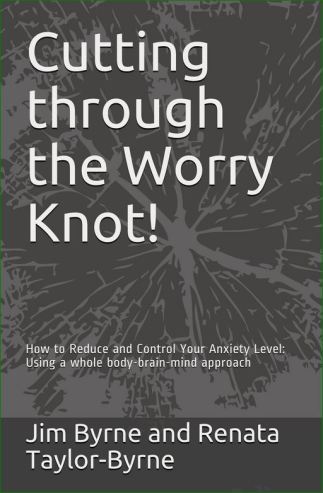
And if you are feeling anxious about Covid-19, or anything else, you might want to read about our book on Cutting through the Worry Knot! How to Reduce and Control Your Anxiety Level: Using a whole body-brain-mind approach; and without using drugs, alcohol or escapism!
~~~
 If your situation is such that you do not want to take the time to read a book or two to support you through the Covid-19 crisis, you can always consult me – Dr Jim Byrne – or Renata Taylor-Byrne – via the telephone, for help, support Psychological First Aid, counselling, coaching or deep psychotherapy:
To consult Renata Taylor-Byrne, Lifestyle Coach/Counsellor, please email renata@abc-counselling.org
~~~
~~~
Or take a look at Renata’s Lifestyle Counselling and Coaching Services.***
~~~
~~~
To consult Dr Jim Byrne, Counsellor/Psychotherapist, please email drjwbyrne@gmail.com
~~~
~~~
Or take a look at Dr Jim’s Online Counselling Services.***
~~~
That’s all for now.
 Best wishes, and take good care of yourself (and others).
Jim
Dr Jim Byrne, Doctor of Counselling
ABC Bookstore Online UK
~~~
~~~
For telephone, Skype and email counselling, coaching and psychotherapy
~~~
~~~
drjwbyrne@gmail.com
Telephone 01422 843 629 (from inside the UK)
44 1422 843 629 (from outside the UK).
~~~

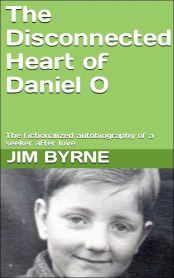 Our mothers have the most dramatic effect upon our psychical and mental health, and upon our life chances. So choose your mother carefully!
 Best wishes,
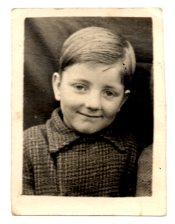 Writers are people who write.
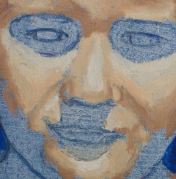 Vasha Popov screwed his little face up, like a well-squeezed dishcloth. He stared into the big, mottled mirror, looking for the echo of his facial contortions. And there it was. This was him. This blue face, with the sad calf eyes and the downturned mouth. And there in the apparent ugliness of his blue face was the evidence, it seemed, of why Mamu did not let him touch her, or speak to her, or get close to her.
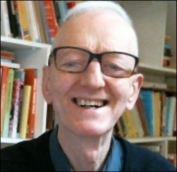 Jim
Jim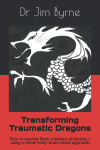 Trauma is all around us. Many humans are seriously damaged by their families of origin, and by their cruel cultures.
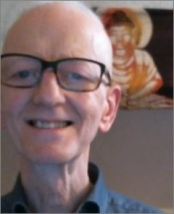 As it happened, I (Jim) did manage to find my way out of the darkness and confusion; out of the autism and dissociation; out of the fear and loneliness. I did my therapy, and I got my reward!
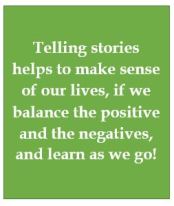 I believe that each of us is a silent witness of our early childhood experiences. We do not know what happened to us unless and until somebody helps us to make a story or stories out of our raw experiences.
 I met Carla in Bangladesh, and she was intensely curious about my life, and especially my childhood. I told her some bits and pieces from the very edges of my conscious awareness, and she was appalled at how painful my childhood had been – how physically and emotionally I’d been abused. I was amazed at the emotions that came up them: the painful memories that welled back. What I had taken to be ‘normal life’ turned out to be quite brutally unusual – or at least not how children should be raised, by parents who love their children, and want them to be happy.
 Over time, two major stories emerged: My Story of Origins (as a country boy in a city school, who failed to make a single friend in ten years of schooling). And My Story of Relationship (especially my insecure attachment to my cruel mother). Both of these stories now appear in a forthcoming book, which you can read about here:
 Over a period of more than 22 years of professional practice, Dr Jim Byrne has developed and refined a DIY (self-help) approach to resolving your own childhood trauma. This book will help you to understand what childhood developmental trauma is; how it relates to insecure attachment and dysfunction of the right brain; and how to work on childhood trauma using a whole body, brain, mind approach. This book outlines three major therapeutic processes, at three graded levels of emotional disturbance (from mild to intense), which you can progressively (and slowly and gradually) work through, in the form of journal writing, and related processes of body-awareness, body activity, sleep, diet and exercise solutions, and deep relaxation.
 That’s all for today.
 ABC Bookstore Online UK