Books about emotional life, including anxiety

Dr Jim’s Blog post

23rd April 2020

~~~

Books as depositories of valuable knowledge and ideas; and as outlets for speaking to the world…

~~~

Introduction

Jim and the Buddha, 2I love books; and I’ve enjoyed scouring bookshops for new ideas since I was about 14 years old.  It is perhaps one of the greatest deprivations of the Covid-19 lockdown that I cannot get to walk around the philosophy, psychology, health and self-help sections of Waterstones, in Leeds or Manchester; or the Bookcase in Hebden Bridge; or W.H. Smith’s in Halifax; or the Bookcase store in Piece Hall.

I also miss the whole floor of good quality, and interesting secondhand books in Oxfam in Bradford!

~~~

~~~

A story of browsing

Yesterday I was browsing my own (and Renata’s) bookshelves in our attic office when my mind alighted upon one of our own books – Holistic Counselling in Practice: An Introduction to Emotive-Cognitive embodied Narrative Therapy.[1]

Book-cover-frontBut, actually, it was the original version I had in my hands; the one with the bnlue cover, and the coloured illustrations – and my eyes were drawn to three illustrations, on pages vi and vii of the Foreword.

– The first illustration shows the interaction of a mother and baby, giving rise to the socialized mind of the child.

(See below).

– The second is a blue boxed callout, which says: “We are bodies as well as minds; primarily social animals; with the potential to develop virtues and vices”.

(Not shown on this page).

~~~

– And the third was also a callout, like this:

“The thoughts and beliefs of the (counselling) client cannot exist independently of their diet, exercise, self-talk, relaxation, stress level, social and economic circumstances, etc.”

Basic-CENT-model

With the benefit of the passage of time, I can see that sleep and relaxation should have featured prominently in that second callout.

Anyway, the surprising thing was that I had to skim all the way through to page 123 before I could find our Holistic SOR model, which is what distinguishes us from the CBT, psychodynamic and humanistic traditions.  This is it:

Holistic-SOR-model2

This model shows that diet and food supplements; meditation; exercise regime; plus sleep and relaxation histories; are among the many factors which determine how the body-brain-mind will respond to an incoming stimulus, or, if you like: how we will respond to our ongoing experiences.

The importance of high quality, original research

I recall that, as I was beginning to draft that book, I realized that we needed to be quite specific about the kinds of foods, and exercise systems, that would most benefit a person who is suffering from anger management issues, or anxiety/panic, or depression.  And I knew I could not afford the time to study nutrition and exercise at that time; so I spoke to Renata (my wonderful wife and life and business partner) and she agreed to do what turned out to be months of research of the scientific studies which have looked at the links between diet and exercise, on the one hand, and the experience of anger, anxiety and/or depression, on the other.

Renata’s research of those subjects appeared as Appendices E and F of the Holistic Counselling book; and later we created a more expanded book – Lifestyle Counselling and Coaching for the Whole Person – in which Renata did weeks of research on the science of sleep, and how it relates to emotional states; and that went into the Lifestyle Counselling book.

Recently, we’ve gone back to all of that research, and subsequent refinements, to produce a new book.

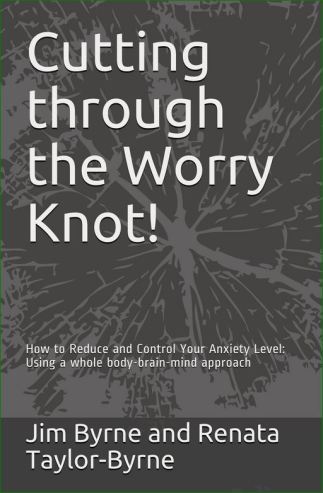
This time we’ve tackled a topic which is very relevant to the Covid-19 pandemic: how to control your anxiety.  Here are the details of the book:

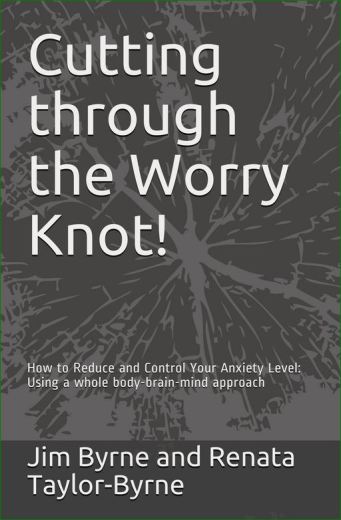
Front cover 2Cutting through the Worry Knot!

How to Reduce and Control Your Anxiety Level: Using a whole body-brain-mind approach

And without using drugs, alcohol or escapism!

By Dr Jim Byrne and Renata Taylor-Byrne

Anxiety is not a disease; not a mental illness. Anxiety is part of our normal, innate, mental signalling system which tells us what is happening to us, and what to do about it.  That is to say, it is part of our emotional wiring. Our emotional intelligence.

Trying to get rid of anxiety with drugs is like hanging two overcoats and a duvet over your burglar alarm when it goes off.  The burglar alarm is designed to give you helpful information, which you can then use to guide your action. Should you check to see if a burglar has got into your house? Or call the police? Or realize that you’d mismanaged your alarm system, and that you should therefore switch it off?

Once you understand anxiety correctly, it becomes as useful as a burglar alarm; and you can learn how to manage it correctly.

When you buy a burglar alarm, it comes with a little Instruction Book about how to set it; calibrate it; monitor it; reset it; and switch it on and off.

You should have got just such an Instruction Book about your anxiety alarm, from your parents, when you were very young – and some people did.  But if your alarm goes off at all times of day and night, in unhelpful ways, then I guess you were one of the unlucky ones who did not get your Instruction Book.  This book contains your Instruction Book, plus lots of other backup information, which will help to make you the master of your anxiety, instead of its quaking slave.

Don’t let your anxiety “burglar alarm” reduce your life to misery. Learn how to use it properly!

For more information about this book on anxiety:

~~~

Paperback copy:

~~~

Kindle eBook copy:

~~~

We love books: Reading them; writing them; and talking about them.  We hope you enjoy what we have to say about what we have learned, and how we have applied our learning.

~~~
Best wishes for a happy reading aspect to your growing life!

Jim and the Buddha, 2Jim

Dr Jim Byrne

Doctor of Counselling

Joint Director of the ABC Bookstore Online UK

Joint Director of the Institute for E-CENT Counselling

Dr Jim’s Counselling and Psychotherapy Division

~~~

~~~

[1] Byrne, J.W. (2019) Holistic Counselling in Practice: An introduction to the theory and practice of Emotive-Cognitive Embodied-Narrative Therapy. Updated edition (2).  Hebden Bridge: The Institute for E-CENT Publications.

~~~

Byrne, J.W. (2018) Lifestyle Counselling and Coaching of the Whole Person: Or how to integrate nutritional insights, physical exercise and sleep coaching into talk therapy.  Hebden Bridge: The Institute for E-CENT Publications.

~~~

Taylor-Byrne, R.E. and Byrne, J.W. (2017) How to control your anger, anxiety and depression, using nutrition and physical activity.  Hebden Bridge: The Institute for E-CENT Publications.

~~~

Byrne, J.W. and Taylor-Byrne, R.E. (2020) Cutting through the Worry Knot! How to Reduce and Control Your Anxiety Level: Using a whole body-brain-mind approach. Hebden Bridge: The Institute for E-CENT Publications.

Thinking, feeling and perceiving: REBT critique

Blog Post, 16th January 2020

By Jim Byrne, Doctor of Counselling

~~~

Response to Comments upon my YouTube video about

A Major Critique of REBT

~~~

Introduction

Dr-Jim-Byrne8 (2)I have frequently found that senior REBT theorists, like Albert Ellis and Michael Edelstein, do not seem to be able to string a valid argument together!
This is surprising, because Albert Ellis built his reputation upon being a ‘great thinker’ (although many who followed him thought him a ‘sloppy philosopher’).

In this blog post, I want to present some brief comments by a recent defender of REBT, to demonstrate that nothing has changed in the ability of REBTers to think straight!

~~~

Here’s the background:

On 2nd September 2017, I posted a video clip, with the following title – REBT CBT Book: Title, Unfit for Therapeutic Purposes – on YouTube, at this web address: https://www.youtube.com/watch?v=lfmCs9hbN04

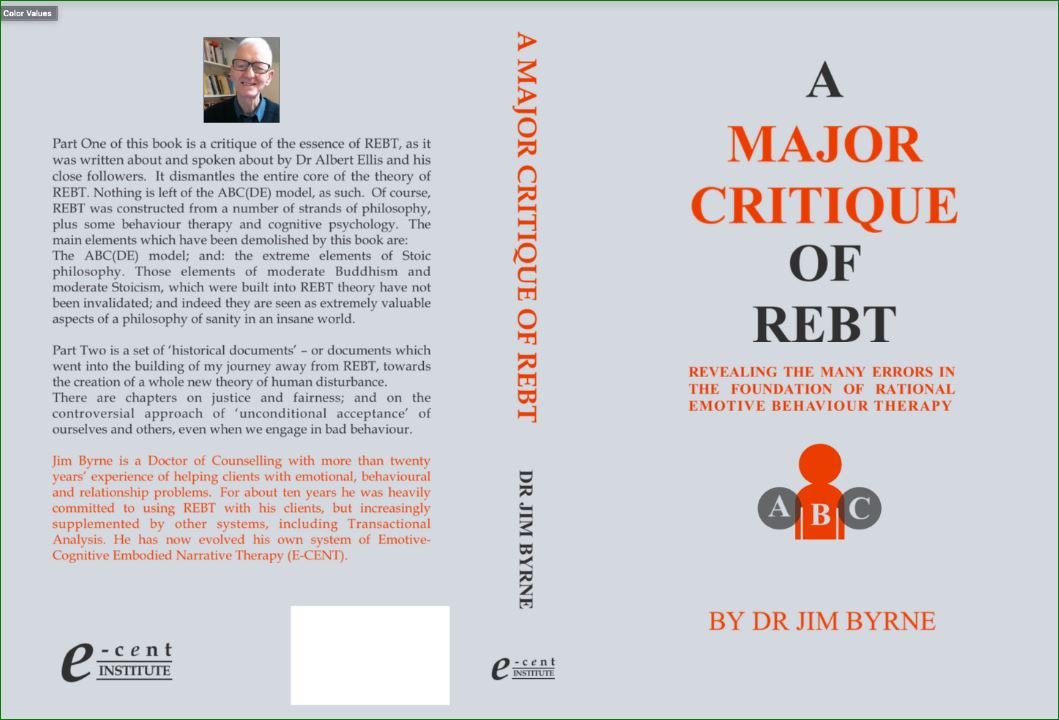
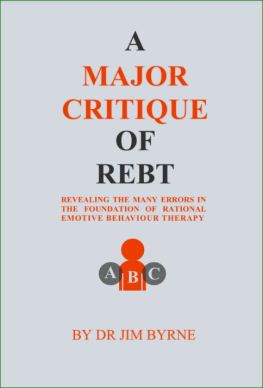
Front cover3 of reissued REBT book(Subsequently, that book was slightly updated, and reissued with the title, A Major Critique of REBT’).

On 15th January 2020, that video clip received its 20th comment from a viewer.

In this blog post, I want to present that viewer’s comments – in defence of REBT – plus my analysis and refutation of those comments.

~~~

What the viewer wrote:

“Can’t we concede there are some instances in which beliefs and thoughts cause distress? If I believe that losing my job would be a catastrophe of gigantic proportions, won’t that make a job loss much more upsetting than if I view it as merely an unpleasant setback? There are times I’ve had to adjust my thinking with self-talk like, ‘OK, this is unpleasant but it’s not the end of the world.’ Such thoughts have actually made me feel less upset. Also, while I agree with you that blaming the client is usually unwarranted, I don’t think it always is. Don’t we bear any responsibility for our well being or lack thereof? Aren’t we often the architects of our own trouble? Is it always circumstance acting upon us?”

This viewer’s ‘handle’, or ID, was this: Some guy’s page. I checked out his page.  It does not have content.  And the identity of ‘Some guy’ is not revealed.

Some Guy's page

~~~

Nevertheless, I replied to ‘Some Guy’ as follows:

“Hello: You have commented upon a video clip which was designed to advertise my book which critiques REBT.  As it says in the description below this video clip:

“For more information about the book which is reviewed in this video, please take a look at ‘A Major Critique of REBT’:  https://abc-bookstore.com/a-major-critique-of-rebt/

“But instead of following up that information, and reading the book, to see if you can fault its factual basis or its logical argumentation, you have commented upon the advert!

“It would have been more helpful if you had read the book, and commented upon the *actual arguments* presented therein.

“I am extremely busy, and I did not post the advert to stimulate debate.  I do not have time to debate your comments upon my advert.  However, as a quick one-off exception to that rule, let me briefly respond, in the following blog post”.  (And I added a link to this post which you are currently reading).

Here is my brief response to ‘Some Guy’

You asked: “Can’t we concede there are some instances in which beliefs and thoughts cause distress?”

My first answer would have to be this:  Even Albert Ellis (on a *good* day) would not make such a suggestion.  Why?  Because, on a *good* day, he would be pursuing the *official line*, to the effect that human disturbance is caused by the interaction of a noxious experience (or Activating event) with an Irrational Belief.  So, it is never the Belief that causes the upset, in the *official line*, but rather the interaction of a belief and an experience (or a memory, or anticipation).  (On a *bad* day, Ellis would have gone way beyond you, Some Guy.  He would have insisted that human disturbances are always and only caused by irrational beliefs!  And I have demonstrated, in many different ways, in my book, that this is a false conclusion on the part of Albert Ellis: See A Major Critique of REBT.***)

My second answer would have to be this: You (Some Guy) are here utilizing the concept of ‘thoughts’.  But what exactly are thoughts?  In Albert Ellis’s (1962) book on Reason and Emotion in Psychotherapy, he cites the idea, from McGill (1954) – Emotions and Reason – that emotions always have a ‘cognitive’ (or thought) component. But McGill was arguing that our emotions (with their cognitive components) determine how we respond to environmental happenings (based on our previous experience).

From this, Ellis (1962) concluded that thoughts and feelings are never separate, and are, in some senses, essentially the same thing.

And even though he suggests that they are very often “the same thing”, he goes on to suggest, later in his book, that it’s our thoughts (or beliefs) that determine our feelings.  What a muddle he created here!

I tried to rescue Ellis from this muddle, in a paper from 2003, which is now incorporated into A Major Critique of REBT’.  It involved developing a Complex ABC Model; but when it was complete, it invalidated much of the original theory of REBT.  (More on the concept of ‘thoughts’ and ‘thinking’ below).

Whole cover3

My third answer would have to be this: You are suggesting, rhetorically, that beliefs and thoughts *cause* distress sometimes; and it seems to me you are making that suggestion because you, personally, *believe* that beliefs and thoughts cause distress (which you may or may not have learned from Albert Ellis’s writings).  So, you should then present *evidence* to support that conclusion.  Perhaps that is what you intended to do in what follows next, where you wrote:

“If I believe that losing my job would be a catastrophe of gigantic proportions, won’t that make a job loss much more upsetting than if I view it as merely an unpleasant setback?”  (Emphasis added – JB).

Let’s reconstruct that argument in the form of a syllogism, as follows (for an imaginary counselling client who is going through the difficulties that you describe, in bold above):

Premise 1: I believe that losing my job would be a catastrophe of gigantic proportions.

Premise 2: I am in the process of losing my job.

Conclusion: I have to *feel* very upset about this catastrophe.

For this to be a valid argument, both premises must be true, and the conclusion must follow logically from those premises.

Premise 1 seems to be true, because you have told me that you *believe* that losing your job would be a catastrophe of gigantic proportions.

Premise 2 also seems to be true, in that you have informed me that you are in the process of losing your job.

Back cover3However, the Conclusion does not follow logically from those two true premises, because you have smuggled the word *feel* into the conclusion, whereas it does not appear in either of the premises!  (It has to be in at least one of the premises to get into the conclusion, validly). Therefore, this argument is invalid, and it falls!

It’s interesting to me that you are a follower (or supporter) of Ellis, and Ellis argued that he was interested in the premises of his clients’ arguments, but he failed to teach anybody anything about how to construct a valid argument, or how to reconstruct an argument to test it for validity.

In my book critiquing Ellis’s theory – A Major Critique of REBT – I have reconstructed some of his key arguments, and some by Dr Michael Edelstein, and demonstrated that they use invalid arguments without noticing their invalidity – and therefore their arguments fall!  By contrast with my approach, Ellis’s followers in general do not seem to have learned to put his theories to this kind of test!  That is why you would be well advised to read my book: A Major Critique of REBT.

~~~

You (Some Guy) then continue your comments like this:

‘There are times I’ve had to adjust my thinking with self-talk like, “OK, this is unpleasant but it’s not the end of the world.” Such thoughts have actually made me feel less upset.’

I have a problem with part of this statement, but not with another.  To try to tease them apart, let me present two syllogisms. The first is to demonstrate what I agree with; while the second is designed to point out a flaw in your presentation and understanding.

First argument reconstruction:

Defintion of an argumentPremise 1. Particular forms of self-talk help to calm our emotions.

Premise 2. I sometimes have to engage in one of those forms of self-talk.

Conclusion: (Therefore) When I use that kind of self-talk, I feel calmer emotions.

This is a valid argument, because both premises are true, and the conclusion follows logically from the premises.

~~~

Second argument reconstruction:

Premise 1: It is often argued that positive self-talk will have a positive effect upon our emotions.

Premise 2: I’ve noticed that when I use particular forms of positive self-talk, my emotions calm down.

Conclusion: (Therefore) positive self–talk changes my *thinking*!

This is an invalid argument, because the concept of *thinking* has been smuggled into the conclusion, whereas it does not exist in either of the premises.

It is simply an article of your faith (Some Guy) that self-talk changes your thinking; and that your thinking changes your emotions. You have no evidence for that; and it is actually impossible to collect evidence to support your conclusions here.

Think about it: Where would you go to collect evidence that self-talk changes your thinking?

If my thinking/feeling/perceiving is all of a piece, why not conclude that my self-talk changes my thinking/ feeling/ perceiving?  (PS: Furthermore, it also seems to be the case that my self-talk is actually a form of thinking/feeling /perceiving!)

Front cover3 of reissued REBT bookIn the summary of A Major Critique of REBT, I introduce the concept of ‘perfinking’ – which is shorthand for perceiving/ feeling/ thinking, which seems to me, based on modern neuroscience research, to be what humans do – not discrete thinking, or discrete feeling, or discrete perceiving.

Indeed, Albert Ellis should have got to this point himself, because he had McGill’s (1954) statements about the interconnection of thinking and feeling.  But Ellis was so committed to Epictetus’ statement about how “people are never disturbed by what happens to them”, that he had to cling to his simple ABC model, with its discrete Beliefs causing discrete emotions.

Here’s a little extract from the summary of my book:

“…in Chapter 3, Dr Byrne compares Dr Ellis’s ABC model with the SOR model of neobehaviourism, (which says this: A Stimulus [S] impacts an Organism [O] producing an outputted Response [R]).   As a result, he (Byrne) finds that it is essential to ‘add back the body’ to the ABC model; and once that is done, the core theory of REBT falls apart, because now we are dealing with a whole-body-brain-mind-environment-complexity, rather than a simple ‘belief machine’.

“Furthermore, this complex-body-brain-mind engages in ‘warm-perfinking’ – (which means, perceiving-feeling-thinking) – which is coloured by emotion from beginning to end), rather than cool thinking and reasoning.”

Please pursue this argument in my book, A Major Critique of REBT.

~~~

The final point that you (Some Guy) make is this:

“…while I agree with you (Jim Byrne) that blaming the client is usually unwarranted, I don’t think it always is. Don’t we bear any responsibility for our well-being or lack thereof? Aren’t we often the architects of our own trouble? Is it always circumstance acting upon us?”

These questions feel like ‘rhetorical devices’, designed to make statements without making them; and intended to hook emotional responses, rather than attempts at reasoning.

Draft-cover-3My REBT book, and also my Lifestyle Counselling and Coaching for the Whole Person, argues that human beings are largely non-conscious creatures of habit, who are shaped by their lifetime of socialization and interactions with others.  I also wrote a lengthy essay on Free Will for my diploma in counselling psychology and psychotherapy, many years ago, in which I concluded that the most extreme scientist cannot prove that there is no possibility of some small elements of free will in a human individual; and that the most romantic philosopher cannot prove that free will exists at all.  This concept of ‘free will’, therefore, seems to me to be a highly contested concept. So, rather than blaming a client for their upset emotions, I think it is more ethical, and more productive, to teach them how to change and grow, rather than blaming them for where they are stuck!  (If you would like a copy of my paper on Free Will and Determinism, please email me, drjwbyrne@gmail.com).

I could write a lot more, if I had the time, but I am extremely busy.  Lots of new books to be written!

~~~

What did you think of this blog post?

Was it helpful?

Please leave a comment below.

~~~

Best wishes to all readers.

Jim

Dr Jim Byrne, Doctor of Counselling

ABC Coaching and Counselling Services

ABC Bookstore Online UK

The Institute for E-CENT

~~~

Stormzy, #Merky Publications, and Bluemoose in Hebden Bridge

Blog Post – ABC Bookstore Online UK

~~~

Stormzy, #Merky publications, Bluemoose in Hebden Bridge, and celebrations of ‘cultural tribes’…

By Jim Byrne, Doctor of Counselling; author and publisher

17th December 2019

~~~

Celebration of black culture

In between breakfast and meditation this morning, my wonderful wife, Renata Taylor-Byrne, passed me her copy of The Observer Magazine (dated 15th December). It’s a special issue celebrating black British culture, and edited by Stormzy[1].

The bottom line is this: Stormzy has formed an alliance with Penguin, and set up an imprint, #Merky publications, which launched in July 2018; and has so far published three books; including a book about his music career by Stormzy.

The other two books are:

# ‘That Reminds Me’ – a fictional narrative, told in verse, by Derek Owusu “about his troubled boyhood”.

# And ‘Taking Up Space’ – described as “a black girl’s manifesto for change”, by Chelsea Kwakye and Ore Ogunbiyi.

And, coming soon will be the autobiography of the former Children’s Laureate, Malorie Blackman.

#Merky books will publish books from under-represented communities. This will not rule out some white authors, depending on how ‘under-represented’ they happen to be. But the imprint is committed to telling ‘universal stories’, which can come from any and all parts of our culture.

Good luck to them!

~~~

Irish cultural voices; and women in print

Kate Pickett and Richard WilkinsonOne of the books that I have tried to promote for a number of years is ‘The Spirit Level’, by Kate Pickett and Richard Wilkinson. (See the Guardian article by Dawn Foster: Social injustice has a profound psychological impact – and it’s tearing our society apart, say the authors of The Spirit Level).

At the Institute for E-CENT Publications, we try to promote progressive politics and holistic psychotherapy as joint solutions to the problems of social-emotional misery.  We talk a lot about the contribution of lifestyle factors (like diet, exercise, sleep, relaxation, etc.) to social misery; but we do not overlook the contribution of the economic and political realities generated by vested interests who dominate the docile political class in Westminster.

And we do not overlook the power of writing to change lives, in the worst of social circumstances.

A1, Jim and Nata counselling homepage
Renata Taylor-Byrne and Jim Byrne – researchers and writers; and counsellors/coaches

So far we have published about twenty books (mainly on self-help topics, plus counselling and therapy subjects).  Two of those books are based in Southern Ireland, or rooted in southern Ireland.

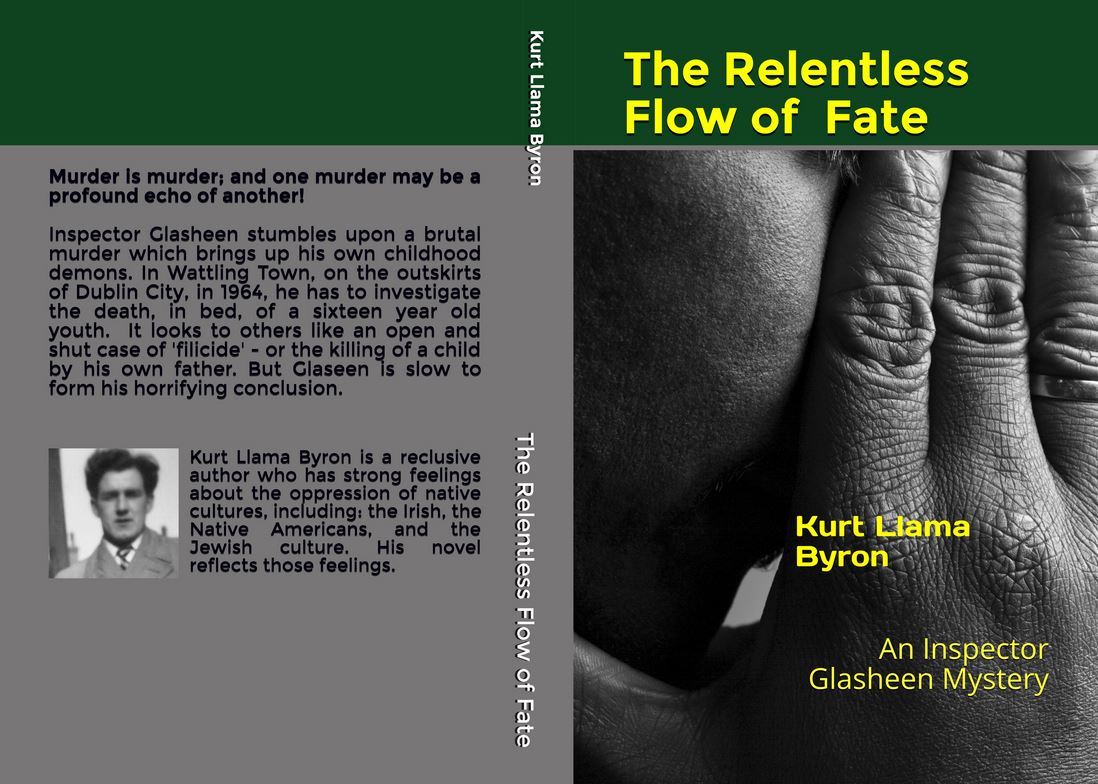
Full KDP Cover, paperbackC3Our only novel is ‘The Relentless Flow of Fate’, which describes the life of a man who is half Irish and half Native American Indian.  Both of those cultures were horribly distorted by abuses of power which have been written about in various ways; but this is a kind of psychological exploration of the unconscious residue of some of those tragic histories. It’s written in the form of a mystery/thriller. The main character is Detective Inspector Glasheen… And a brutal murder is the starting point…

Then there’s my fictionalized autobiographical story – which includes 80% of my experience of the first 40 years of my life; combined with 20% of assorted fragments of others people’s lives – including the lives of three extra-terrestrial alien psychologists who are sent to Earth to study humanity…  It’s titled Metal Dog – Long Road Home – A personal mythology

Metal Dog - Long Road Home: A mythical journey: Amazon.co.uk: Byrne, Dr  Jim: 9781542899734: BooksIn this book, Dr Jim Byrne, the creator of Emotive-Cognitive Embodied Narrative Therapy (E-CENT) has utilized his own system of narrative therapy to revise his original, non-conscious ‘personal mythology’, or ‘story of self’. – According to the author, humans live inside of stories, and their lives are dominated and directed by those stories, or personal mythologies. It is impossible to ‘forget’ those mythologies, those scripts for a life pattern in the present and future. It is impossible to simply step out of them. The only hope for humans who have been distorted by their childhood and early life experiences is to dig up their personal narratives, to examine and digest them, to revise them, and to create a new, consciously chosen personal mythology which can support a happy and successful future for them. In this book, Dr Byrne demonstrates how to do that digging and digesting and rewriting tasks, by showing us how he healed his own traumatized body-mind, and his broken heart.

For more, please go here: Metal Dog – Long Road Home – A personal mythology

~~~

Bluemoose Books

Which reminds me: I recently became aware of Blue Moose Books[2], in Hebden Bridge.  They have recently had a book shortlisted in the Irish book awards ceremony of the year, which was announced on the Bluemoose website like this:

Leonard and Hungry Paul – Short listed in The ‘An Post’ Irish Book Awards – Newcomer

“By Kevin Duffy • Published 25th October 2019

“Congratulations to Ronan Hession whose debut, Leonard and Hungry Paul, has been short listed in The ‘An Post’ Irish Book Awards, in the newcomer category.”

~~~

It seems that, in 2020, Bluemoose will concentrate exclusively on publishing books by female authors. That should throw up some interesting stories of the lives of the biggest ‘minority’ in society (at approximately 51%)!  We look forward to seeing what emerges.

~~~

Kindle cover, How to LoveE-CENT Publications does not currently have any books on minority issues. The main books that seem to attract female buyers are:

How to Have a Wonderful, Loving Relationship: Helpful insights for couples and lovers. By Dr Jim Byrne. With Renata Taylor-Byrne.

How to Quickly Fix your Couple Relationship: A brief DIY handbook for serious lovers. By Dr Jim Byrne.

You can see our full list of publications here: ABC Bookstore Online UK.***

~~~

That’s all for now.

Best wishes,

Jim

Dr Jim Byrne

ABC Bookstore Online UK

Telephone: 44 1422 843 629

Email: ABC Bookstore.

~~~

[1] Stormzy’s full name is: Michael Ebenazer Kwadjo Omari Owuo Jr. (born 26 July 1993), known professionally as Stormzy. He’s a British rapper, singer and songwriter. In 2014, he garnered attention on the UK underground music scene through his Wicked Skengman series of freestyles over classic grime beats.

[2] Bluemoose Books is an independent publisher based in Hebden Bridge, West Yorkshire. Kevin and Hetha Duffy started Bluemoose in 2006…

Diet and exercise affect mental health

Blog post: 4th July 2019

~~~

Diet and exercise are at least as important as philosophy of life in determining how we feel!

~~~

Copyright (c) Jim Byrne, Doctor of Counselling, July 2019

~~~

Front cover design 3Over the years that I’ve been providing counselling and therapy services to individuals and couples, I have had to keep broadening my understanding of the nature of human beings.

I was originally trained as a Rational Therapist (REBT), and tended to focus exclusively on the self-talk of the client.  I had bought into the idea that people are upset by what they “tell themselves” about their negative experiences.

Then I came across clients who did not seem to have any obvious psychological reason to feel depressed or anxious, but they were. This led me to realize that many people suffer from ‘gut dysbiosis’, including Candida Albicans overgrowth, which (we now know) also causes ‘leaky brain’, which allows toxins from the large intestine to get into the bloodstream, and from there, into the brain; disrupting brain chemistry, and causing symptoms of anxiety, depression, in the main; but theoretically also, anger.

Dr-Jim-Byrne8 (2)I also found that some people were anxious because they were over-consuming caffeine or sugary foods; and not consuming enough calming foods and drinks (like Brazil nuts, and Camomile tea).

Out of these realizations, and others, I began to build, and to constantly amend, my own stress and anxiety diet, which I shared with my clients, when appropriate.

And some clients had such sedentary lifestyles that they became anxious or depressed, because of the lack of exercise-induced production of endorphins (or ‘happiness chemicals’); and exercise-assisted washing of stress hormones out of their systems.

Jim.Nata.Couples.pg.jpg.w300h245 (1)Eventually, Renata, my wife and professional partner, did some research on the role of diet and exercise in the experience of anger, anxiety and depression; and we collaborated on a book in which we put her research, and my stress and anxiety diet, together; plus some work we’d jointly done on exercise.

The book is titled, How to Control Your Anger, Anxiety and Depression: Using nutrition and physical activity.***

~~~

There are six parts to this book:

Front cover design 3The first part deals with diet and nutrition and how they influence anxiety, anger and depression.

The second part of the book deals with physical exercise and how it can affect these common emotional problems.

The third part is a description of my ‘stress and anxiety reduction diet’ and offers guidelines for understanding different types of diets and their effects.

The fourth part shows some of the key findings from the science of nutritional deficiency, and the role of inflammation in the creation of depression.

The fifth part is a summing up of the key findings of the book, so that you can spot the most useful material that you can use for yourself – or for your clients, if you are a health-care or psychotherapeutic practitioner, counsellor or psychologist.

And the sixth part is our attempt to coach you through the process of habit change (including controlling alcohol consumption; changing your diet; or increasing your physical activity); and to give you a map to guide you through the process of accessing, learning and applying the transformative information in this book.

You can read a page of information about this book here:

https://abc-bookstore.com/diet-exercise-mental-health/

~~~

The Body-Mind Connection in Psychodynamic Therapy Explained

Blog post: 4th December 2019

Updated on 23rd April 2021

Updated again on 27th February and 1st March 2025

~~~

Counselling and psychotherapy theories (1):

Psychodynamic theory – (Sigmund Freud and the post-Freudians)

By Jim Byrne, Doctor of Counselling

~~~

Introduction

Freud-on-dreamsMost counsellors have their basic training in a single system of theory and practice – (a single ‘school of thought) – perhaps augmented by a brief look at one ‘alternative’ system, for comparison purposes.  This is an impoverished approach to counselling theory and practice, which has been pioneered by the universities, and the professional bodies that accredit counsellors and therapists.  It is driven by the need for ‘neatness’, whereas the reality of the human mind, human suffering, and psychological processes is anything but neat.

I was fortunate to train in more than 13 different systems of counselling and therapy, and I have mixed and matched elements of them all for years, eventually resulting in a unique system of my own.

The psychoanalytic approach

The first system that I experienced, at the age of 22 years, was psychoanalysis.  I had been through a very stressful period of social exclusion, and needed help to sort myself out.  I saw a psychoanalyst weekly for three months; combined with other systems, such as art therapy, music therapy, group therapy, relaxation therapy; and some others.

Because of my immaturity at the time, I did not benefit greatly from psychoanalysis (in so far as I can consciously recall!)

Years later I reviewed the psychoanalytic literature and realized that most of the information I needed at the time was there, contained in Freudian theory, if only my analyst had been able to communicate it to me.

Metal Dog - Autobiogprahical story by Jim Byrne

I had come from a family which was economically and culturally deprived. I (like all humans) was born as an ‘it’ (or ‘thing’), which was wired up with two basic instincts: the life or constructive instinct and the death or destructive urge. My mother (who was the first element of my ‘super-ego’, or Over-I [or Inner Policewoman!]) was the most important influence on the way my mind (or ‘ego’ [or ‘self’]) was shaped; and she was far from being ‘good enough’ as a caring mother.  So I developed an insecure attachment style. (This latter point – about my attachment style – does not come from Freud or the Freudians, or even the neo-Freudians.  It comes from Dr John Bowlby, who was castigated for deviationism, and ostracized by the British Object Relations School of psychoanalysts, which was the neo-/post-Freudian tradition that took root after the Second World War.  Bowlby believed that the child’s actual experience shaped him or her; while the Freudians of every stripe believed the child was upset by his/her interpretations (or phantasies) of what his/her parents did: [and this belief was carried on my Albert Ellis and Rational Therapy! Hi ho!]).  Of course, more recently, starting in 1994, the psychodynamic approach has begun to incorporate Attachment theory into it’s therapy, under the influence of Dr Allan Schore (1994), who spent ten years trying to integrate neuroscience, developmental psychology, Attachment theory and psychoanalysis (plus several other disciplines) into a comprehensive therapy system – because the psychodynamic approach to psychotherapy had fallen out of favour, post-CBT, because it was seen as being unscientific.  Allan Schore and others have certainly put psychoanalysis back on the map! (At a time when people are beginning to see through the pseudo-science of CBT/REBT). (See further description/ explanation here: https://ecent-institute.org

Today I was musing about this development – about which I have a lot of positive feelings/ thoughts/ perceptions, and it occurred to me that Allan Schore’s [and Daniel Siegel’s) agenda may well have been simply this:

What do we need to do to outdo CBT, and to restore faith in psychoanalysis? 

The obvious answers, which they both seem to have alighted upon, was to incorporate a couple of systems of verified theory into psychoanalysis, and thus to save psychoanalysis from the dustbins of history. The systems that were ‘selected’ [or which fitted the bill] were neuroscience and Attachment theory.

~~~

The Transformation of Psychoanalysis by Dr. Allan Schore’s Affect Regulation Theory 

Revolutionizing the Understanding of Emotions and Development 

The field of psychoanalysis has undergone significant transformation due to the groundbreaking work of Dr. Allan Schore, particularly through his development of Affect Regulation Theory. Schore’s theory has provided profound insights into the role of emotions in human development, mental health, and therapeutic practices.

Introduction to Affect Regulation Theory 

Dr. Allan Schore, a prominent figure in the field of Neuropsychoanalytic, introduced Affect Regulation Theory as a framework to understand how emotions are regulated within the brain. His work emphasizes the importance of early emotional experiences and their impact on brain development, personality, and behaviour. Schore’s integration of neuroscience and psychoanalysis has bridged a critical gap, leading to a more comprehensive understanding of the human psyche.

The Foundations of Affect Regulation Theory 

Affect Regulation Theory posits that the regulation of emotions is a fundamental aspect of psychological development. Schore’s research focuses on the interactions between caregivers and infants, highlighting how these early relationships shape the brain’s emotional regulatory systems. Through affective communication, caregivers help infants learn to manage their emotional states, which in turn influences their capacity for self-regulation throughout life.

Neuroscientific Contributions 

One of the key contributions of Schore’s work is the integration of neuroscience into psychoanalytic theory. By utilizing advances in brain imaging and neurobiology, Schore has demonstrated how the right hemisphere of the brain, which is dominant in processing emotions, is crucial for affect regulation. His research shows that disruptions in early attachment relationships can lead to dysregulation of these neural systems, contributing to various psychological disorders.

Impact on Psychoanalytic Practice 

Schore’s Affect Regulation Theory has significantly influenced psychoanalytic practice by shifting the focus towards the importance of early relational experiences and their neurobiological underpinnings. This shift has led to several key changes in therapeutic approaches:

Emphasis on Attachment and Relational Dynamics 

Therapists now place greater emphasis on understanding patients’ early attachment experiences and how these have shaped their emotional regulatory systems. By exploring these dynamics, therapists can help patients develop healthier ways of managing their emotions and relationships.

Integration of Neuroscientific Insights 

Schore’s work has encouraged psychoanalysts to incorporate neuroscientific findings into their practice. This integration provides a deeper understanding of the biological basis of emotional regulation and its impact on mental health, leading to more effective therapeutic interventions.

Focus on Affect Regulation in Therapy 

Therapeutic approaches have increasingly focused on helping patients improve their affect regulation abilities. Techniques such as mindfulness, self-soothing strategies, and emotion-focused interventions are now commonly used to enhance patients’ capacity to manage their emotions.

Broader Implications for Mental Health 

Beyond psychoanalysis, Schore’s Affect Regulation Theory has had broader implications for the understanding and treatment of mental health disorders. His work has influenced various disciplines, including developmental psychology, psychiatry, and social work.

Understanding Developmental Trajectories 

Schore’s theory has provided valuable insights into the developmental trajectories of individuals with emotional dysregulation. By recognizing the long-term impact of early relational experiences, mental health professionals can better identify risk factors and implement preventive measures.

Informing Treatment of Psychological Disorders 

Affect Regulation Theory has informed the treatment of a wide range of psychological disorders, including anxiety, depression, and personality disorders. By addressing the underlying issues related to affect regulation, therapists can develop more targeted and effective treatment plans.

Conclusion 

Dr. Allan Schore’s Affect Regulation Theory has revolutionized psychoanalysis by highlighting the critical role of early emotional experiences and their neurobiological foundations. His work has led to significant changes in therapeutic practices, emphasizing the importance of attachment, relational dynamics, and affect regulation. The integration of neuroscience into psychoanalytic theory has provided a more comprehensive understanding of the human psyche, ultimately improving mental health outcomes for countless individuals. The transformative impact of Schore’s work continues to shape the future of psychoanalysis and mental health treatment, offering new pathways for understanding and healing the complexities of the human mind.

~~~

Postscript: But Schore overlooked many aspects of “the body”!

But in the process, Schore and Siegal, both missed the opportunity to go back to square one, like Bessel van der Kolk, and to ‘follow the body’ through the early years of child development – to discover that ‘the body keeps the score’, and thus that psychoanalysis is not the overall ‘Russian doll’ inside of which others systems should be subsumed.  Rather, psychoanalysis [of some revised sort] should be subsumed inside of a system which takes the social-emotional-body of the counselling/ therapy client as the super-ordinate Russian doll of counselling and psychotherapy!

~~~

The Influence of Dr. Bessel van der Kolk on Psychodynamic Therapy

Transforming Our Understanding of Trauma and Healing

Dr. Bessel van der Kolk, a renowned psychiatrist and author of the seminal book “The Body Keeps the Score,” has significantly influenced the field of psychodynamic therapy through his groundbreaking work on trauma and its effects on the human body and mind. His research and clinical insights have not only deepened our understanding of trauma but also transformed therapeutic approaches, underscoring the importance of integrating body and mind in the healing process.

Understanding Trauma Through a New Lens

Dr. van der Kolk’s work has profoundly shifted the perception of trauma within psychodynamic therapy. Traditionally, psychodynamic therapy emphasized the exploration of unconscious processes, early experiences, and interpersonal relationships to understand and address psychological issues. However, Dr. van der Kolk’s research highlighted the need to consider the physiological and neurological impacts of trauma, thus advocating for a more holistic approach.

The Concept of “The Body Keeps the Score”

One of the most influential contributions of Dr. van der Kolk is the concept that “the body keeps the score.” This idea posits that traumatic experiences are not just stored as memories in the mind but are also embedded in the body’s physiological responses. Traumatic events can lead to changes in brain function, stress hormone regulation, and the nervous system, which manifest in physical symptoms and behavioral patterns.

By emphasizing the body-mind connection, Dr. van der Kolk has urged psychodynamic therapists to incorporate somatic awareness and interventions into their practice. This approach recognizes that addressing trauma solely through talk therapy may not be sufficient for healing, as the body itself holds crucial information about the individual’s experiences and needs.

The Integration of Somatic Therapies

Dr. van der Kolk’s work has led to the integration of somatic therapies within psychodynamic frameworks. Techniques such as Sensorimotor Psychotherapy, Somatic Experiencing, and EMDR (Eye Movement Desensitization and Reprocessing) have gained prominence as effective methods for treating trauma. These approaches focus on helping individuals become more attuned to their bodily sensations, release stored tension, and process traumatic memories in a way that promotes healing.

Sensorimotor Psychotherapy

Developed by Pat Ogden, Sensorimotor Psychotherapy combines principles of psychodynamic therapy with somatic techniques to address the physical and emotional effects of trauma. Dr. van der Kolk’s work has validated the importance of this approach, highlighting how incorporating body awareness can enhance the therapeutic process and lead to more comprehensive healing.

Somatic Experiencing

Somatic Experiencing, developed by Peter Levine, focuses on releasing the physical tension and energy associated with trauma. Dr. van der Kolk’s research has shown that trauma can become trapped in the body, leading to chronic stress and other health issues. By addressing these physical manifestations, Somatic Experiencing helps individuals restore balance and resilience.

EMDR

EMDR is a therapeutic approach that uses bilateral stimulation, such as eye movements, to help individuals process and integrate traumatic memories. Dr. van der Kolk’s endorsement of EMDR has contributed to its widespread acceptance and use in psychodynamic therapy. EMDR’s effectiveness in reducing the distress associated with trauma highlights the importance of incorporating neurobiological interventions into the therapeutic process.

Neurobiological Insights

Dr. van der Kolk’s work has also emphasized the importance of understanding the neurobiological underpinnings of trauma. His research has revealed how traumatic experiences can alter brain structures and functions, affecting areas such as the amygdala, hippocampus, and prefrontal cortex. These changes can result in heightened anxiety, emotional dysregulation, and difficulties with memory and concentration.

By integrating neurobiological insights, psychodynamic therapists can better understand the complex ways in which trauma impacts their clients. This knowledge allows for more targeted and effective interventions, as therapists can address both the psychological and physiological aspects of trauma.

The Role of Attachment and Relationships

Dr. van der Kolk’s work has also underscored the importance of attachment and relationships in the healing process. He has highlighted how trauma can disrupt an individual’s ability to form healthy connections with others, leading to isolation and further psychological distress. By recognizing the significance of secure attachment and supportive relationships, psychodynamic therapists can help clients rebuild trust and foster meaningful connections.

Restoring a Sense of Safety

One of the key aspects of Dr. van der Kolk’s approach is the emphasis on restoring a sense of safety for trauma survivors. He advocates for creating a therapeutic environment where clients feel understood, validated, and supported. This safe space allows individuals to explore their traumatic experiences without fear of judgment, facilitating the healing process.

Enhancing Emotional Regulation

Trauma often disrupts an individual’s ability to regulate their emotions, leading to intense and overwhelming feelings. Dr. van der Kolk’s work has highlighted the importance of helping clients develop skills for emotional regulation. Techniques such as mindfulness, grounding exercises, and body-based interventions can assist individuals in managing their emotions more effectively.

Building Resilience and Empowerment

Dr. van der Kolk’s contributions to psychodynamic therapy extend beyond the treatment of trauma. His work has also emphasized the importance of building resilience and empowerment in clients. By addressing the impact of trauma on the body and mind, therapists can help individuals regain a sense of control and agency in their lives.

Fostering Self-Compassion

Dr. van der Kolk stresses the importance of self-compassion in the healing process. Trauma survivors often struggle with feelings of shame and self-blame. By fostering self-compassion, therapists can help clients develop a more compassionate and forgiving relationship with themselves, promoting healing and growth.

Encouraging Post-Traumatic Growth

Dr. van der Kolk’s work also acknowledges the potential for post-traumatic growth—the positive changes that can arise from the struggle with trauma. By helping clients recognize their strengths and resilience, therapists can support them in finding meaning and purpose in their experiences.

Conclusion

Dr. Bessel van der Kolk’s contributions to the field of psychodynamic therapy have been transformative. His emphasis on the body-mind connection, the integration of somatic therapies, and the importance of neurobiological insights have expanded our understanding of trauma and its treatment. By highlighting the significance of attachment, emotional regulation, and resilience, Dr. van der Kolk has provided a comprehensive framework for addressing trauma and promoting healing. His work continues to inspire and guide psychodynamic therapists in their efforts to support trauma survivors on their journey toward recovery and growth.

~~~

Back to Jim’s story

I ended up in therapy, at the age of 22 years, because my life was subjected to cruel treatment by somebody acting from their death-urge (or destruction-urge) ! I was not strong enough to withstand their destructive influence, because…

  • I had been weakened by my family of origin (which denied me the right to be self-protectively angry!)
  • and my ‘outsider’ status during my school days.
  • And I was malnourished, so therefore physically/psychologically weak; and my gut bacteria was imbalanced because of antibiotics given during three surgeries in the first six years of my life.

But after therapy, I was strongest at the ‘broken point’!  (See Metal Dog – Long Road Home! which is my fictionalized autobiography.

Freud, Ellis and Plato

Front cover3 of reissued REBT bookSomewhere in the period 2007-2009, I made good use of Freud’s theory of the three mental agencies – the It (or baby before socialization); the Ego (or emergent personality [or ‘self’] after [some] socialization); and the Super-ego (which is the internalized mother/other; internalized through socialization processes). I used this model to evaluate the components of the ABC model from Rational Emotive Behaviour Therapy (REBT); and this helped me to justify rejecting the simple ABC model; and to produce a more complex ABC model.  (See my book, A Major Critique of REBT.***)

~~~

And later I used it as a comparator for evaluating Plato’s model of the Charioteer and the Two Horses. This occurred in my book on models of mind for counsellors:

Title: A counsellor reflects upon models of mind

Integrating the psychological models of Plato, Freud, Berne and Ellis

Every counsellor needs to think long and hard about their perceptions of their clients.  Are they based on ‘common sense’, or have they been subjected to the discipline of considering the theories of great minds that preceded us, like Plato, Freud, Berne and Ellis. (Ellis, of course, oversimplified the SOR model of mind into the simple ABC model, but he is still important because of his impact on the whole CBT theory, which currently dominates the field of counselling and therapy in the US, UK and elsewhere).

Paperback and eBook versions available

Learn more.***

~~~

And the Freudian model of mind also helped in the development of another of my books, which is this one:

The Emergent Social Individual:

Or how social experience shapes the human body-brain-mind

Kindle Cover1By Dr Jim Byrne

Copyright © Jim Byrne, 2009-2019

The E-CENT perspective sees the relationship of mother-baby as a dialectical (or interactional) one of mutual influence, in which the baby is ‘colonized’ by the mother/carer, and enrolled over time into the mother/carer’s culture, including language and beliefs, scripts, stories, etc.  This dialectic is one between the innate urges of the baby and the cultural and innate and culturally shaped behaviours of the mother.  The overlap between mother and baby gives rise to the ‘ego space’ in which the identity and habits of the baby take shape.  And in that ego space, a self-identity appears as an emergent phenomenon, based on our felt sense of being a body (the core self) and also on our conscious and non-conscious stories about who we are and where we have been, who has related to us, and how: (the autobiographical self).

Learn more about this book.***

E-Book version only available at the moment.***

~~~

Today, the Freudian approach has become less significant, especially since Allan Schore developed his ‘affect regulation theory’; and Daniel Siegel developed ‘interpersonal neurobiology’ (IPNB).  And also since I (with the help of Renata Taylor-Byrne) developed Emotive-Cognitive Embodied Narrative Therapy (E-CENT). Please see my two introductory books on E-CENT here:

Holistic Counselling in Practice.***

Lifestyle Counselling and Coaching for the Whole Person.***

~~~

Postscript

So, Allan Schore and Daniel Siegel have failed to notice the primary importance of the body, and thus of everything that affects the body for good or ill; including diet/ nutrition; sleep; physical exercise; tension/ relaxation; and so on.

That role fell to me and my wife and professional partner, Renata Taylor-Byrne. We have done a lot of work on integrating diet, exercise and sleep into talk therapy. See the following sources:

~~~

Front cover, Lifestyle Counselling, 2020Lifestyle Counselling and Coaching for the Whole Person:

Or how to integrate nutritional insights, exercise and sleep coaching into talk therapy.

By Dr Jim Byrne, with Renata Taylor-Byrne

Because diet, exercise and sleep are increasingly seen to be important determinants of mental health and emotional well-being, it is now necessary to rethink our models of counselling and therapy. This book will show counsellors how to incorporate lifestyle coaching and counselling into their system of talk therapy.  It will also help self-help enthusiasts to take better care of their own mental and physical health, and emotional well-being.

Prices: from £4.26 GBP (Kindle) to £12.64 (paperback)

Paperback and eBook versions.

~~~

Learn more.***

~~~

You are what you eat (among other things). Feel better by eating better!

How to control Your anger, anxiety and depression: Using nutrition and physical activity

Front cover design 3Nutritional deficiencies lead to emotional disorders –and well as physical diseases. But this book’s focus is on the link to mental health and emotional wellbeing.

This book will teach you about the links and how to avoid the negative effects.

The authors also present detailed guidance about how to change your eating and exercising habits, successfully, and without a lot of pain. Change your diet and exercise approach, and watch the negative emotions drop out of your life…

~~~

How to Stop Wrecking Your Mental, Physical and Emotional Health:

Sleep & Health book, Front coverAnswers from the science of sleep

By Renata Taylor-Byrne

This book addresses many important questions about sleep, including the following:

Why should we be concerned about the quantity of hours slept? (Including the physical and mental diseases linked to inadequate sleep).

Why should we be committed to getting high quality, undisturbed sleep? (The physical and mental health benefits).

What causes common sleep problems? And:

How to fix common sleep problems, like insomnia. (This includes looking at foods that promote sleep; and foods that destroy sleep. Plus how to manage your lifestyle in general to promote healthy sleep – which, in turn, gives you a healthy life. And also how to manage your mind, and your sleep environment, to reap the great rewards of regular, nourishing and regenerating sleep experiences).

…For more information about this book, please click this link: Sleep science and your health.***

~~~

Postscript 2:

If you want to develop your own rich and flexible model of counselling and therapy, it’s a good idea to study most of the mainstream systems and theories, as sources of creative inspiration for yourself. But don’t forget that the human body is an emotional entity from birth; and the emotional-body, as socially shaped, is what walks into the counselling or therapy room to seek your help!  It’s not just a right-brain and a left-brain.  The body has stored up the history of the client’s journey through a troubled and unequal world of harsh challenges.  (See in particular, Stephen Porges’ Polyvagal Theory; and Bessel van der Kolk’s The Body Keeps the Score.)

That’s all for now.

Best wishes,

Jim

Dr-Jim-Byrne8 (2)Dr Jim Byrne, Doctor of Counselling

Author, Counsellor and Psychotherapist

https://abc-bookstore.com

~~~

https://abc-counselling.org

~~~

https://ecent-institute.org

~~~